
GALLERY: The story behind the Rice blockhouses
Green to answer tantalizing question at symposium.
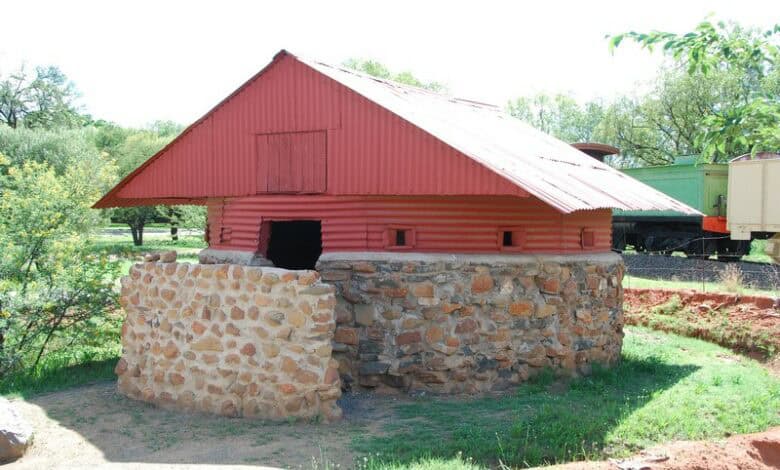
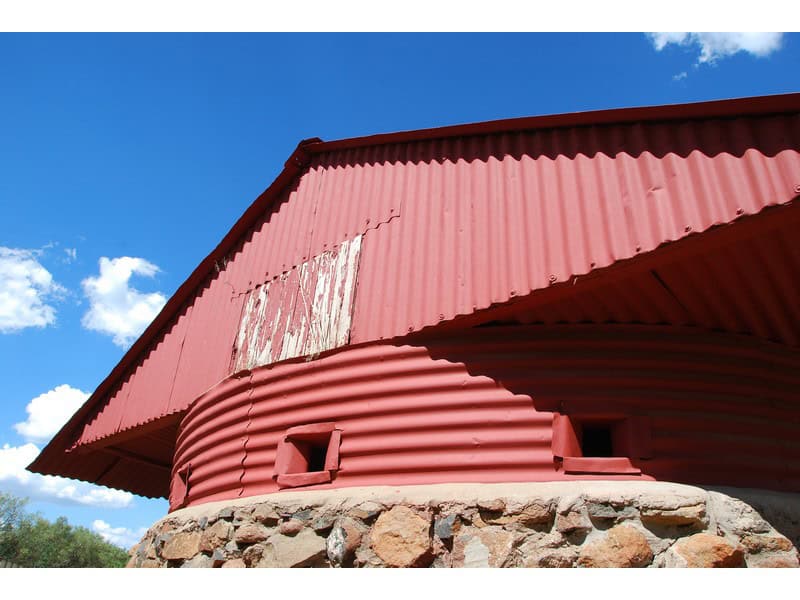
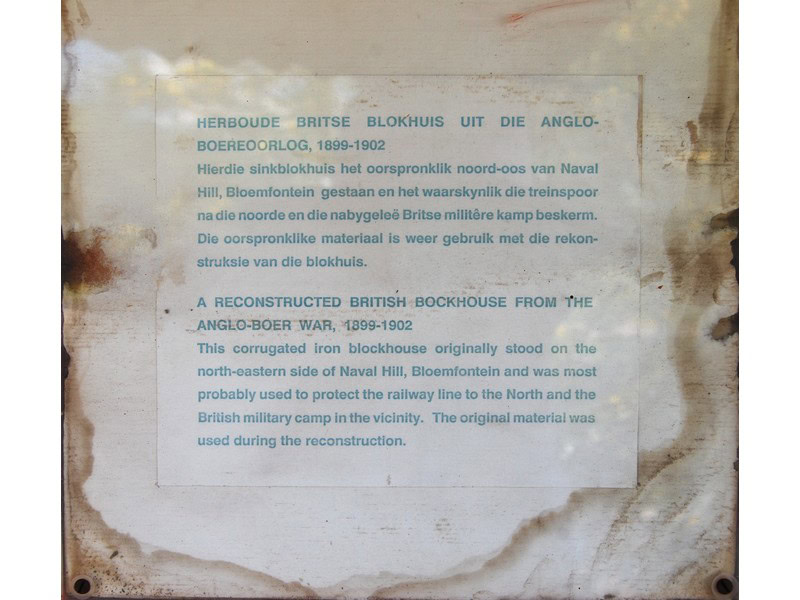
The Rice blockhouse originated in Middelburg.
But what is the story behind these blockhouses?
This tantalizing question will be answered during the South African Heritage Association’s national symposium, which will be held in Middelburg from 13 October.
One of the speakers is Simon C Green who will talk about “the birthplace of Rice Pattern Blockhouses”.
Lord FS Roberts had set up a series of forts to guard the railway during the Anglo Boer War, when General Christiaan de Wet started blowing up his lines of communication in June 1900. The railway line was the most effective and fastest means of communication.
The forts were a series of trenches reinforced with stone walls or sangers surrounded by barbed wire..
Roberts handed over the command of the British Army in South Africa to Lord H. Kitchener on 29 October 1900 thinking the war was over and only a few rebels roaming the country. It was during November and December that wrecking of the railways had reached its maximum during the war and construction of the masonry blockhouses started in December that year. Each blockhouse took up to three months to erect.
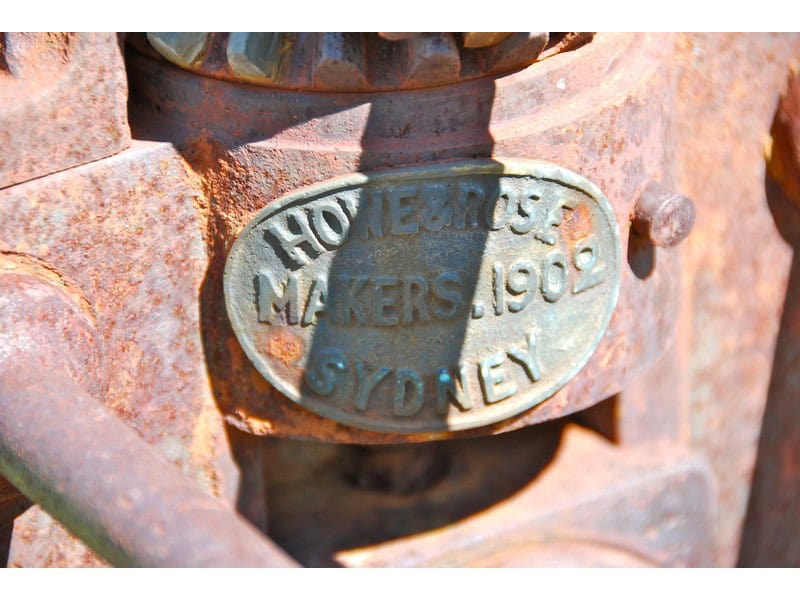
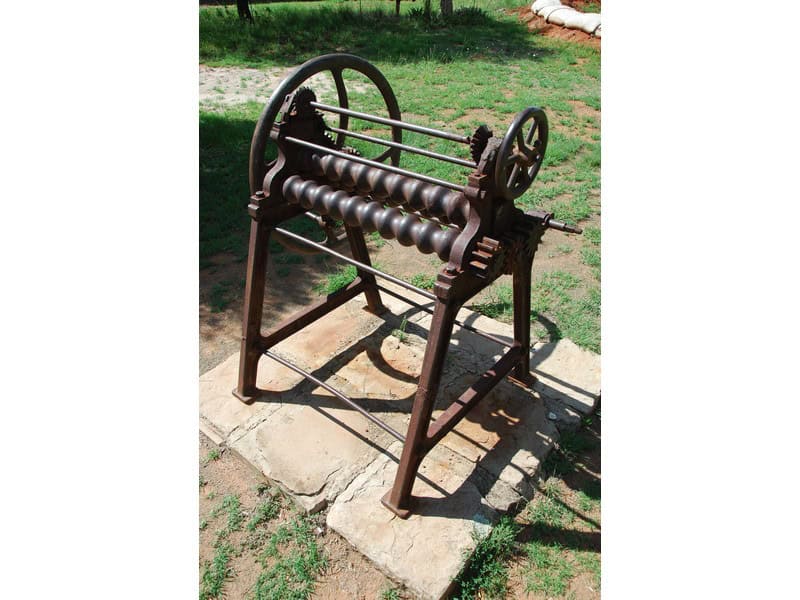
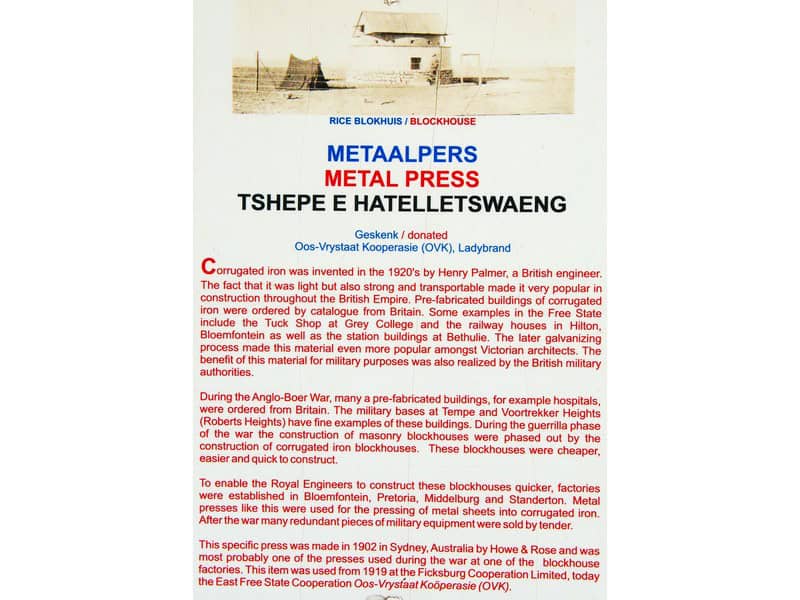
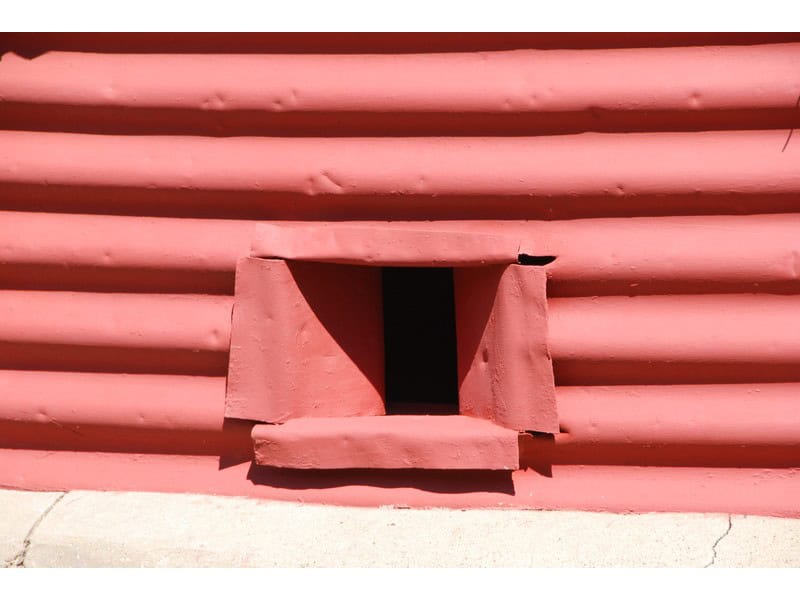
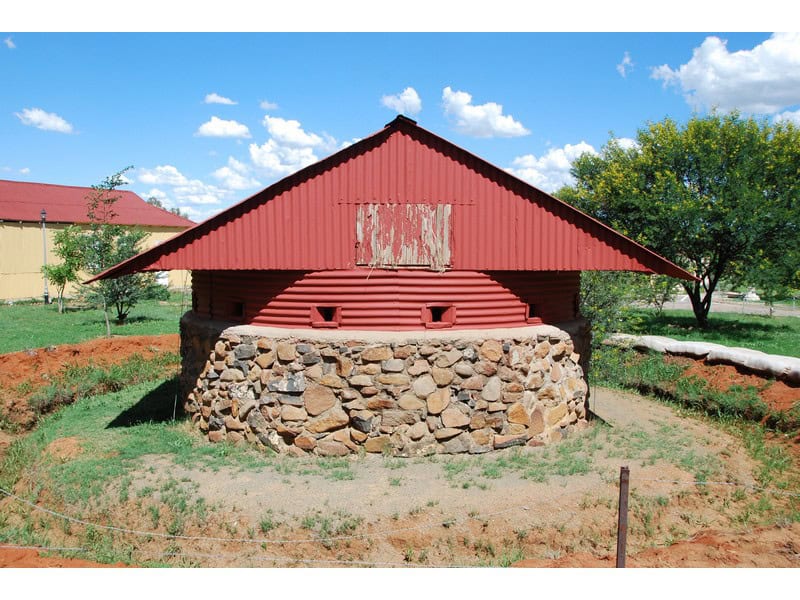
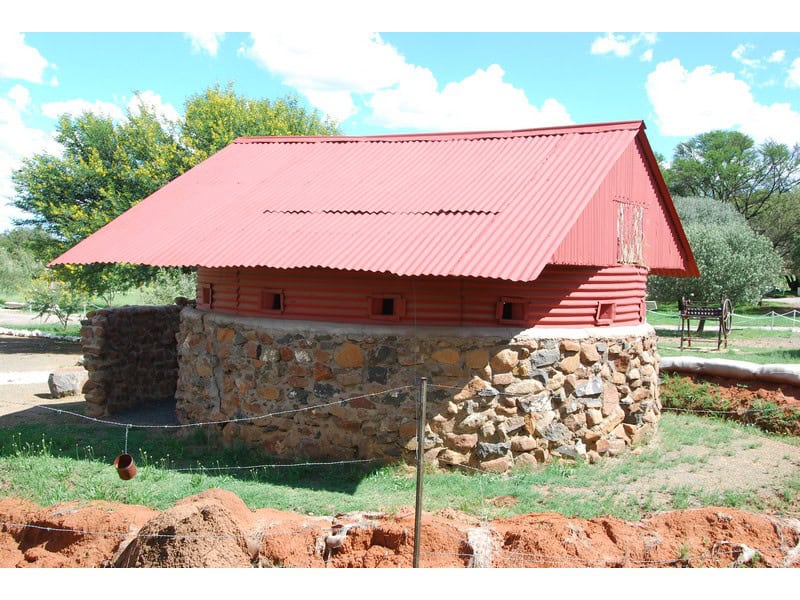
Realising that thousands of blockhouses would be needed Kitchener resorted to prefabricated forts. Several prototypes were constructed but the one developed by Major S. R. Rice was to be adopted.
Kitchener’s strategy was to divide the country into small areas by fortified lines preventing the Boers from crossing from one area to the next. It would be possible to move British columns by train into areas of Boer activity and attack them.
At the end of the war there were over 8 000 blockhouses of all different types. Some 50 000 men were deployed to guard all the blockhouses. The length of blockhouse lines covered up to 6 000 kilometre.
Most of the 441 masonry blockhouses were constructed between December 1900 and the early part of 1901. They were erected at important points such as railway bridges, railway stations and towns.
The first metal blockhouse was built at Nelspruit, January 1901.
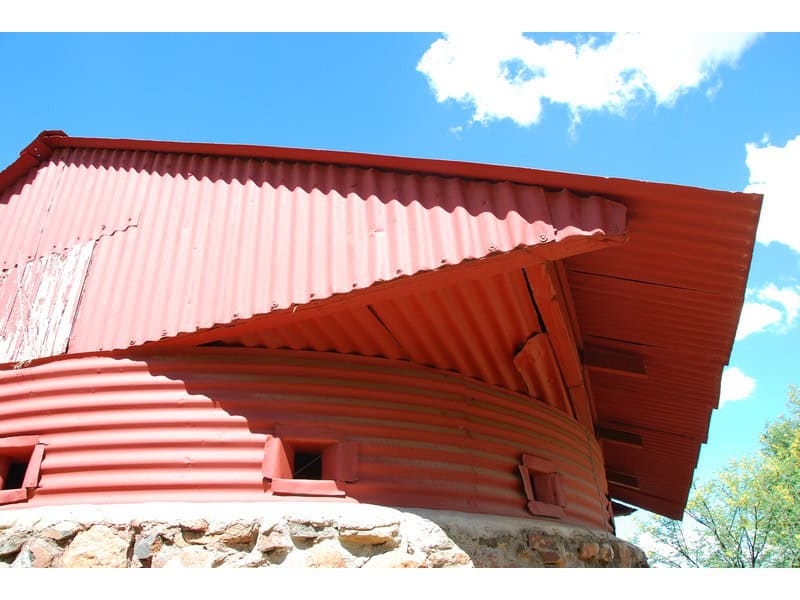
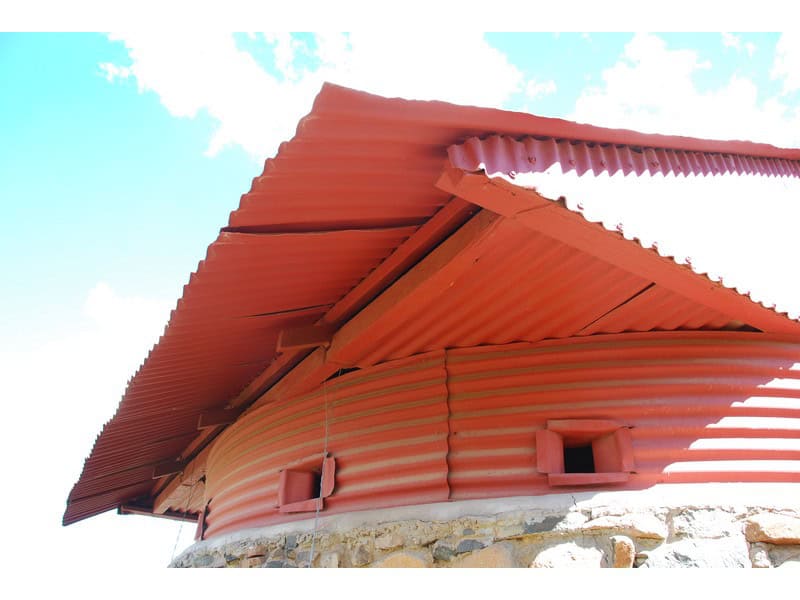
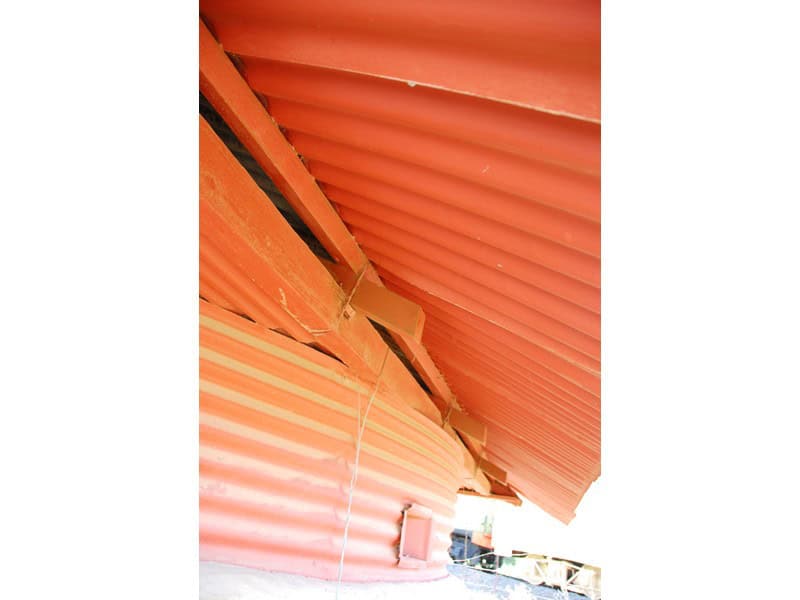
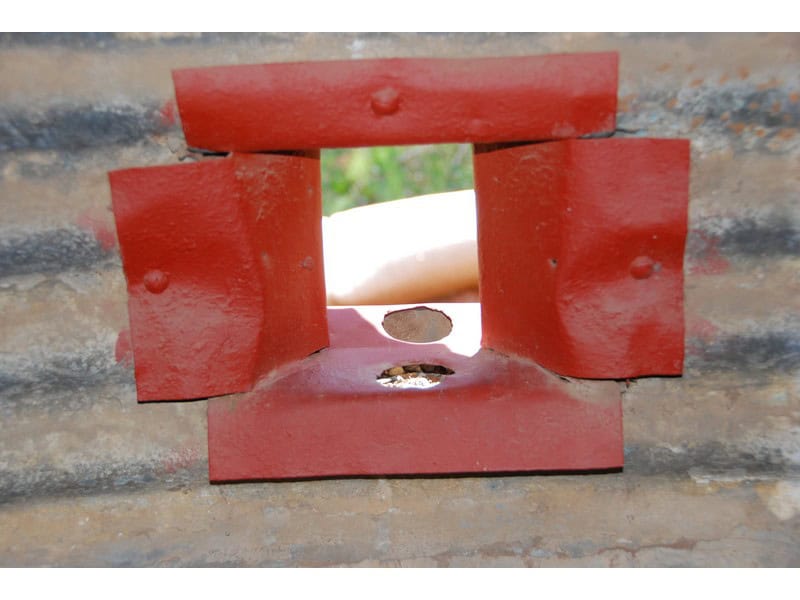
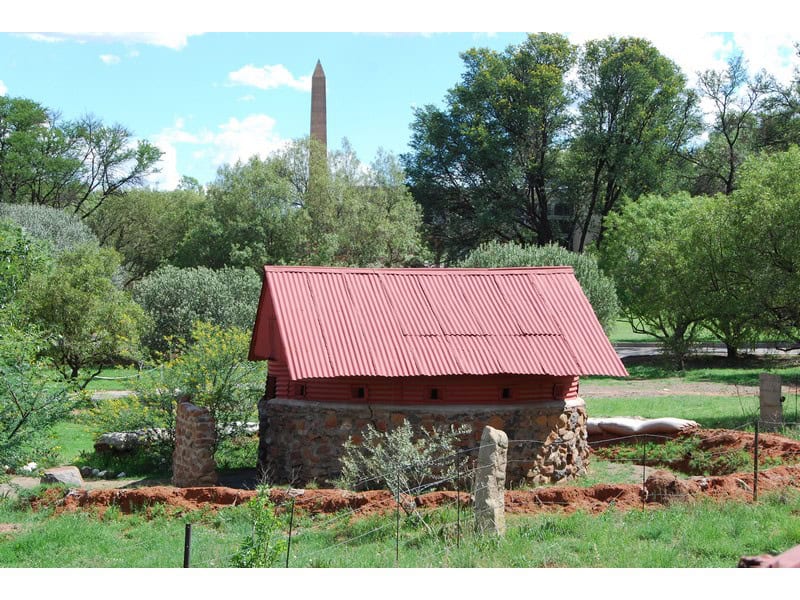
By February Major Rice had developed his circular corrugated iron blockhouse. He retained the idea of two corrugated iron skins to be separated by shingle sufficiently to stop rifle fire. The circular design provided good all round visibility and the lack of corners did away with the need for wooden posts.
Wood rots and splinters when hit by bullets or shrapnel putting the occupants at greater risk. The steel door to the blockhouse was sheltered by another piece of corrugated iron. The Major Rice blockhouse could be erected in six hours by six men.
Each blockhouse was surrounded by a stone wall. Circular and radiating trenches were dug and stone sangers erected. This allowed the garrison to get in and out and fight from the prepared defensive position.
For enquiries about the symposium, contact Soekie Rossouw at 082 922 7498.