The stepchild of South African heritage can be saved
Amazing that national and international media are silent about this treasure
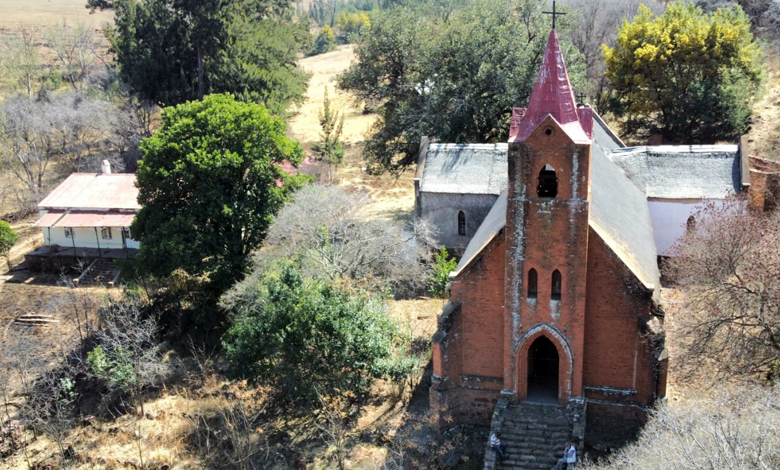
Botshabelo can still be saved.
The stepchild of South African heritage is not completely lost.
So believes the chairman of the Middelburg Heritage Association, Rudi van Wyk.
He visited the site museum with former mayor Ben Mokoena and patron of the association, Dr Kobus Terblanche.
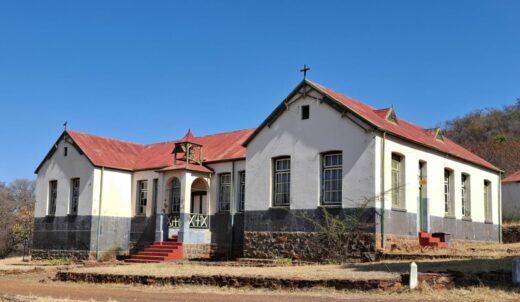
Botshabelo is the forgotten Berlin mission station 10km outside Middelburg.
Astonishingly, there has been no intervention to save the precious buildings, and especially the remarkable mission church.
It is equally astonishing that the national and international media have ignored the cry for help for the last 30 years.
When you drive into the place of refuge, you are overwhelmed by a holy presence.
There is a palpable silence.
The beauty of this piece of paradise overwhelms you.
It is as if the German missionaries are still watching over the site.
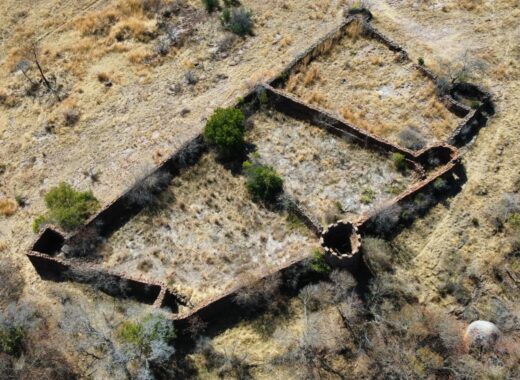
It feels as if you have to show respect for every little building, every giant stone that was piled up to build Fort Merensky.
How much work and sweat went into this fort?
How much paint did the Ndebele women use to decorate the buildings?
You experience Abraham Serote struggling around a table with Gustav Trümpelmann to translate the Bible into Sepedi.
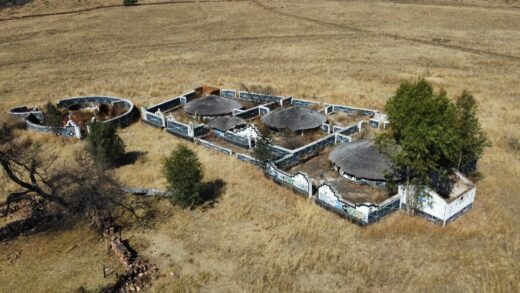
But Botshabelo has had a sad history since land claimants took over the site.
Where thousands of tourists from overseas drove through the gates every month, weddings held in the mission church, freshly baked bread served, a restaurant operated, the Middelburg Marathon Club hosted a popular half-marathon annually, campers relaxed in a well-maintained caravan park and the church packed with a Christmas carol service, there is now decay.
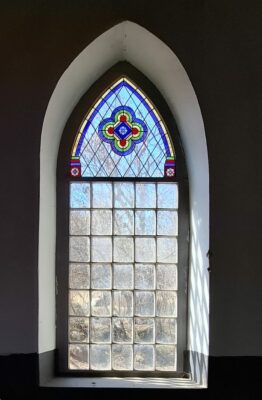
One of the church’s stained glass windows was replaced with a regular window, and some of the steel crosses were removed from the cemetery.
The gate to Botshabelo has now been locked.
The land claimants have been in two different groups for the last 25 years, and R11m in Lotto money that was supposed to be used for the upgrading of Botshabelo has disappeared.
The civil cases between the claimants have been dragging on for years.
High-ranking ANC and DA politicians, such as former prime minister and ANC cabinet member Thabang Makwetla, and the DA’s James Masango, grew up in Botshabelo.
Other famous people who lived there were political commentator Harald Pakendorf, former Member of Parliament Peter Gastrow, and Justus Tsungu, who was known for his Afrikaans radio talks, as well as the world-famous artists Gerard Sekoto and Esther Mahlangu.
The historical importance of Botshabelo cannot be measured in monetary terms.
This is a South African treasure that stands with one foot in the grave, but according to Van Wyk, it can still be saved.