
SAAPA warns alcohol abuse and drink driving are fueling preventable deaths
SAAPA warns communities are at risk because of alcohol over-availability and drink driving; zero tolerance and stricter measures needed.
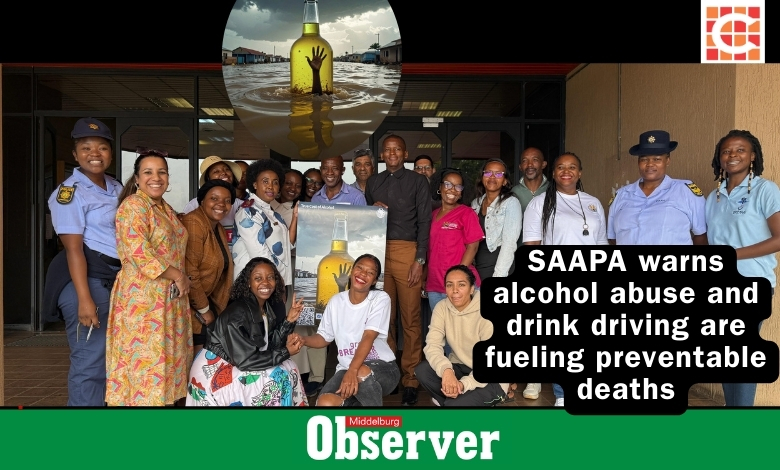
When SAAPA hosted one of its True Cost of Alcohol community dialogues earlier this year in Middelburg, the scale of alcohol saturation in local communities came into sharp focus.
Stakeholders revealed that Mhluzi alone has approximately 135 licensed liquor outlets, a startling figure that paints a grim picture of how deeply alcohol has embedded itself into daily life.
In many streets, liquor outlets sit on almost every corner, normalising over-consumption and fuelling abuse that tears families and communities apart.
Against this backdrop, the Southern African Alcohol Policy Alliance (SAAPA SA) has renewed its call for zero-alcohol tolerance for all drivers, warning that South Africa’s continued acceptance of drinking and driving is costing lives. “Our communities are drowning in alcohol,” SAAPA SA said, “And the consequences are being measured in funerals.”
The South African National Council on Alcohol and Drug Dependence (SANCA) shared their statistics, which indicated that alcohol was among the top four most abused substances, especially among the youth.
SAPS Mhluzi also presented shocking stats showing that, on average, they would apprehend about 40 people a day for drinking and driving.
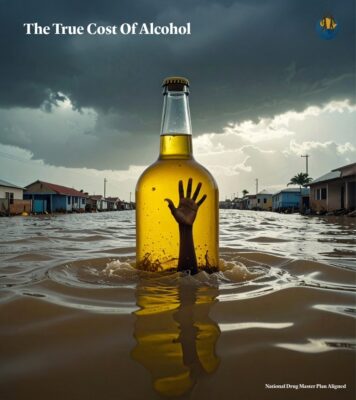
The human cost is stark. During the 2025/26 festive season, 8 561 of 173 695 drivers tested positive for alcohol, a 144% increase from the previous year. Although authorities reported a 5% reduction in overall crashes and fatalities, 1 427 people still lost their lives in 1 172 fatal crashes. Behind each number is a parent who never came home, a child whose future was cut short, a family left to grieve.
Every day, millions of South Africans use the roads simply to live their lives – taking children to school, going to work, visiting loved ones. Most do not drink, yet they remain vulnerable because alcohol-impaired driving is still legally tolerated.
Road deaths linked to alcohol are not unavoidable accidents; they are preventable tragedies enabled by outdated policy and social acceptance.
Scientific evidence has long shown that alcohol impairs judgement, reaction time, and decision-making well below current legal limits. Even small amounts reduce a driver’s ability to respond to danger. SAAPA SA argues that allowing any level of alcohol behind the wheel sends a dangerous message that impaired driving is acceptable.
The alliance is calling for urgent amendments to the National Road Traffic Act to introduce zero-alcohol tolerance for all drivers. Such a move, SAAPA SA says, would simplify enforcement, align with scientific evidence, and deliver a clear message to the public: alcohol and driving do not mix.
“South Africa cannot continue to normalise risk and mourn preventable deaths,” SAAPA SA said. “A stronger alcohol policy saves lives. Zero tolerance is the standard for a country that values its people.”