EXCLUSIVE: SA fighter in Ukraine – “War is not meant for Saints…”
South African fighter known as Call Signal Saint recounts his time in Ukraine’s special forces, describing death, trauma and the true cost of war.
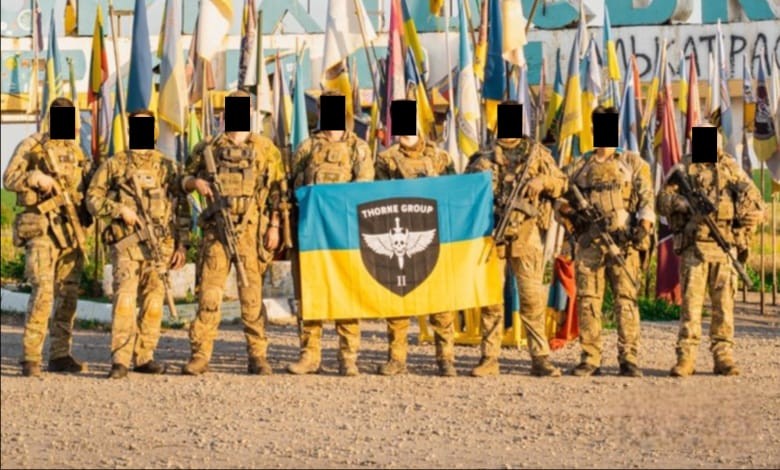
NOTE TO READERS: A Middelburg soldier returning from the frontlines of the war in Ukraine, spoke exclusively to Middelburg Observer’s Consulting Editor Tobie van den Bergh. Middelburg Observer will be publishing more on this riveting interview soon.
LISTEN HERE
Call Signal Saint. “Ironic isn’t it, that it is Saint. War is not meant for Saints.”
He looks through you with dark eyes. Eyes that have seen things that no man should see. At the age of 22, experienced what no man should experience.
Five months ago, he was still a member of the special forces in Ukraine. Known as Call Signal Saint. Now, he is back in Middelburg. He has to adjust to a civilian life that he is not used to. “You will never forget their faces. Especially how they looked at you in their last moments. The sound of their screams keeps you awake at night.”
The world does not realise how bad it is
He wants to remain anonymous, but has given permission for his call sign to be used: ‘Saint’. Saint in a devastating war between Ukrainian and Russian forces.
“As we speak, people are dying, people are losing limbs. This is a war being fought on a wide front. The world does not realise how bad it is. It is a destructive war. The only reason I am speaking is to make people aware of how destructive war is and how much pain and sorrow it causes. People live in their own small world and do not realise how bad it is.”
The reason for going to war was that of a saint – to make a difference – to do something about the injustice being done to the inhabitants of Ukraine.
“I knew it was going to be bad, but not this bad.” The devastation in the war-torn country touched him deeply. “The worst was when we came to a town that had been attacked by the Russians. You walk into a house and see the photos. You experience that a happy family lived there. That’s when it hits you the hardest.”
“It’s hell on earth”
He pauses for a moment. “It’s hell on earth. Houses are abandoned. When the Russians passes through, it looks like a desert. Death and black. There are corpses everywhere. It smells like death. Its corpses of both civilians and soldiers. Thousands of corpses… It is only in the midst of death, pain, and sorrow of the war that you fully understand the value of someone’s life.
“Sometimes, amidst the death and destruction, the heavenly voices of children echo. We lived in safe houses in towns. There are many children on the streets. They thought we were the greatest heroes. It doesn’t matter what nationality you are. They sang to us. Sometimes they gave us flowers.” Yet he doesn’t want his children to know about their soldier father one day. “My children shouldn’t know that I have such a side. You forget who you are in war. You become something you don’t know yourself.”
Shrapnel penetrated my Bible
There was also divine intervention, which the young soldier testifies to. He calls it ‘symbolic’. “I always carried my Bible in the back of my backpack. A piece of shrapnel hit me from behind and penetrated my Bible.” But he wasn’t always so lucky. When he was shot at, the projectile passed under his arm. However, he kept firing. During a trench fight, he was second in line. In the fierce battle, he never heard a drone drop an F1 hand grenade above him. Trenches are 2m deep.
The hand grenade fell 2m from him, and the shrapnel penetrated his leg. The scar will always remind him of the deadly trench fight against the Russians in a foreign land. The foreign language he speaks fluently today, ironically, is Russian. But the young sportsman is no Rambo. He had three ‘Tours’, one as a sniper. He is highly trained. Trained as a recce, as a sniper, in close combat, as an infantry soldier, in explosives and to fight in trenches.
Was he ever afraid?
“Yes. When you’re on your way to a battle, everyone’s on edge. You’re riding in an armoured vehicle with a 30mm cannon. You start to shake. That’s when the men are separated from the boys. You then show how you react to fear. You’re not afraid of dying. You’re afraid of what’s after death. Nobody really knows what life is like after death.”
“The operations we were in, every operation was a suicide mission. Those of us who survived as long as I did, it was pure luck or supernatural protection. Every metre you walk, you are one metre away from death. It really is all suicidal. With no operation you are sure you are going to survive. It is always suicidal. You have to know that if you go, you may not come back. The people have to know that you are sent to kill. And you could be killed. I was infantry, and if you are infantry, you are sent to kill and you can be killed.”
The firing of missile after missile
His mind wanders around the battlefield. It’s as if he’s recalling the firing of missile after missile. “Missile attacks on capital cities. Sirens go off. The safest place is underground in the basements. Everyone flees to the basements. You hear a rumble and a bang. You hear debris falling. It happens every night.”
While they were sitting in a village one night and talking, the power suddenly went out.
“Within milliseconds, the first missile fell. There was a huge bang (’n moerse slag). It sounded like it was falling right next to you. Two missiles were fired in quick succession. They were ballistic missiles.” Long after the interview was over, he left a voicemail.
“When they come with the mortar and artillery fire, that’s what does the damage. As you walk through the town that has already been hit, on your way to your target, it’s all around you. It’s a kind of rumbling going right into your gut. It’s a rumbling sound that shakes you. You can’t explain what it sounds like. The rumbling of the artillery is something you live with. When something falls next to you now, something shoots through your head. It’s like hellfire.”
Elite troops in Ukraine
It’s clear that the young farm boy is proud to have been part of the elite troops in Ukraine. He emphasises, as I finish the interview, “Remember, my first year I was in the third separate assault brigade of the Ukrainian armed forces. In my second year, I was in the special forces, actually the stormtroopers.”
He also spoke about the sophisticated weaponry they used and the outstanding training. Today he doesn’t blame the Russian troops.
“Half of them don’t want to be their. The Russians are brainwashed by their government and those who are not brainwashed are forced to be there. They will get the death penalty if they refuse to fight in the war.”
And the casualties?
“Double it. The bodies they can’t identify are not on the list.” When I ask for photos, he slowly flips through his album. He stops for a moment. “This was my buddy. He’s dead… a lot of them are dead.”
The hell he saw is burned deep into his being.
But it also shows on his body. The scar on his leg.
The tattoos and writing on his arm…
in Russian…
ALSO READ: Young Middelburg sportsman injured in Russian drone attack in Ukraine
WATCH: Russian Drones And Missiles Strike Kyiv In Overnight Attack
HELLSCAPE! Ukrainian Cities Go Dark In Deadly Russian Strikes; Drones, Kinzhal Missiles Ravage