
Middelburg Heritage: This week in Middelburg’s History – March 30
The Kruithuis (Arsenal) – Oldest government building in Middelburg - 30 March 1875
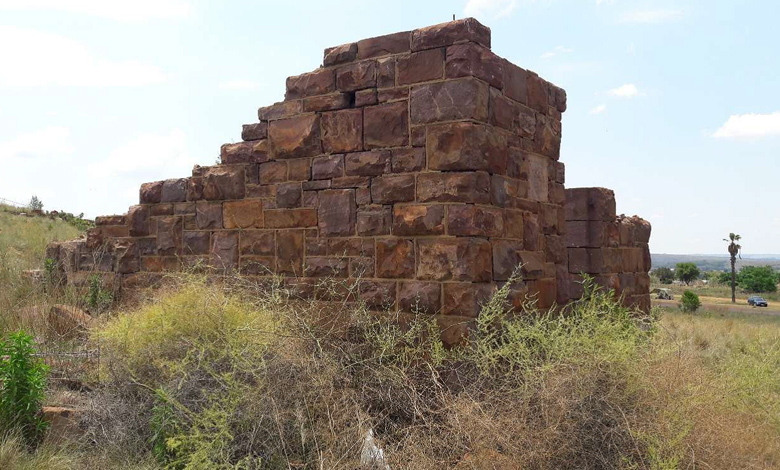
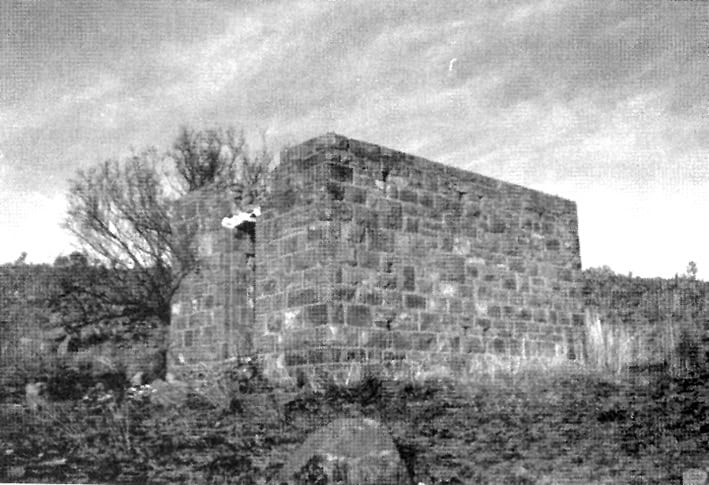
On the west side of the town, along the main road to Mhluzi, stands the ruins of the oldest government building in Middelburg – the Kruithuis (Powder Store) or arsenal, built for the storage of gunpowder by the South African Republic in 1875 – just 11 years after the town was founded!
Middelburg was seen as a hub for the distribution of ammunition in this area of the Zuid-Afrikaanse Republiek and was considered important as a strategic point for military operations, especially against the black tribes in the north-east.
The government, under President Thomas Francois Burgers, decided to build a Powder Store as a store for ammunition in Middelburg. This task was assigned to Magistrate JJ Meintjies, who wrote to the Secretary of State, the Reverend Nicolaas Jacob Reinier Swart, on April 6, 1875, that the Powder Store had been completed. It was built by a local building contractor, Mathiam Coetzee, and inspected and found in order by S Wemmer. The cost is given as R640. Mathiam Coetzee (1834–1886) is listed as one of the first residents of Middelburg. In 1872, he purchased erven 305 (later the Trichard house), 306 (later Burrows’ shop), and 309. In 1879, he was listed as residing in Middelburg as a Legal and General Agent.
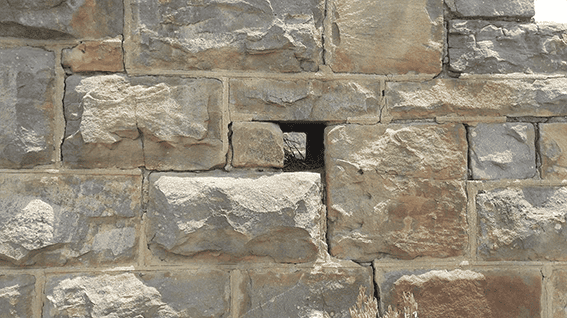
The Powder Store was built on the western side of the town and consisted of a square stone building with ventilation holes in the walls. It had a tin roof with a thick steel door with several bolt points. The building of a Powder Store outside the town was due to the fear that the dynamite, gunpowder, and other ammunition stored in it might explode.
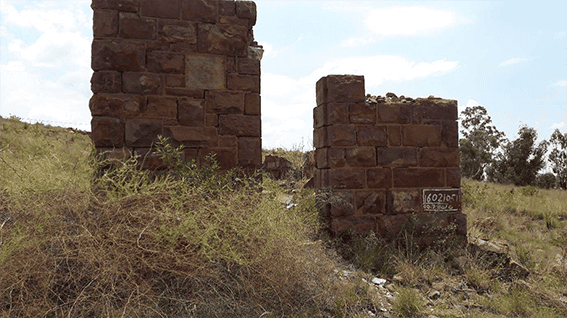
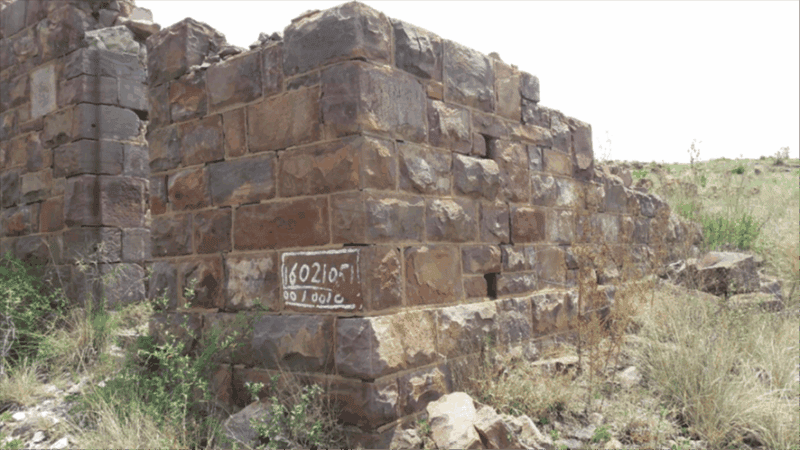
By 1883, the magistrate reported to Commandant-General Piet Joubert that the Powder Store was full to overflowing, probably with supplies and ammunition in preparation for the impending war against Mapoch (1882–1883).
From records, it appears that the Powder Store was the first government building in Middelburg, as the other early government buildings, namely the Prison, were only built in 1878 and the magistrate’s office in 1888.
On February 17, 1894, Willem Frederick Sebastiaan Kirsten, first clerk and prosecutor of the magistrate’s court, who was in charge of the Powder Store, shot himself in the Powder Store following the death of his young son two days earlier. He was buried in the Old Cemetery.
It has sometimes been stated that the building was a Blockhouse from the Anglo-Boer War. Several experts agree that this was not the case. The symmetrical holes through the thick walls are also tunnels, which would make it impossible to aim a weapon at different angles of fire from the building.
The position of the building is indeed strategic in the neck over the hills from the west, but the building is on the eastern slope of the ridge, which does not make sense for attacks from the west. That the building could possibly have been used by the British as part of the protection of the town against Boer attacks is not impossible. However, there is no reference to this in the records, and the high ground southwest of the position would make it very vulnerable. However, it would not have been able to serve as a blockhouse/fort due to the lack of effective loopholes.
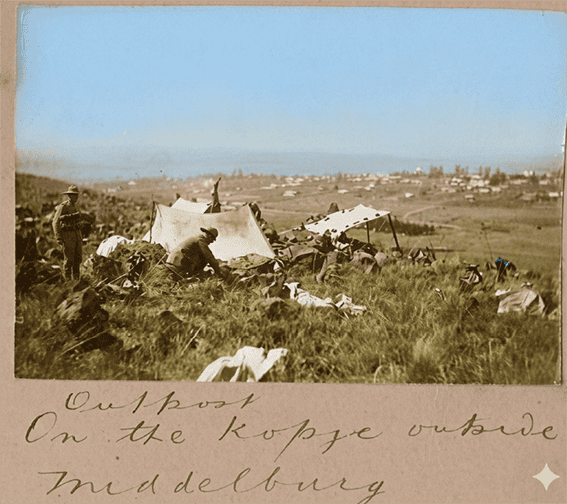
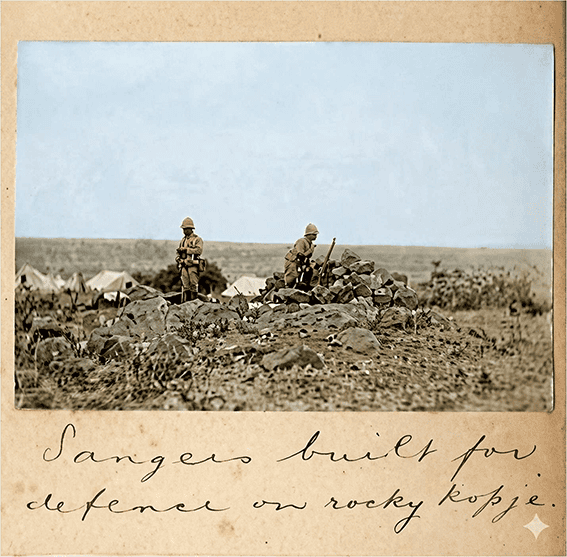
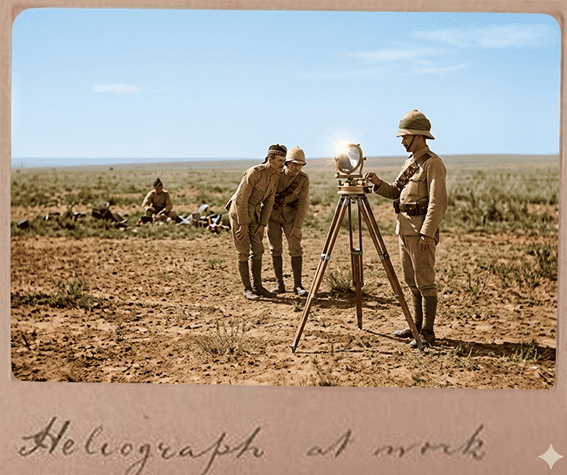
Photographs survived of other British fortifications on the adjacent hill that were erected during the Anglo-Boer War. Boer commandos were active to the west and north-west of the town. There are reports of several Boer commandos, even with wagons, cannons and horse-drawn carts crossing the railway at Uitkyk just south of the town and then moving west, around the town, thus creating a risk of attack to liberate the town. Therefore, guard posts were erected by the British on the ridges with a view to the north and west. The guard posts were linked to each other by means of heliographs for communication.
The ruins of these British fortifications still exist and are located further north on the adjacent ridge. One of these ‘outposts’ is captured in a photograph.
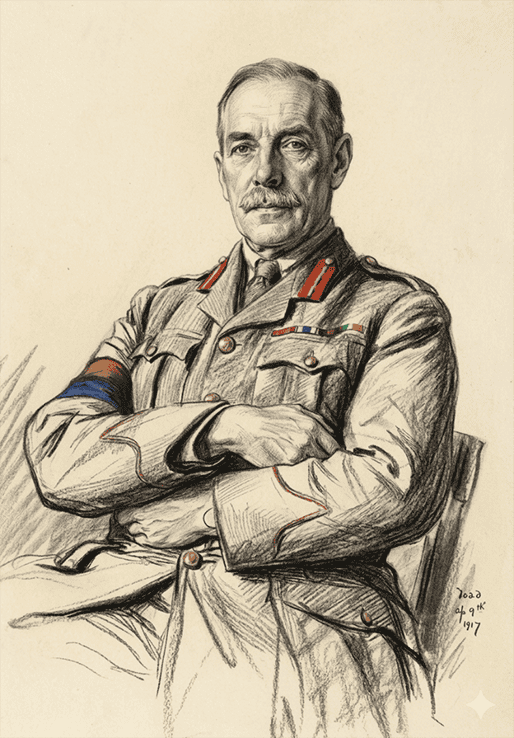
The main British fortification was the Blockhouse in Kanonkop (Gun Hill) from which a searchlight shone over the town, as part of the curfew. This was a so-called ‘pepper-pot’ variant of the Rice-designed blockhouse with the searchlight on the roof. The rolled-zinc Rice Pattern blockhouses were developed in the first three months of 1901 and manufactured in Middelburg by Major Spring Robert Rice of the Royal Engineers. The Gun Hill blockhouse and gun emplacements will be discussed in a future issue of this rubric.
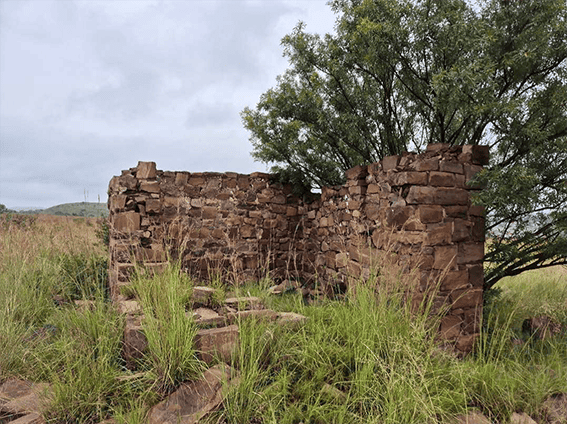

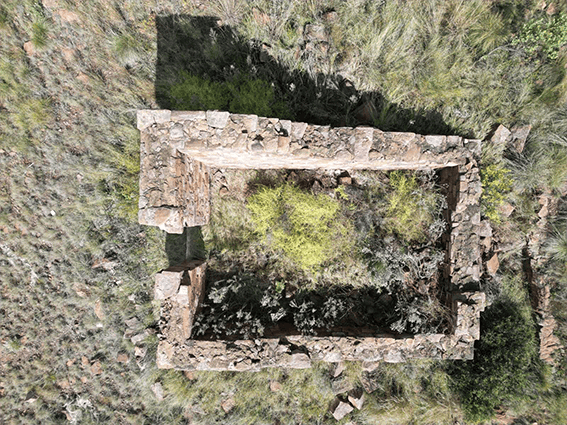
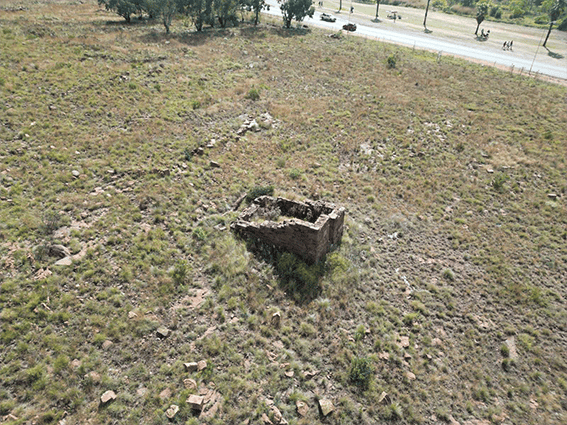
The Kruithuis building was undamaged until the 1970s, after which it was unfortunately systematically vandalised, and residents drove away from the hewn stone for their gardens and braai facilities, while the steel door and corrugated iron sheets were looted. Middelburg Heritage has mounted a Blue Heritage Plaque on the ruin.
Unfortunately, the oldest government building in Middelburg is just a ruin!