
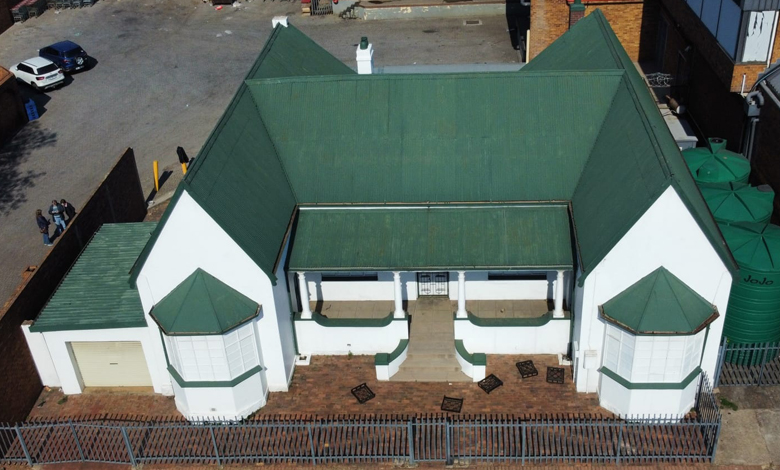
Miss Bessie Epstein, the famous owner of the house in the middle of a shopping centre, gave rise to many stories! What is the story behind the “White House” in SADC Street?
Jewish exodus from Russia
In Tsarist Russia with serfdom, the Jewish community was severely oppressed. Jewish property rights were restricted to the Pale region in Western Russia, and even within the Pale, some cities were inaccessible to Jews.
During Tsar Alexander II’s reign, serfdom (binding peasants to work on a specific plot of land) was ended, and Jews gained increased rights and liberties. In 1881, Tsar Alexander II was assassinated. Jewish conspirators were implicated in the murder and anti-Jewish sentiments flared up in Russia.
Tsar Alexander III, who witnessed his father’s assassination, reversed his father’s lenient policies towards Jews. The so-called May Laws restrict Jews again to the Pale areas – Belarus, Moldova, East-central Poland, Lithuania, Ukraine and part of Latvia, and Jews were stripped of their civil rights. There was an active campaign against Jews in Russia, with brutal pogroms of anti-Jewish demonstrations often led by the police, which then culminated in violence and destruction of property. Additional restrictive laws were enacted. This violence against Jewish families and their traditions forms the basis of the famous film Fiddler on the Roof.
Jewish men were also forced into compulsory lifelong conscription in the Imperial Army, where they literally served as “cannon fodder”.
Within the Shtetis (small Jewish villages) widespread poverty arose, as expressed in the famous song “If I were a Rich Man” from Fiddler on the Roof and Yiddish-speaking Jews in particular experience severe poverty with the destruction of traditional synagogues and customs. The Russian famine of 1891/92, along with a cholera outbreak that caused between 375 000 and 500 000 deaths, made the situation even worse.
Under these circumstances, a massive Jewish emigration drive begins from Russia to, among others, America and Europe, often by people smugglers from various Baltic Sea ports. Although the Russian government does not acknowledge this, the emigration is obviously allowed to solve the Jewish question. This would establish the entire Jewish community in America in particular. Most of these Jewish families either lost all their possessions in the pogrom violence, or had to leave it behind when they fled to Europe.
For these Jewish men and their families, the discovery of gold and diamonds in Southern Africa offered a green pasture of economic salvation. Many Jewish families moved to Southern Africa, first arriving in the Cape via London and later settling in the Boer Republics and northern British colonies after the Anglo-Boer War. Many became the proverbial Boer Jews.
Joe Epstein (1875-1921) and Yetty Epstein née Epstein (1875-1943) were part of this grouping emigrating to Southern Africa. It is unknown from which part of Russia Joe came as the available records indicate only that he was born in Russia, but Yetty was from Lithuania. Both were part of a larger family grouping that emigrated, Yetty had three siblings in Southern Africa. It is unknown what their financial position was during emigration to Southern Africa. It is also unknown if there was any family connection between Joe and Yetty, as both surnames were Epstein. They enter marriage in Somerset Strand in the Cape Colony.
Epstein Family in Middelburg
Joe initially established himself as a general merchant at 39 Argyle Street, Woodstock, in the Cape Colony. Their son Solomon was born on February 6, 1902 in the Cape Colony. After the Anglo-Boer War the family moved to Middelburg, where Joe established a general merchant business. Jews had to obtain special permission from the Milner administration to move to the former Boer republics. Lord Milner appointed a Jewish Committee to consider each application, and Joe’s application was approved. The Jewish community in the four Southern Africa colonies grew by 52% from 1900 to 38 000 in 1904. The Epsteins belonged to the expanding Jewish community in Middelburg, where he purchased several properties.
On March 11, 1907 their first daughter, Bessie, was born in Middelburg and on March 31, 1908 their second daughter Hilda.
Joe established his business on Erf 126 on the corner of SADC (Long) Street and Coetzee Street. Over a period, he built a shopping complex which housed a general merchant, butcher shop and a café. He also bought plot 13 in Boven Street (Cowan Ntuli Street) on the north-western corner with River Street.
He built the famous Epstein house on Erf 46 in Long Street (SADC Street), as the family’s home. The large home featured the standard H-shaped layout common during that era. The central porch with front door that opened directly into a hallway with two spacious bedrooms, and then ended in a large living-dining room with a back porch. Both wings of the H-design, with porch doors, contained several rooms which were typical of the time, one leading into the next.
The right wing also contained a spacious kitchen with a large coal stove and a pantry. In most cases, the house did not originally have a bathroom, so hot water from the kitchen was carried in jugs to the bedroom to be used in a wash basin. The bathroom was installed much later in the left wing. The large yard also contained a carriage house built of stone, with horse stables and space for two carriages and about six horses. An orchard grew to the east of the house, while a spacious grape arbour stretched alongside the building.
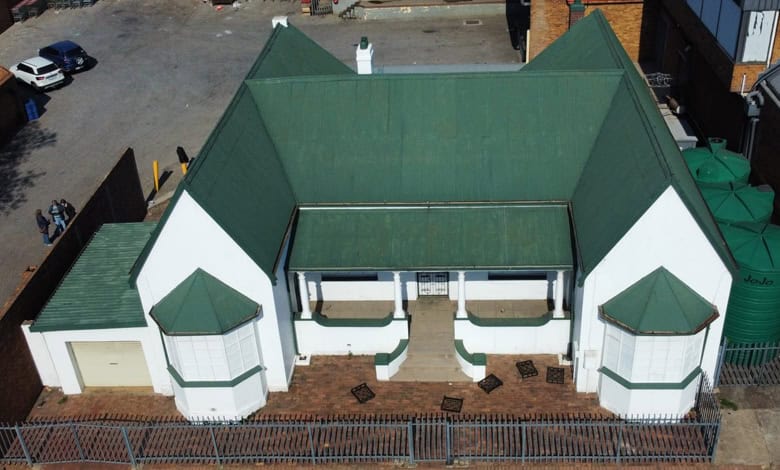
The house on Lang Street was built in what was then one of Middelburg’s wealthier areas. Next door, the Reznikov family lived in a spacious home, while two houses away the merchant, Henwood, built his impressive double-storey Victorian house, The Oaks. Wiegand’s shop stood diagonally opposite the house.
Joe Epstein became actively involved in the Jewish community. Established in April 1903, the Board of Deputies for the Transvaal set guidelines for synagogues across various towns in the area. Joe sold a portion of his plot 126 on Coetzee Street to support the construction of a synagogue for Middelburg’s expanding Jewish community. He was on the building committee of the new synagogue. The foundation stone of this synagogue was set in place on August 12, 1914.
(The name of his business was coincidently the same as the later business, OK Bazaars, which bought the plot but was not linked).
Joe and Yetty’s daughter Hilda marries Hyman Silbert, and the couple settled in Randfontein.
Bessie and her mother, Yetty, remained alone in the house. Bessie took care of her mother and became a well-known music teacher in Middelburg, giving piano and violin lessons. Several pupils in Middelburg received music lessons from Miss Eppie, as she is commonly known.
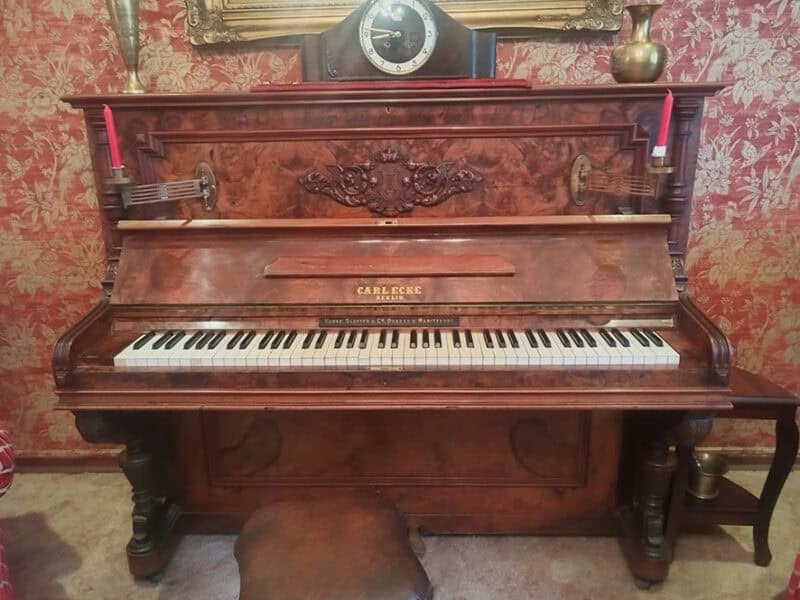
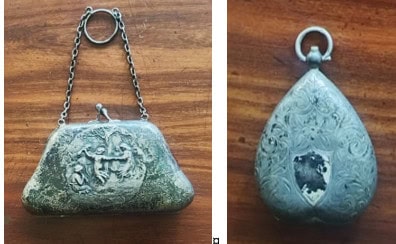
On January, 2 1943 Yetty died at the age of 68, of a heart condition, in the house in Long Street. Her will contained the key to the famous Epstein house in SADC (Lang) Street! Yetty left in her will, dated January 29, 1930, the corner shop to Solomon, the butcher shop to Hilda and the café to Bessie. She released Solomon from a bond of £1 000 which he owed to the estate. Hilda inherited erf 13 in Boven Street with the improvements/buildings on the erf and Bessie inherited erf 46 in Lang Street with the house and improvements on the erf. She bequeathed a silver candlestick to each daughter, her piano to Hilda and her sewing machine to Bessie. There was, however, a precondition: None of the children may sell any of the properties for 30 years after her death – so she rules from the grave until 1973.
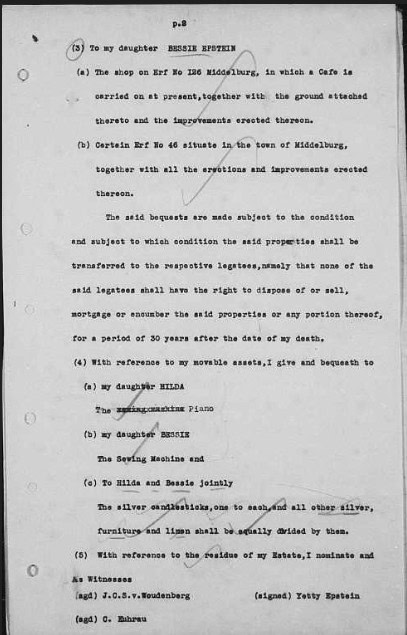
Bessie and her famous house
Bessie is now the owner of the big house, and this is the beginning of an eccentric lifestyle as a spinster. She set up a living unit for herself, in the right wing of the house, with a veranda room as a lounge and music room, which lead to a kitchen and bathroom in one room and then one of the large bedrooms in the central part. She continued with music lessons and became a familiar face in the town where she always walked down to the shops on foot. Once a week, she lit the big coal stove in the old kitchen and cooked her food for the week.
She had several eccentric habits. Each garden tool was distributed individually to the gardener and then collected back one at a time. Between each tool received, the door was first locked, the tool placed in storage and then unlocked again. One day a week she dyed her hair pitch black, with the famous remark that if on that day, while her hair dye was on, even if Queen Elizabeth were to knock on the door, she would not open it!
During Pesach (Passover), the Jewish holiday when chametz-containing items are prohibited at home, she placed such items outside her bedroom in the hallway, since it was not considered part of her living space!
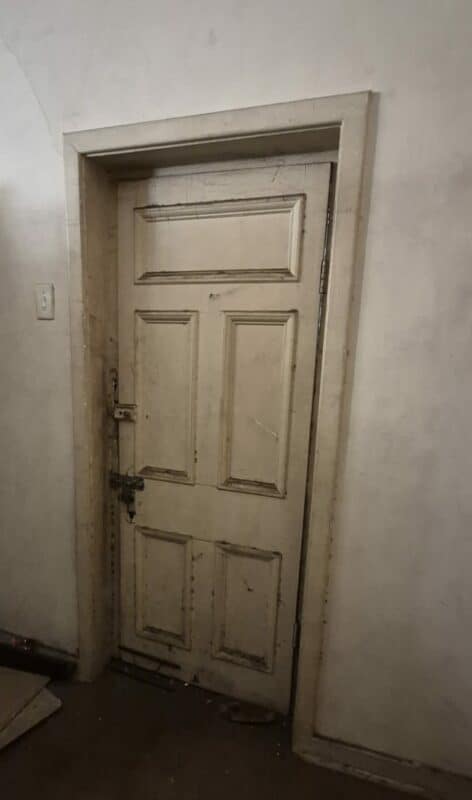
She rented out the rest of the house as a residential unit and the outbuildings as stores.
Then the developers decided that these plots would be ideal for a new OK Bazaars complex in Middelburg and started buying up the plots. Old Aunt Mienie Hollender had died, and her house had been sold. Mrs Reznikov, who was now also elderly, sold her home, but Miss Bessie still hesitated.
Her mother left the house to her, and it was her mother’s will that she live there, so she could not sell. The developers pushed, everyone gave advice, but Miss Bessie held back.
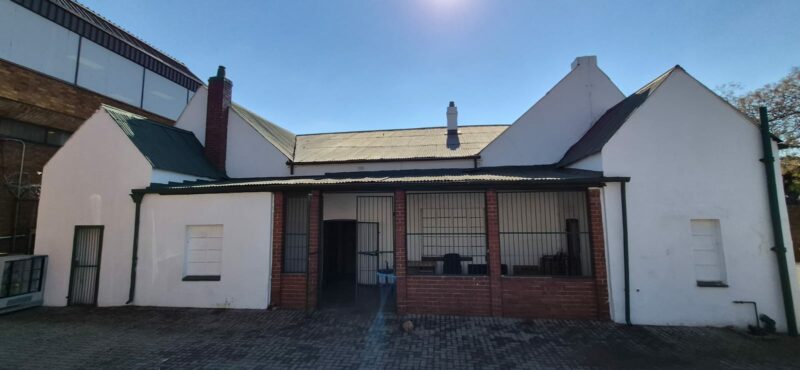
Although the will’s restriction no longer applied, because 30 years have passed, she did not want to know anything about selling. After much pressure, a compromise was reached – she would sell the plot, but the house must stay standing, and she would remain in the house! The developers went ahead and built the shopping centre around her – with her house as an island on the side. Part of the sale conditions was that the house will remain standing, and she will would line in the house.
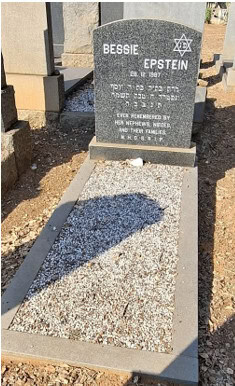
She had a fall near the Post Office and broke her hip. She rapidly deteriorated and on December 28, 1987, Bessie Epstein died at the age of 80. She was buried in the Jewish section of the Old Cemetery. The end of a legendary, eccentric character from Middelburg.
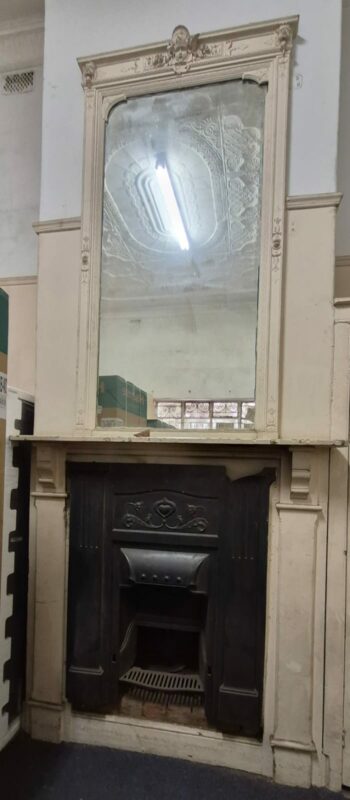
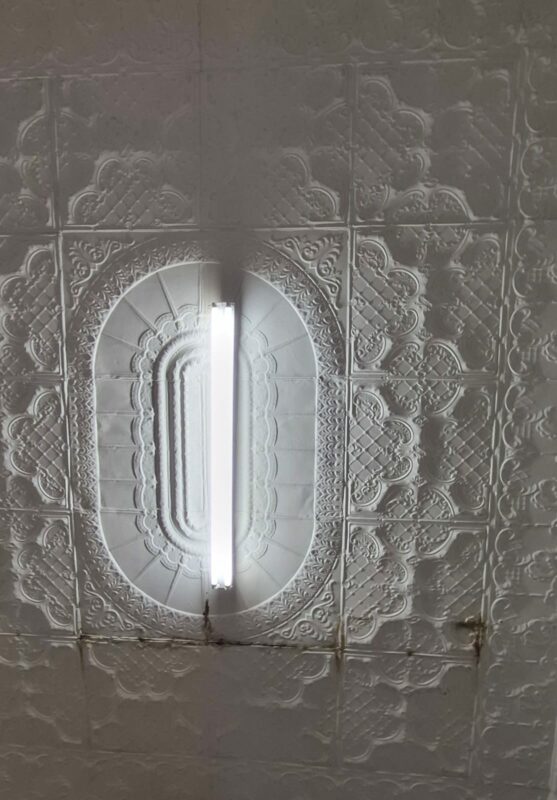
But the house must remain. The building now sits neglected beside a shopping mall, prompting curiosity about “the old white house in the mall.” Her famous house is unfortunately deteriorating rapidly. The outside was repainted by the now owners Shoprite (who also painted all the windows white!), but the interior is in a dilapidated state. It was used for a period as a shebeen, many features went missing and many doors are gone. A beacon of a bygone era, and one of the last large opulent residential houses of Middelburg is on the brink of destruction, notwithstanding Yetty’s last will!
The Jewish community in Middelburg is rapidly shrinking; children move to the Rand and old people die. Solomon died in 1948 and Hilda in 1976. The Middelburg Synagogue closed and became a business, serving as a silent witness to the Jewish emigration from Russia and the settlement of the characters of Fiddler on the Roof in Middelburg.