
Water dialogue tackles infrastructure sabotage in Middelburg
Upgrading 432km of decaying asbestos pipes in Steve Tshwete will take nearly R680m, prompting local leaders to call for private sector backing.
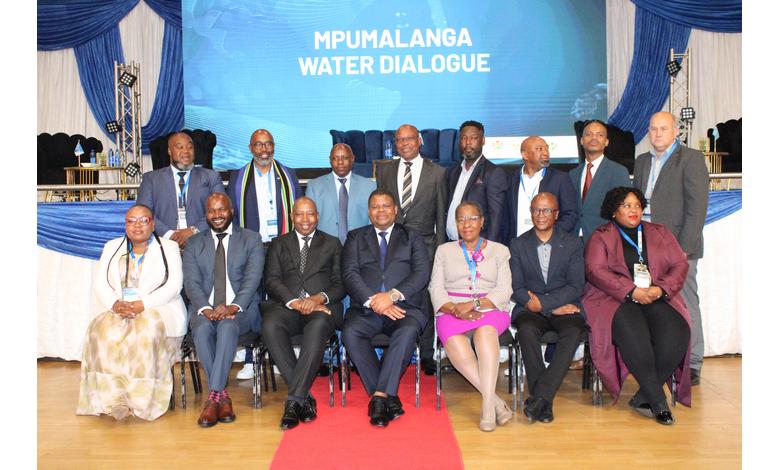
Government leaders and industry experts gathered at the Middelburg Banquet Hall on Thursday for the Association for Water and Sanitation Institutions of South Africa (AWSISA) and Global South Water and Sanitation Mpumalanga Dialogue to tackle the province’s mounting water challenges, infrastructure sabotage and funding deficits.
AWSISA acts as a unified platform and advisory body for South Africa’s water and sanitation sector, driving sustainable resource management, policy reform and infrastructure development.
Opening the dialogue, MEC for Co-operative Governance and Traditional Affairs Speedy Mashilo emphasised that rural and farming areas remain the government’s primary focus.

“Our biggest concern is around the farm areas. That is why we want to do water harvesting and form partnerships in various areas, such as with mines and Rand Water.”
Addressing the threat of power cuts on supply systems, Mashilo outlined plans to adopt green energy.
“Where possible, we are going to use solar to power windmills as part of our system to ensure we get water,” he explained.
“We are going to teach our people how we can harvest water as we move forward.”
The MEC also condemned organised criminal networks targeting wastewater facilities, which have led to raw sewage spills into local rivers.
“We have now realised there is a syndicate stealing cables. The moment they steal cables, there is no electricity for pumping, the system stops, and sewage is discharged into streams and rivers. It is pure sabotage.”
To fix the broader network, including replacing asbestos pipes across Mpumalanga, Mashilo noted that R4b in funding is required.
Local municipality faces massive infrastructure overhaul
Steve Tshwete Local Municipality Mayor Mhlonishwa Masilela highlighted local achievements while setting out plans to overhaul the town’s network.
The municipality received five awards at the event for drinking water and wastewater management under the Blue Drop and Green Drop schemes.
“I am so happy that we won five cups in terms of cleaning our water, both Green Drop and Blue Drop,” Masilela said.
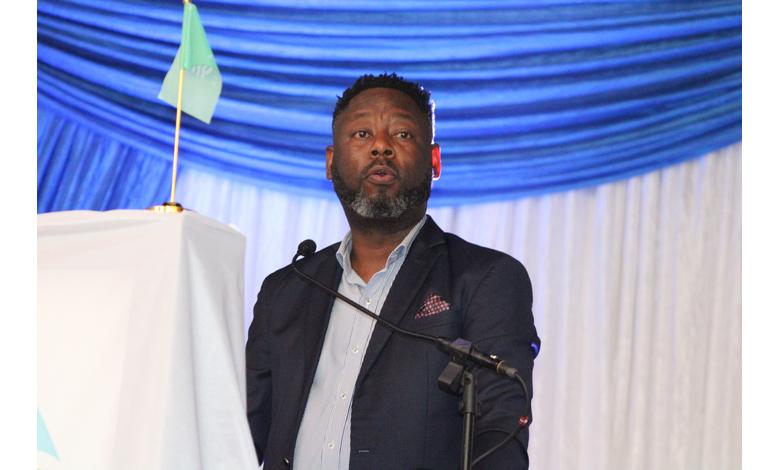
“They assessed our water treatment plants and saw the capable workers in our municipality who are making sure the people of Steve Tshwete get the best water.”
However, Masilela told the Observer that replacing 432km of decaying asbestos pipes presents a major financial challenge.
“We acknowledge that we have almost 432km of piping, which needs almost R680m to improve the pipeline infrastructure. To put a pipe from here to Doornkop alone requires R100m.”
To cover the costs, Masilela called on local industry for support.
“We need mines that can invest, and partners who want to make sure people get suitable, drinkable water. Even after my term, the plan is in place to ensure this municipality delivers clean tap water for all. With the support of national funding and private partners, these challenges will soon be in the past,” he added.
National backlog requires private sector investment
Deputy Minister of Water and Sanitation David Mahlobo called for strong public-private partnerships, financial discipline and a cultural shift towards paying for municipal services.
He noted that fixing Mpumalanga’s water network requires more than R30b, while the national backlog exceeds R400b.
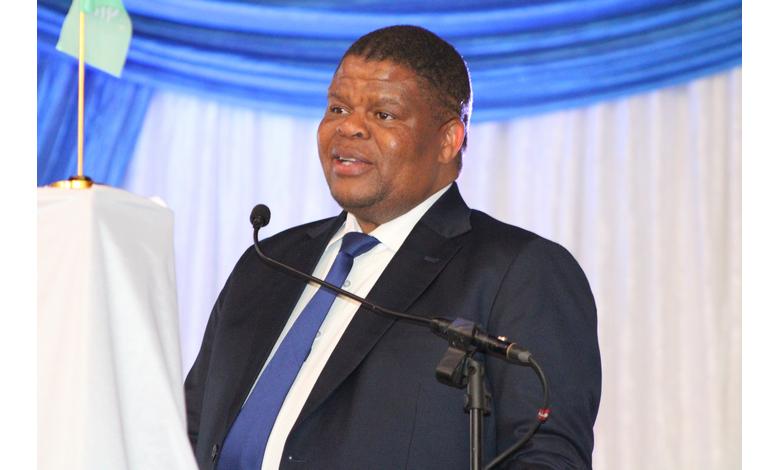
“We don’t see you as suppliers; we see you as partners and shareholders. In South Africa, we are open to partnerships in water, and we are open to reform,” Mahlobo said.
He highlighted the issue of unpaid bills across the country.
“Municipalities are not financially viable because South Africans are not paying for services partly because of the economic situation, but also because of a deep-rooted culture of non-payment,” he noted.
Mahlobo stressed the need to safeguard funding meant for infrastructure maintenance.
“There must be discipline. Traditional financing from grants and subsidies must be ring-fenced. When you ring-fence, we don’t want you to take all the money, but take a specific quantum that is commensurate with the condition of your infrastructure. If you haven’t done basic maintenance, you are at bedrock, and someone must account for that.”
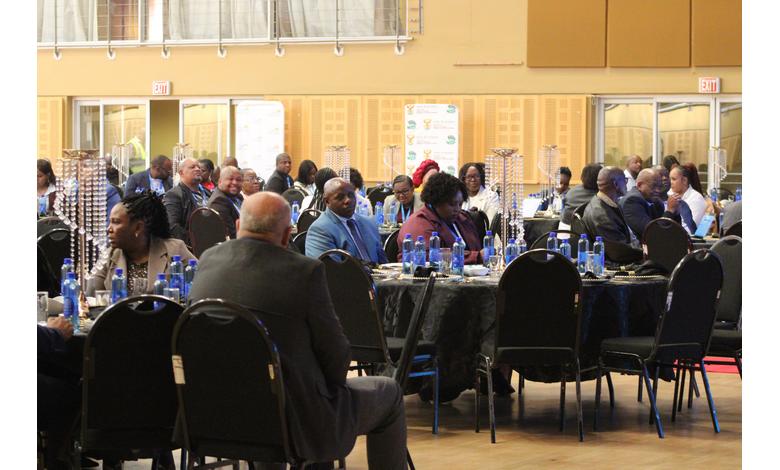
Mahlobo urged citizens to conserve water in the face of national scarcity.
“Our relationship with water must change; water must be valued. Every drop of water you waste, someone is looking for it. We are a generation that must ensure this country is water-secure not for ourselves, but for future generations.”