
KaBokweni group demands response from Mpumalanga premier on immigration memorandum
Residents in KaBokweni express frustration over unanswered grievances as government outlines a consolidated national approach to immigration.
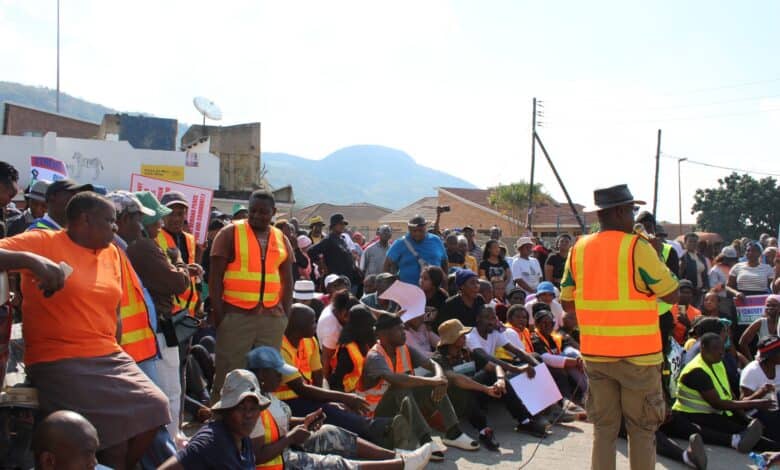
A local community organisation claims Mpumalanga Premier Mandla Ndlovu has failed to respond to a memorandum of grievances handed over on June 26.
The KaBokweni Community Movement (KCM) and residents staged a peaceful protest at the local police station to submit the memorandum detailing concerns about undocumented foreign nationals in the area. In it they demanded that undocumented immigrants be barred from using public institutions, including schools, clinics and hospitals, and from being employed in positions that should be filled by South Africans.
The document was addressed to Ndlovu, who was given seven days to respond.
Residents voice frustration over neglect
One of the founding members of KCM, Joshua Malope, said the premier’s failure to address the public directly showed a lack of care for his people.
“We are being neglected. At least he could write back to us in response to the memorandum. It could give us hope that he is working behind the scenes to curb these problems we detailed,” he said.
Community member Thabo Sifundza said he was losing faith in the government, saying it is not active in the community, especially when grievances were vocalised through protests.
“We will not win the fight against illegal immigration as citizens alone. We need the government to deal with crime and the incorrectly documented foreign nationals who own spaza shops in the township,” Sifundza said.
ALSO READ: Mpumalanga SAPS lays out plans for expected national protest
Government outlines consolidated action plan
When approached, the chief director of communication of the Mpumalanga Provincial Government, George Mthethwa, said Ndlovu was aware of the memorandums directed to him by multiple protest groups across the province in June.
“The premier is in fact working in the background to tackle responses to the public’s grievances. He has embarked on several meetings and engagements to deal with matters,” Mthethwa said.
According to Mthethwa, instead of replying to each memorandum, the province had submitted its consolidated plans to the Interministerial Committee (IMC), as directed by the president at the beginning of June.
“It is a matter of national competence and feedback, and results are communicated by the minister of justice and constitutional development, Mmamoloko Kubayi,” Mthethwa explained.
He said consolidated plans were derived from meetings with Ndlovu’s executive council and heads of provincial departments.
Mthethwa confirmed that movement operations were intensified by the Border Management Authority and Department of Home Affairs at posts such as the Lebombo and Oshoek border posts, along with SAPS operations Shanela and Vala Umgodi.
“The premier further directed intense monitoring of municipal by-law compliance and registration of spaza shops on a regular basis,” he said.
Mpumalanga News previously reported that a June 9 meeting led by Ndlovu involved the Mpumalanga Provincial Joint Operational and Intelligence Structure in response to President Cyril Ramaphosa’s call for a more co-ordinated and lawful approach in addressing immigration challenges across the country.
He directed respective departments to tackle the following:
• economic cluster to intensify the closure of illegal and unregistered informal businesses and assess the compliance of shops to mitigate the risk of poisonous food
• local government sector to enforce by-law compliance and eradicate illegal land occupation
• security cluster to reduce border crime by intensifying search operations to identify undocumented foreign nationals
• education sector to conduct 100% verification of undocumented learners at schools and embark on awareness campaigns for the enrolment of documented learners.
ALSO READ: Mpumalanga MEC assesses Lebombo Border operations ahead of March and March protests
National committee reviews migration legislation
On Sunday, July 26, Kubayi issued a statement on behalf of the IMC outlining progress made in implementing the Five-Point Plan on Migration Management. The plan was described as a comprehensive, co-ordinated national programme, bringing together all spheres of government, law enforcement agencies, border authorities, municipalities and social partners.
“We have observed that there are still individuals who impersonate Home Affairs officials and target foreign nationals and businesses for these illegal identity searches, and sometimes extortion,” she said. “We want to urge whoever is involved in this wrong practice to desist from it or face the might of the law.”
On borderline infrastructure upgrades, the committee confirmed that a memo would be tabled before the Cabinet for a decision to commence critical infrastructure projects. These phased projects will prioritise the deployment of technological infrastructure to keep up with sophisticated criminal networks and syndicates that exploit technological vulnerabilities.
This is in addition to work on the redevelopment of six of South Africa’s busiest ports of entry, namely Lebombo, Beitbridge, Oshoek, Ficksburg, Maseru and Kopfontein. Construction is expected to start at the beginning of 2027.
Kubayi said a review of policy and legislative areas that may be contributing to weaknesses in migration management was also under way.
“Our objective is to strengthen enforcement mechanisms, improve co-ordination among institutions, address regulatory gaps and ensure that South Africa’s migration system remains effective, fair and aligned with constitutional principles.”
Among these were the Citizenship, Immigration and Refugee Protection Bill, the Employment Services Amendment Bill and the Business Licensing Bill, which seek to reserve certain business activities and sectors wholly or partly for South African citizens.
According to Kubayi, the IMC has maintained active engagement with affected states as part of efforts to manage current migration pressures and ensure that temporary interventions lead to sustainable solutions. Current engagements included continued co-operation with countries such as Malawi and Zimbabwe regarding migration management and repatriation arrangements.
“We believe that establishing a dedicated agenda item at the African Union to address the primary push-and-pull factors and root causes of irregular migration, focusing squarely on good governance, democracy and economic stability, will enable the development of a pragmatic, comprehensive approach to continental migration challenges.”
To boost the African economy, she said the Department of Trade, Industry and Competition (DTIC) would hold discussions with sectors such as hospitality, agriculture and tourism on local employment and economic growth in the next two weeks.
Furthermore, the Department of International Relations and Co-operation and the DTIC would together convene a meeting with businesses invested in other parts of the African continent to understand the challenges they are experiencing and the overall impact of current migration issues.