
Lowveld murder: Sonell Joubert’s bail denied, latest affidavit fails to sway court
Despite her legal team filing a supplementary affidavit earlier this month, Sonell Joubert was denied bail.
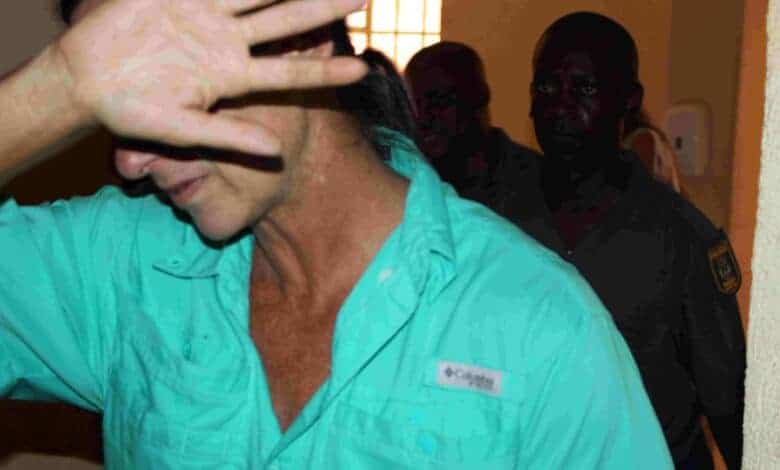
Murder-accused Sonell Joubert (43) was denied bail in the Tonga Magistrate’s Court on Monday.
According to an article published by Lowvelder, Magistrate Ningi Neko delivered the judgment during Joubert’s fourth appearance since Jurgens Nel’s body was found on Lowhills Farm in Mpumalanga on February 3.
She has been incarcerated since February 4.
Bail was denied and Joubert will remain in custody until March 27, despite her legal team filing a 131-page supplementary affidavit on February 18, the day Neko was set to deliver judgment. The affidavit details her version of what happened from February 1 to February 3.
On February 18, Joubert’s newly appointed attorney promised to present new information relating to the case that he believed would secure her release on bail. Neko, however, found it amounted to nothing more than an attempt to counter evidence previously presented by the investigating officer, Sergeant Bonginkosi Given Nguyuza.
Neko accepted the State’s arguments that Joubert constitutes a flight risk, and that she would likely interfere with witnesses, or harm herself and/or others if released on bail.
Despite Joubert offering to surrender her passport, to report to the local police regularly, and to have the State monitor her whereabouts in real-time, Neko accepted the State’s assertions that the police would struggle to locate Joubert if released on bail. The court shared another of the State’s concerns – Joubert’s lack of a fixed address, as she had been ordered to leave the farm she resides on, and her elephant, Tswale, had been relocated on Friday, February 21.
Meanwhile, police are continuing investigations to determine the details of Nel’s death.
Various versions of events
What they know for certain, according to Nguyuza’s previous testimony, is that Nel was killed on February 1. “The accused stabbed the victim to death, locked him in the house, and falsely accused him of violating a protection order,” Nguyuza said. Neko questioned Joubert’s intended plea of self-defence, stating that Nel had six serious stab wounds, whereas Joubert’s wounds were limited to a finger injury and a cut below the eye.
During the prosecution process to date, the various versions of events paint a clearer picture of how Nel ended up residing on Lowhills in the first place, and how his treatment of Joubert and her employee, Xolani Ntshalintshali, resulted in protection orders being issued against him. This included different versions of what happened between Joubert and Nel prior to his death.
To date, the murder weapon has not been located.
How did Nel end up living on Lowhills and what followed?
A local church had asked Joubert and her life partner, Johann Möller, if they would house Nel as he had struggles, including being unemployed and without accommodation.
They offered to do so, but would soon regret their decision, seeking the Nkomazi District Court’s help in barring Nel from assaulting or threatening Joubert and Ntshalintshali. Joubert has indicated that Nel had contravened at least one of these orders on February 1. According to a sworn statement by Ntshalitshali that forms part of the court docket, but was not read into the record, he was with Joubert during the last moments of an altercation between her and Nel.
Ntshalintshali’s affidavit explains that he was working on the farm when a water pump issue required Joubert’s assistance at the electric switchboard, 17m from Nel’s house.
Joubert then, for reasons unknown to Ntshalintshali, entered the property where Nel resided. Ntshalintshali heard a loud scream and ran over to find Joubert and Nel wrestling in his room. Ntshalintshali feared for his and Joubert’s life and intervened, managing to separate the two. According to his affidavit, Nel fell next to an axe, after which he (Ntshalintshali) yelled: “Axe! axe!”, and grabbed Joubert’s wrist and they fled the house.
After the incident, he noticed stab wounds to his leg, inflicted during the brawl. Ntshalintshali indicated that he does not know who stabbed him.
The State prosecutor, however, said Ntshalintshali’s statement, while filed by the defence, had been sworn to by a State witness. This contributed to the court’s finding that Joubert would likely interfere with state witnesses and should, therefore, be refused bail.
The State and defence differ with regard to the events that followed the February 1 altercation. According to Joubert’s statement, the police were called during the incident on February 1. Nguyuza testified that the police went to the scene where they were told by Joubert and Möller that Nel had locked himself inside the house and that he was aggressive and armed. Nguyuza stressed that the house, however, had been locked from the outside with a padlock. Joubert, on the other hand, pointed out that the house had two alternative doors to which Nel had the keys, as well as gauze windows, which could be used to exit the house.
Nguyuza testified that Joubert instructed the police to leave. Unable to access the premises, they departed. Joubert and Möller went back to their home about 4km from the scene.
In her sworn statement, Joubert denied having asked the police to leave the scene, stating they saw movement and heard noise in the house while the police were there. She also said the lights were turned on and off in the house in the police’s presence.
On February 3, Nguyuza and seven other police officers went back to Lowhills. They met Joubert and Möller who gave them the keys to the padlock. In the kitchen, they found Nel’s body. He had six stab wounds.
While testifying, Nguyuza shared his belief that Nel had been dead for two to three days upon being discovered. In response, Joubert indicated the incident between her and Nel had taken place in the bedroom and not the kitchen where his body was found.
In addition to placing her version of events on record, Joubert’s attorney, Marco Lamberti, argued that the charge she faces should not be one of premeditated murder, which is a serious charge in terms of Schedule 6 to the Criminal Procedure Act. The State disagreed and Neko found in the State’s favour, stating Joubert could not be trusted.
In her judgment, Neko referred to Joubert and Möller’s alleged evasion of the police when they were attempting to execute a high court-issued warrant for her arrest in another matter. Neko concluded that any Schedule 6 accused would have to present exceptional circumstance to justify their release, and Joubert had failed to do so.
Lamberti said he will be requesting leave to appeal.
Joubert remains in custody, pending further investigations. The case has been postponed to March 27.
Breaking news at your fingertips… Follow Caxton Network News on Facebook and join our WhatsApp channel.
Read original story on www.citizen.co.za

