
Northern Cape farm becomes safe haven for world’s smallest tortoise
A rare tortoise finds refuge on a historic farm where conservation and centuries of heritage now go hand in hand.
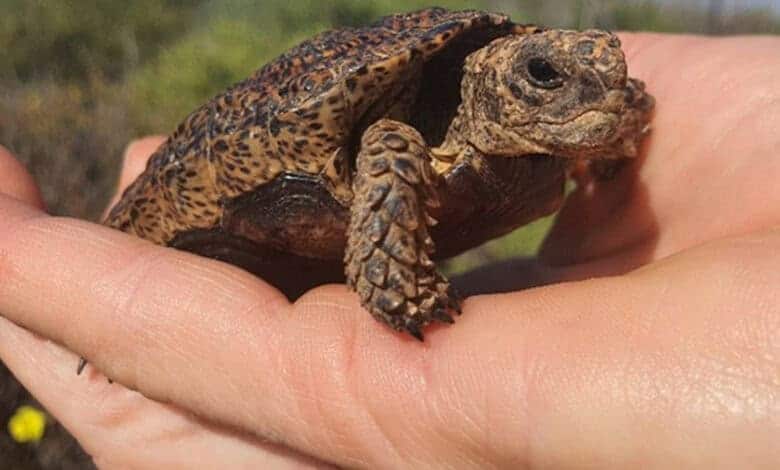
A century-old farm in the Northern Cape is now a safe haven for the world’s smallest tortoise species, which is native to South Africa.
The Endangered Wildlife Trust (EWT) has registered the first conservation servitude aimed at protecting the critically endangered speckled dwarf tortoise.
The Witness reports that the Lokenburg Conservation Servitude, located on the Lokenburg farm in the Northern Cape, is now officially protected, safeguarding not only the dwarf tortoise but the broader ecosystem it inhabits. The servitude is the result of a partnership between EWT and the Nel family, who have owned the land for six generations.
“Specific tortoise conservation management areas have been designated within this servitude, where targeted management actions and development restrictions will be in place,” said the EWT.
Species-focused conservation actions will also take place across the broader landscape and include management of the Pied Crow populations in the area, which are unnaturally high, and, through excessive predation, are driving the tortoise populations to extinction.
The speckled dwarf tortoise is endemic to tiny remnant patches of habitat stretching along South Africa’s west coast to the inland areas of Namaqualand. Although the broader region is vast, viable tortoise populations remain extremely isolated.
Lokenburg lies in the district of Nieuwoudtville, a region renowned for its springtime floral displays and rich biodiversity.
According to the EWT, the farm is particularly significant for two reasons – it was the first in the area to receive title deeds in 1774, and it’s the only property to have dwellings built by every generation of the family who have lived there.
Current owners Nelmarie and Herman Nel farm sheep, cattle and rooibos tea. They recently joined the South African Essential Oil Producers with plans to expand this sector sustainably, benefitting both their community and the environment.
But their biggest contribution may be the preservation of biodiversity. The Lokenburg Biodiversity Management Plan, developed in partnership with EWT, lays out conservation actions, agricultural restrictions and training plans that will ensure the continued protection of the land and its wildlife.
“[The plan] ensures, through collaboration, that no detrimental forms of development, or agricultural activities, will take place within the focal areas,” said the EWT.
South Africa has more tortoise species than any other country. Nine of the 13 southern African tortoise species are found in the arid Karoo region where they face multiple threats, including habitat loss and degradation, predation, illegal collection and uncontrolled fires.
Other species earmarked for future monitoring include the endangered Ludwig’s Bustard and Martial Eagle, along with vulnerable species such as the secretary bird and Verreaux’s eagle.
Breaking news at your fingertips… Follow Caxton Network News on Facebook and join our WhatsApp channel.
Nuus wat saakmaak. Volg Caxton Netwerk-nuus op Facebook en sluit aan by ons WhatsApp-kanaal.
Read original story on witness.co.za

