
World Water Day: Half of SA’s water lost as ageing infrastructure crisis deepens
Water and sanitation experts warn that ageing infrastructure, the lack of maintenance and a lack of proper funding are adding strain to the country’s already limited water supplies.
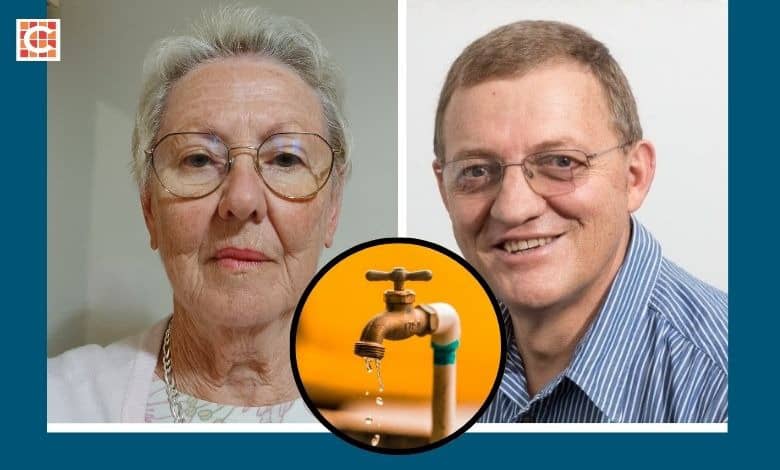
As the United Nations observes World Water Day today to raise awareness of the more than two billion people living without access to safe water, experts weigh in on South Africa’s current challenges.
Prof Kobus du Plessis from the Department of Civil Engineering at Stellenbosch University says water availability in the country is at risk because we have failed to address the three goals of the National Water Resource Strategy set out by government.
The goals are that water and sanitation must contribute to economic growth, that water resources must be protected and that poverty and inequality must be eliminated.
Du Plessis says that from a water resource point of view, we are already facing serious water availability challenges.
Water resources
“These challenges are simply due to the lack of development of new water resources – creating more storage capacity, the diversification of our water resources and the consideration of alternative options, such as water reuse and desalination,” explains Du Plessis.
He believes these additional resources are needed to ensure sustainable growth, as we are seeing a significant influx of people to cities.
“Availability can also be limited by the significant loss of water through our distribution systems. We are facing losses of around 50%, which is certainly not acceptable if we want to be comfortable with the availability of our already limited water resources. This is mainly due to a lack of proper maintenance and technical capacity at all levels of water governance,” he adds.
Du Plessis says the broader community must be more aware of the country’s water situation and reduce demand by using water more effectively and efficiently.
Infrastructure
“The main challenge resulting in the dramatic failures we are observing in many local municipalities in South Africa is the lack of proper maintenance of existing infrastructure,” he adds.
Du Plessis explains that typical water infrastructure, such as pipes and reservoirs, can withstand poor maintenance for a long period, but once it starts to fail, it almost always becomes an irreversible process that becomes expensive to turn around.
He adds that the main reason for poor maintenance is a lack of proper funding, which reflects a poor understanding by local authorities of the importance of allocating appropriate funding to ensure proper maintenance.
“It also seems that in many municipalities, there is simply a lack of commitment to resolve these issues, as seen in the long response times to critical failures. We need to professionalise our municipal water sector again,” he adds.
Droughts
Another challenge in South Africa, Du Plessis says, is the lack of early warning systems for droughts, due to limited expertise and inadequate planning in the water sector.
“The result is not only a direct impact on many economic activities within municipalities but also a significant negative impact on our agricultural sector, putting food security at risk. All of this has a direct impact on job creation and economic growth,” he adds.
He says a solution is to have adequate information available, with a basic set of data, including proper recording of rainfall and water supply levels, whether dam levels or groundwater levels.
“This will enable informed decision-making to respond to approaching challenges. Municipalities also need access to appropriate expertise to advise them on approaching below-average rainfall periods, or they need to build that expertise in-house.”
Du Plessis says many municipalities do not have a planned strategy to respond to low dam levels.
“It is not useful to simply apply restrictions once water levels drop below a set level. That is reactive and, in many cases, too late. An appropriate risk assessment of their available water resources is the absolute minimum,” he adds.
Water and sanitation
Dr Jo Barnes, a senior lecturer at Stellenbosch University’s Department of Global Health, says water provision and sanitation are inextricably linked.
“Poor sanitation allows sewage and chemical pollution to enter our rivers and streams, dams and the oceans. These harmful substances pollute our drinking water sources and put more pressure on already failing purification works that are trying to clean that polluted water, thus forming a vicious circle,” she says.
Barnes adds that in many urban areas, the increase in population has outstripped the available water supply systems for more than a decade now.
Dirty streams
“In the Highveld region and in KZN, for instance, there is abundant water available at present, but many communities do not have access to safe water and are forced to walk long distances to access dirty streams,” she explains.
She says the solution to this growing crisis lies entirely in the hands of all tiers of government.
Accountability
“The delivery of services is subject to overly powerful political control, while the technical and practical aspects are neglected or ignored, often for reasons that serve politicians, not the communities. The funds allocated to the provision of water and sanitation services amount to billions of rands, but the actual services delivered are frequently unacceptable,” she says.
Barnes adds that there is a general lack of accountability among officials who are employed to design, maintain and deliver these services.
“Until there is a proper structure where all officials can be held accountable for their decisions in a fair and impartial manner, there will only be cosmetic efforts to make the services appear better than they actually are,” she says.
Breaking news at your fingertips… Follow Caxton Network News on Facebook and join our WhatsApp channel.
Nuus wat saakmaak. Volg Caxton Netwerk-nuus op Facebook en sluit aan by ons WhatsApp-kanaal.
Read original story on www.citizen.co.za

