
West Coast cubs signal rare apex predator return after nearly 200 years
A rare leopard recovery is underway in a coastal region north of Cape Town, but scientists warn the population remains highly vulnerable.
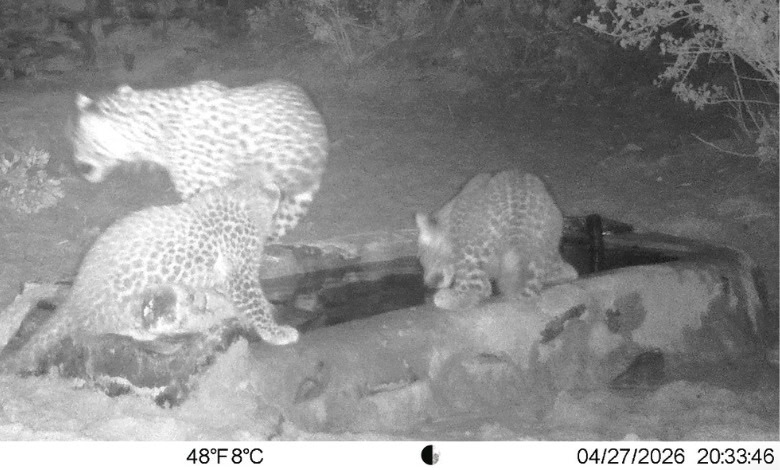
The Landmark Rewilding Trust’s Leopard & Predator Project has confirmed the first leopard cubs to be photographed on the West Coast of South Africa. Researchers say the sighting marks a major milestone in the species’ natural recolonisation of the region.
Unlike a ‘reintroduction’ – where animals are physically moved by humans – this ‘recolonisation’ represents a natural expansion of the leopard’s range into its ancestral territory.
The two cubs, estimated to be around three to four months old, were recorded on camera traps – remotely triggered wildlife cameras – alongside a female leopard during routine monitoring in a West Coast survey area. The area stretches between Cape Town and the Berg River north of Langebaan.
The organisation has not disclosed the exact location, citing safety concerns for the animals.
Project leader Dr Bool Smuts says the images represent the first confirmed breeding activity in the region in nearly two centuries.
The project began formal camera trap monitoring in 2019 after early indications suggested leopards were returning to the area, long believed to have been cleared of the species in the 1800s.
From extermination to breeding confirmation
According to the project, leopards were historically exterminated along the West Coast by the 1840s following centuries of persecution. Early signs of return only emerged around 2015, initially through spoor, followed by occasional unclear camera images.
The structured research programme that followed recorded a gradual increase in detections over time, beginning with sporadic adult males typical of dispersing individuals in recolonisation zones.
By 2022, researchers confirmed the presence of a resident female leopard in the area. Until now, however, no cubs had been recorded.
The latest footage confirms at least five adult leopards – four males and one female – have been recorded in the broader West Coast and Swartland survey area over the past three years, along with the newly observed cubs.
“They look healthy,” Smuts says of the female and cubs.
Early-stage recovery with risks
While the findings have been described as significant for conservation, researchers caution that the population remains in an early and vulnerable phase.
Smuts says the situation is unfolding, adding that long-term population estimates will depend on further scientific analysis of camera trap data collected along fixed survey routes in the region.
When asked about key risks facing the emerging population, Smuts was direct, identifying human activity as the primary concern.
Conservation context and coexistence
The Landmark team says the return of leopards reflects broader shifts in land use and attitudes towards wildlife in the region, including increased conservation-minded landholding and reduced historical hunting pressures.
There has also been an expansion of protected areas and what the project describes as improved coexistence practices among landowners.
The organisation has previously reported rescuing 78 leopards from persecution over the years and says it continues to support landowners willing to accommodate wildlife.
The project is currently following a minimal-intervention approach in the area.
“Leave them alone,” Smuts says, noting that the cubs are currently located on conservation-minded landholdings where non-interference is considered the most effective protection measure.
A rare ecological return
The project says top carnivore recolonisation in areas where they were previously wiped out is globally rare, making the West Coast development particularly notable. Further analysis of the data is expected to refine understanding of population size and long-term viability, but researchers say the current findings already point to a significant ecological shift in a landscape where leopards were once considered locally extinct.
Breaking news at your fingertips… Follow Caxton Network News on Facebook and join our WhatsApp channel.
Nuus wat saakmaak. Volg Caxton Netwerk-nuus op Facebook en sluit aan by ons WhatsApp-kanaal.
Read original story on www.citizen.co.za

