
Video: 250kg lion thriving after private jet flight to KZN
Born into one of South Africa's best-known bloodlines, Kambro's relocation is helping maintain the country's lion genetic diversity.
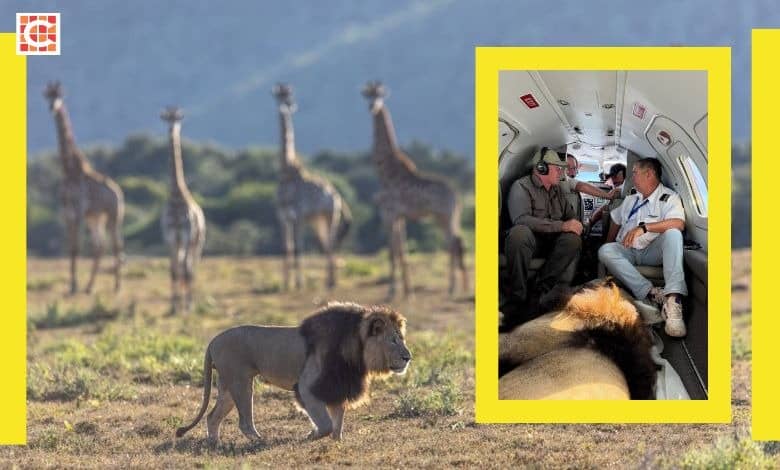
An eight-year-old male lion weighing 250kg from the Eastern Cape has settled into his new home at Somkhanda Game Reserve in KZN.
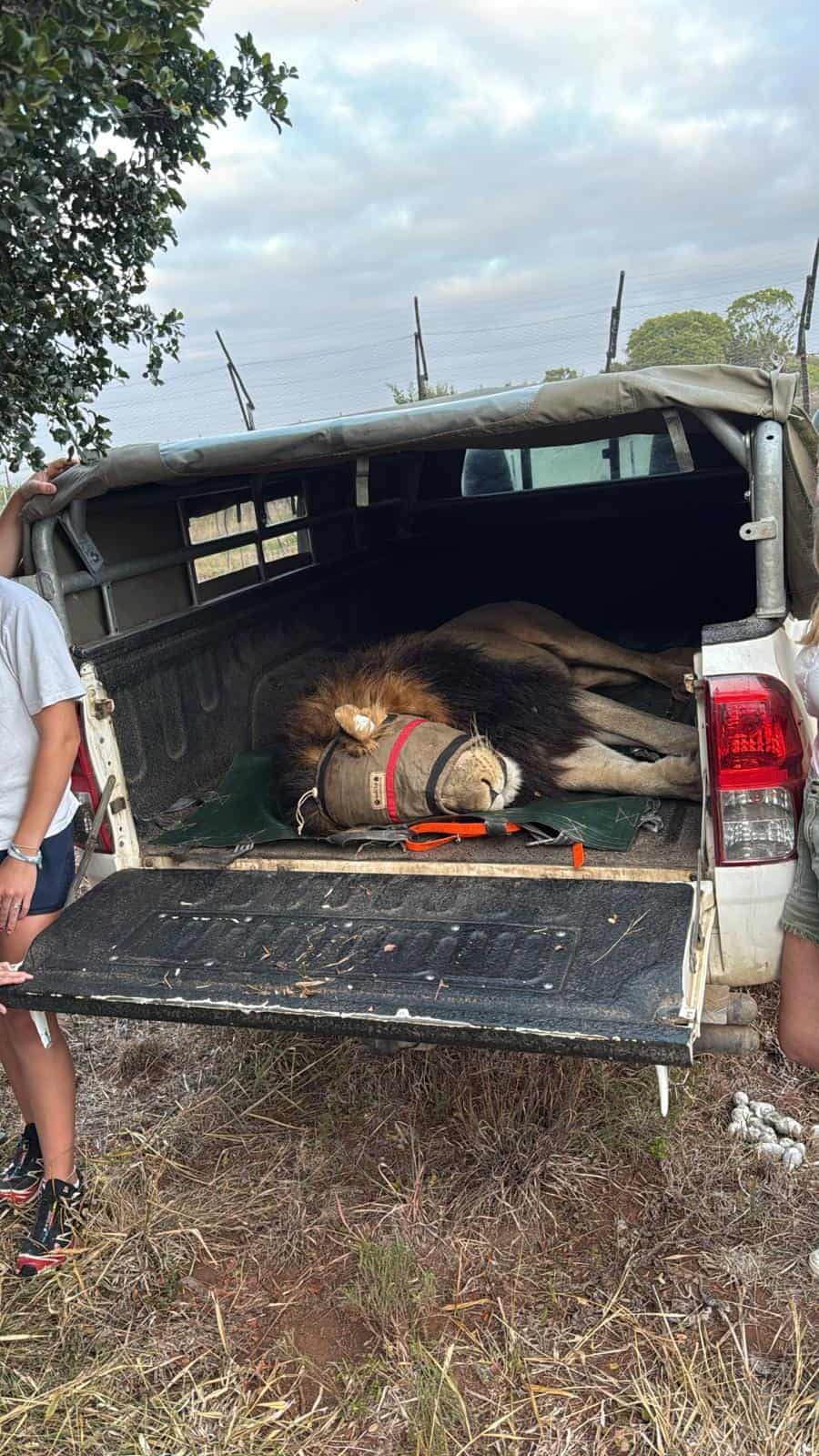
Kambro was flown to the reserve in January by private jet as part of a conservation programme to strengthen South Africa’s lion population.
He is the son of Sylvester, a first-generation Kalahari-origin lion who made headlines in 2015 when he escaped from Karoo National Park near Beaufort West.
At the time, Sylvester was three years old.
Trackers nicknamed him ‘Spook’, the Afrikaans word for ghost, because of his ability to evade capture for 24 days.
Famous father
Sylvester escaped again in 2016 before he was eventually relocated to Kuzuko Private Game Reserve in the Eastern Cape, where, in 2017, he fathered Kambro and his brother, Gamka.
In a nod to their famous father, the cubs were named after the Karoo landscape.
Kambro and Gamka were eventually moved to the Magic Hills Private Collection for conservation purposes. In November 2021, Kambro was transferred to Kariega Private Game Reserve in the Eastern Cape.
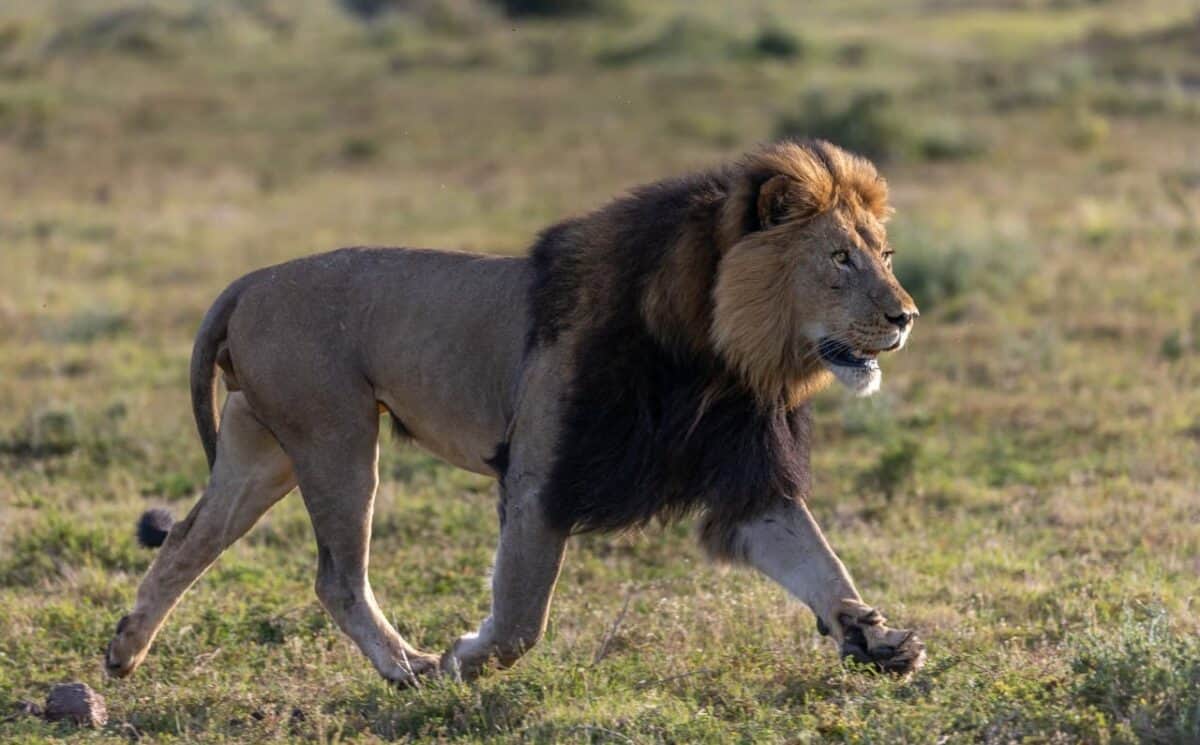
There, he established himself as the dominant male and had two litters, which included three cubs and four cubs respectively.
Chris Reyneke, an ecologist at Kariega Private Game Reserve, explains Kambro was relocated to KZN to prevent inbreeding because his daughter had reached reproductive age, while also contributing to broader lion conservation efforts.
Relocation by jet
His relocation was not an ordinary one, as Kambro was transported by private jet courtesy of Ace Jet Aviator Lounge.
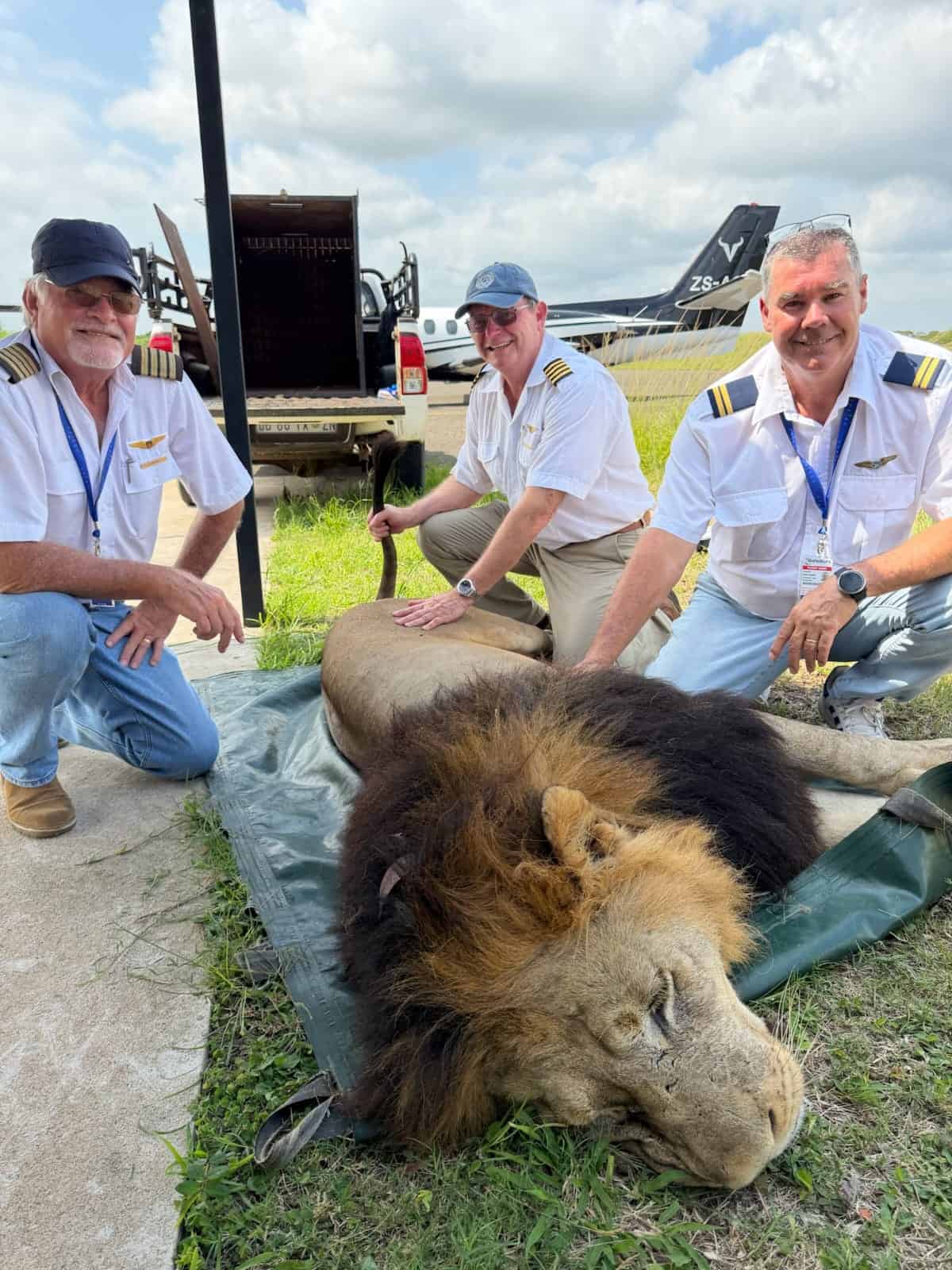
The company recently shared a video of the relocation on social media, attracting more than three million views on Instagram. Colin Whitaker, the owner of the company, says Kambro was transported aboard an Ace Jet Citation 501 aircraft.
The carefully co-ordinated operation was facilitated by The Bateleurs, South Africa’s only environmental air force, and supported by wildlife veterinarian Ryan van Deventer. The fuel and veterinary expenses were sponsored by Ivan and Brooke Carter, while the Flight Training College sponsored the pilot’s flying time.
Flying the safest option
“Road transport across South Africa’s vast landscape is tough on large predators. The Eastern Cape to KZN by road is a long haul, with rough terrain, unpredictable heat and hours of vehicle vibration that compound the risks of extended sedation,” says Whitaker.
He adds that for an animal of Kambro’s size and genetic significance, that kind of risk exposure was simply not an option.
“Flying Kambro reduced the travel time. It shortened the sedation period, minimised stress on the animal and gave the veterinary team far greater control over the environment,” he says.
Whitaker described Kambro’s flight as ‘ecologically important’.
“Lions are classified as vulnerable on the IUCN [International Union for Conservation of Nature] Red List, with population pressures driven by habitat loss, human-wildlife conflict and restricted gene flow between isolated reserves.”
Modern conservation
He explains that South Africa’s response to this challenge is a co-ordinated approach known as metapopulation management.
“This is a system in which lions are strategically moved between participating reserves to maintain genetic diversity, prevent inbreeding and support population stability across the broader network.”
He adds that by introducing Kambro, a genetically valuable male with a proven siring history, into Somkhanda’s pride structure, conservation managers are strengthening the long-term health of the lion population across multiple reserves simultaneously.
Whitaker describes the process as ‘modern conservation’.
“It’s not about keeping lions in one place but rather about managing living populations across dynamic, interconnected landscapes. Every successful translocation adds resilience to a species that needs it,” he adds.
Kambro is thriving
Meiring Prinsloo from the Somkhanda Game Reserve adds that Kambro is doing well and is settled into his new environment.
“Kambro was supported through a successful soft-release strategy whereby he was first released into a holding boma upon arrival and from there he was released onto the reserve. He has also been seen with some of the other lions on the property.”
Click the image to watch the video:
Breaking news at your fingertips… Follow Caxton Network News on Facebook and join our WhatsApp channel.
Nuus wat saakmaak. Volg Caxton Netwerk-nuus op Facebook en sluit aan by ons WhatsApp-kanaal.
Read original story on www.citizen.co.za

