
Are farmers being milked while consumers pay the price?
Dairy farmers are producing more and cutting costs to survive, but consumers don't necessarily see the benefit when the price paid to producers falls.
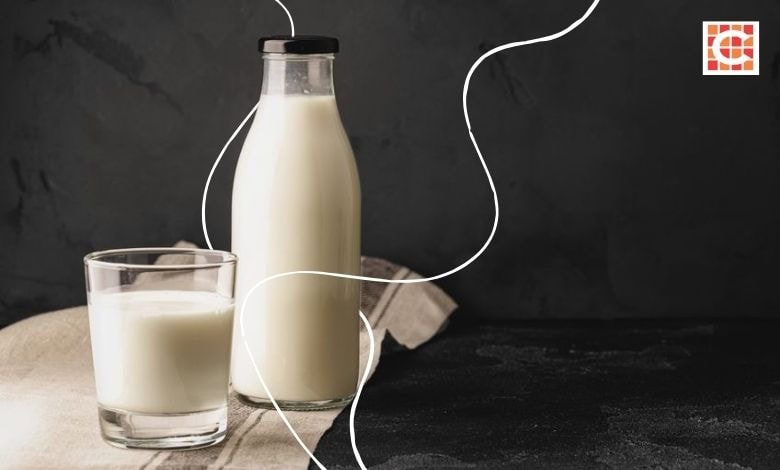
South African dairy farmers are battling rising production costs, animal disease and limited bargaining power, raising concerns about the long-term sustainability of local milk production and what it could mean for consumers.
South Africans buying milk at the supermarket may not see the financial pressure building on dairy farms. Still, the squeeze on producers raises important questions about the future of a household staple.
While consumers keep paying for milk, farmers struggle to keep their operations profitable as fuel and other input costs rise and market competition intensifies. Lower prices paid to farmers do not necessarily translate into cheaper milk on supermarket shelves.
Published supermarket specials in October offered two-litre packs of fresh milk for around R29.99 at Pick n Pay and R32.99 for SPAR extra shelf-life fresh milk. Prices vary according to retailer, brand and promotion.
At those prices, a household buying four litres of milk a week spends approximately R260 to R286 a month on milk alone.
Farmers have little room to cut costs
A Farmer’s Weekly panel discussion at the Royal Show in KZN on October 9 highlighted the difficulties facing South Africa’s dairy industry.
Dairy farmer Tom Turner said the number of dairy farmers in South Africa had declined from around 7 500 to just 830 during his farming career, as producers were forced to expand and improve efficiency to remain viable.
Even among efficient producers, profitability remains a concern.
Turner said that in a study group of 65 dairy farmers, only the top 20% consistently achieved returns on capital exceeding what they could earn by investing their money in the bank.
“Most dairy farmers would be financially better off selling their operations and putting their money in the bank,” he said, adding that the figures came from a particularly good year for dairy farming.
Dairy farmer Andrew Morphew illustrated the pressure on producers by comparing milk’s purchasing power with the cost of diesel. In 2016, a farmer needed to sell 1.49 litres of milk to buy a litre of diesel. By 2026, that same litre of diesel cost the equivalent of 3.6 litres of milk.
Morphew said farmers had responded by increasing production and reducing costs, but that this approach was reaching its limits.
“We are putting more milk into a market that doesn’t have the money to pay for it,” he said.
Turner warned that expanding production without sufficient demand growth could further undermine the industry.
“If I want to grow my farm, I am effectively putting another farmer out of business,” he said.
Foot-and-mouth disease adds pressure
According to Farmer’s Weekly, the industry is also dealing with foot-and-mouth disease, which threatens herd health and can disrupt milk production.
At the Milk Producers’ Organisation Western Cape’s AGM during Nampo Cape in Bredasdorp, chairperson Ben van Greunen described the disease as a major concern for dairy farmers during an already difficult year.
The challenge is maintaining production while managing animal health, vaccination, and biosecurity costs.
The industry cannot afford to lose production capacity while farmers are already struggling with profitability.
Will consumers benefit from lower farm-gate prices?
The price consumers pay for milk reflects more than the amount farmers receive. Processing, packaging, transport, refrigeration and retail costs all contribute to the final price.
Consequently, a reduction in the price paid to farmers does not automatically mean that supermarket prices will fall by the same amount.
Turner also questioned whether farmers’ efficiency standards matched those applied throughout the dairy supply chain.
“Farmers benchmark themselves internationally, but are our processors and retailers doing the same?” he asked.
He argued that the industry needed stronger investment in marketing, product innovation and exports to expand demand rather than forcing farmers to increase production in an increasingly competitive domestic market.
“For consumers, the concern is not simply whether the next bottle of milk will cost less. Continued financial pressure on producers could threaten the sustainability of farms and the industry’s ability to maintain local supply,” Turner added.
Although the current pressures do not guarantee higher retail prices, they underline the need to understand how costs and margins are distributed throughout the dairy supply chain.
South Africa’s challenge is to maintain an economically viable dairy industry while keeping milk affordable for households.
Breaking news at your fingertips… Follow Caxton Network News on Facebook and join our WhatsApp channel.
Nuus wat saakmaak. Volg Caxton Netwerk-nuus op Facebook en sluit aan by ons WhatsApp-kanaal.
Read original story on www.citizen.co.za

