
Eskom battled desperately to keep the lights on as promised by President Cyril Ramaphosa
Eskom would still need to appoint a specialist.
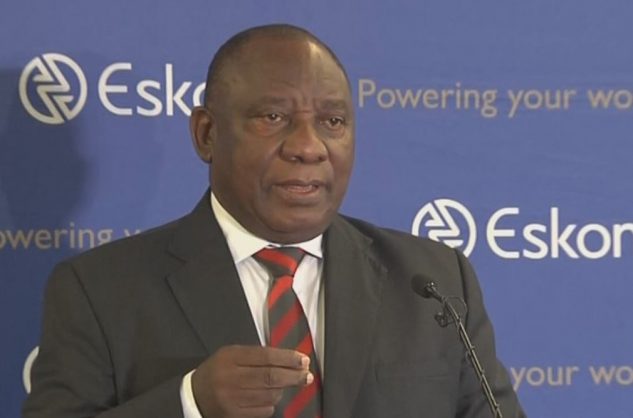
As Eskom battled desperately to keep the lights on as promised by President Cyril Ramaphosa, news the Green Scorpions would be shutting down two units at one of Eskom’s biggest plants if it did not submit a maintenance plan for the plant by January 12 has already hit a stumbling block.
Eskom environmental manager Deidre Herbst said the utility planned to engage with the authorities regarding timelines to submit the requested maintenance plan at Kendal.
“The compliance notice requires an independent specialist to provide the plan for units 2,3,4 and 6,” Herbst said.
“Eskom would still need to appoint such a specialist.”
However, said Herbst, the Scorpions would be engaged about switching off units one and five, “and in parallel will be working hard toward bringing those two units into compliance.”
On the other hand, Robyn Hugo, CER Programme Head: Pollution & Climate Change at the yesterday welcomed news the Green Scorpions was starting to act against “serial polluter” Eskom.
“The departments’ use of the law and legislation to enforce environmental compliance and ensure SA is implementing emissions reduction strategies is long overdue,” Hugo said.
“Long overdue” meant as far back at 2009 when the National Ambient Air Quality Standards (NAAQS) were published under the National Environmental Management Air Quality Act.
“The NAAQS established set limits for priority pollutants in South Africa, and indicate what levels of exposure to air pollution are generally safe for people, and the environment”, a background information document (BID) on CER’s website stated.
In 2013 Minimum Emission Standards set two broad compliance timeframes, April 1, 2015, for “existing plant” limits, followed by more stringent ‘new plant’ limits to be complied with by 1 April 1, 2020.
In 2014, Eskom was granted a five-year postponement for most of its plants by the Department of Environmental Affairs (Forestry and Fisheries) from the compliance timeframes for 16 of its power stations in respect of the particulate matter (PM), sulphur dioxide (SO2) and nitrogen oxides (NOx).
According to the BID, Eskom intended to submit applications for postponement for 14 of its power stations to the National Air Quality Officer at the DEA by 31 March 2019 however it appeared new minister Barbara Creecy wasn’t having any more disruptions.
In June Creecy was served with legal action from Groundwork and Vukani Environment, represented by CER and agreed there was “air quality challenges” in the Mpumalanga Highveld Area.
The loss of two units from Kendal could knock up to 1 300MW from a system already on life support, with unplanned power loss reaching 13 154MW on Friday, 14 294W on Saturday and dropping to 12 956 yesterday.
It’s the open cycle gas turbines keeping the lights on at the utility at the moment. In the Eskom group annual results for the year ended March 31, Eskom and independent power producers OCGT costs increase by R5.9 billion to R6.5 billion in the last financial year.
Eskom said yesterday the system was still “constrained and vulnerable” and was trying to bring its unplanned breakdowns to under 9500MW.
Read original story on citizen.co.za

