Road test: Haval Jolion Pro 1.5T Ultra Luxury 7DCT
While the Pro hasn’t departed from Haval’s successful formula, a wealth of new models from Chinese and more established marques means it might not have the impact on our market that the Jolion enjoyed.
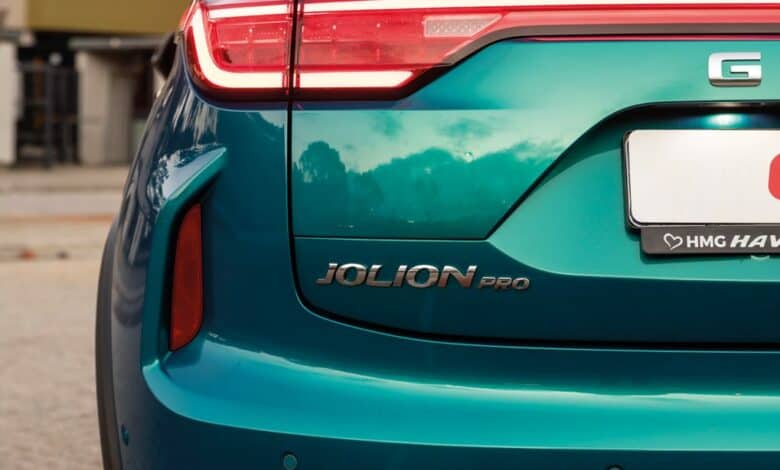
The Pro takes all that’s good about Haval’s Jolion and presents it in a fresh new suit, but has the game moved on? Read below for CAR magazine’s road test verdict.
Looking for a new or used vehicle? Find it here with CARmag!
Haval Jolion Pro 1.5T Ultra Luxury 7DCT fast facts
- Price: R462 950
- 0-100km/h: 10.48 seconds
- Top speed: 185km/h
- Power: 105kW
- Torque: 210N.m
- CAR fuel index: 9.72 l/100km
- CO2: 186g/km
When CAR magazine tested the Jolion 1.5T Super Luxury AT in September 2021, it stated that Haval might have a money spinner on its hands. And it wasn’t wrong. Since then, the striking compact crossover has regularly featured among the most popular vehicles on our market – it was 14th highest-selling car in 2023 with 8 604 examples rolling out of dealerships – and has accounted for more than 23 000 units sold between 2021 and 2024. But even as we bolted our testing equipment to the Jolion, things were firmly afoot in Haval’s home market. This firm, and its parent company GWM, have tended to stagger their product launches to favour its domestic market’s requirements, meaning that what’s newly released to export markets such as our own have since been discontinued in China. The car you see here was introduced to Haval’s local lineup at the end of 2021 as the Chitu and has joined Haval’s South African portfolio under the more familiar Jolion Pro moniker. Here, it replaces the mid-spec Premium and Luxury models, while the Jolion soldiers on in entry-level City and City Plus specifications.
Say what you will of the outgoing Jolion’s styling, but it is eye-catching. Elements such as the ‘tear mark’ LED daytime running lights on higher-tier models, bold grille garnishes and striking C-shaped brakelamps ensured never fell into the cookie-cutter design trap that’s ensnaring some of its rivals. And it’s with this in mind that CAR magazine considers the Pro’s execution a bit of a mixed bag. It certainly looks neat and upmarket, and the iridescent paintwork applied to our test unit is suitably lustrous. But you get the impression that the above-mentioned cues have been watered down somewhat. The grille, although still bold and chrome-accented, is a demurer item, while the LED ‘tear marks’ have become elements within the faux front air dams, and those distinctive brakelamps have made way for more generic, but currently in vogue, units with a bridging apex. In contrast to the bold advances taken by the likes of Jaecoo and Beijing, this feels more like a sideways step.
Related: Top 10 Best-Selling Automotive Brands Locally – September 2024
It’s a similar story in the cabin. There’s little changed from the innards of the preceding Jolion that CAR magazine admired for its good perceived quality and pleasing aesthetics, and the inclusion of reach and rake adjustment for the steering column improves ergonomics. Yet, the elements that previously irked remain; the keyless entry sensor is only on the driver’s-side door, a fiddly HVAC interface with small on-screen touch points, and an infotainment system that, while function-rich, features an operating system that often interleaves settings within sub-menus that don’t always correspond to the functions you’re after. It’s nitpicky stuff, but when the rest of the package is so well executed it tends to jar a little. Thankfully, the Pro’s packaging is similarly generous to that of the outgoing Jolion, with 615mm of rear legroom and a 232l boot that expands to 936l with the 60:40-split rear seatbacks folded.

Drivetrain and throttle calibration have been weak points in some of the Chinese SUVs we sampled of late; often manifesting in engines that are unrefined and thirsty and operate at the behest of hair-trigger-sensitive accelerator pedals. Thankfully, the Pro is a composed performer. Coupled with a smooth seven-speed dual-clutch transmission, the 1.5l turbopetrol’s 105kW and 210N.m outputs mean it doesn’t labour or drone under acceleration, and the throttle is easily modulated, ensuring town driving is a lurch-free affair. A hint of low-rev lag means the 0-100km/h sprint is despatched in a leisurely 10.48 seconds, while our mixed-use fuel run saw the Pro returning 8.47l/100 km, close to Haval’s claimed figure and good for a shade under 600km between fill-ups.
There’s little to complain about handling-wise here. The lightweight L.E.M.O.N platform from the Jolion underpins this model and contributes to a 1 452kg kerb weight and a steady anchor point for MacPherson-strut front/torsion beam rear suspension setup that does a great job of soaking up bumps and, along with steering that’s light and possessed of a fairly leisurely gearing, it gels well with the car’s relaxed demeanour. Despite its softer springing, the suspension didn’t succumb to submarining under hard braking, and our 100km/h tests saw the Pro return an impressive ‘excellent’ rating with its 2.77-second showing.
Related: More Fuel Price Relief Confirmed For October – Coastal and Inland Prices
One of the Jolion’s trump cards has been the wealth of standard specification you get for a relatively modest outlay. When we tested the comparably equipped Super Luxury model three years ago, it dipped under the R400 000 mark, making its value proposition particularly strong. Since then, a combination of inflation and competitively priced competition (think Chery’s Tiggo 4 and 7 models, as well as the likes of Suzuki Grand Vitara/Toyota Urban Cruiser, and Honda’s Elevate) has levelled the playing field on which the Jolion once held such a strong position. Ultra Luxury specification wants for very little, with the likes of leather upholstery, heating and ventilation for the electrically adjustable driver’s seat, wireless phone charging pad, 360-degree camera array and dual-zone climate control among the niceties. This model’s suite of safety features remains impressive for a car in its price bracket; the likes of adaptive cruise control, radar-actuated emergency braking, lane-keeping assist and rear cross-traffic alert being among the standard-fitment items. Factor in a five-year/75 000km service plan and seven-year/200 000km warranty, and the Pro still represents a solid value proposition.

When the Jolion first broke onto our market a few years back, Haval was onto a winner. So, it comes as little surprise that, some cosmetic tweaks aside, the Pro hasn’t departed from that successful formula. There’s still a great deal to like here; it remains solidly put-together, well-equipped, and pleasing to drive – not to mention being packed to the gills with tech and convenience-related kit… It is, after all, essentially the same car. That said, with the wealth of new models from both Chinese and more established marques such as Suzuki and Honda, a safer aesthetic treatment and the inevitable price increase, it perhaps won’t have quite the impact on our market that the Jolion enjoyed.
Find the full feature in the October 2024 issue of CAR Magazine.
Browse thousands of new and used vehicles here with CARmag!
The post Road Test: Haval Jolion Pro 1.5T Ultra Luxury 7DCT appeared first on CAR Magazine.