Property sales and prices jump in ‘magnetic’ Johannesburg
Buyers and investors need to hurry if they want to make the most of the real estate opportunities Johannesburg offers.
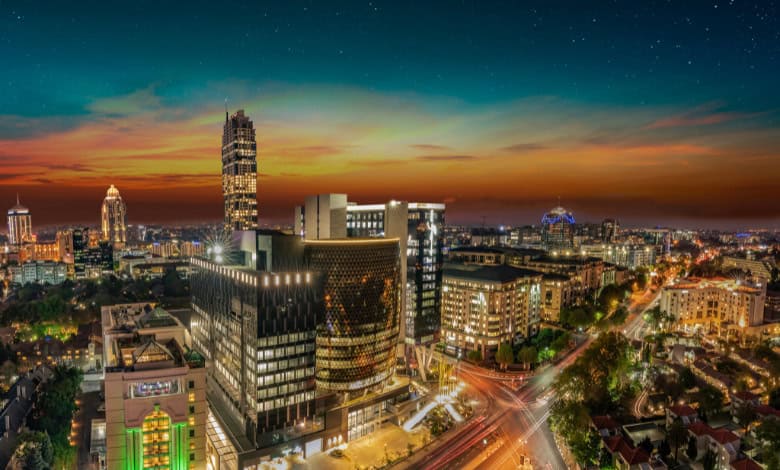
Johannesburg has just been placed on the Global Power City Index (GPCI) – the list of the world’s most “magnetic” cities – and its ability to attract people, capital and new business is now having a profound effect on the local real estate market.
That’s the word from Berry Everitt, CEO of the Chas Everitt International property group, who notes that the group’s sales volumes in the city’s northern and affluent eastern suburbs are currently as much as 40% ahead of where they were at this time last year, and that average sale prices achieved have risen by between 6% and 15%.
“Johannesburg is already the richest city in Africa**, and our recent results reflect the fact that it is indeed a lodestone for an increasing number of entrepreneurs, business owners and corporate investors from all over the world, who view it as the most viable and stable gateway to the fresh and lucrative markets of Africa, especially now that the African Continental Free Trade Agreement (AfCFTA) is starting to bear fruit.”
Rory O’Hagan, who heads up the Chas Everitt operations in Sandton, Bedfordview and Waterfall, says the city remains the heart of the local economy, accounting for 16% of the country’s GDP. “It is home to most of SA’s blue-chip companies and major financial institutions, and the fact that it currently offers much lower prices for prime properties than Cape Town has not gone unnoticed by the many expats currently returning to SA, or the growing number of affluent families who are now quietly ‘reverse semigrating’ from the Western Cape.”
However, he says, that picture is shifting, and prices are already rising faster than inflation now in high-demand areas. “We were the first to start talking about reverse semigration more than two years ago, as well as the ‘brain regain’ as significant numbers of returning expats and foreigners started choosing to live in Johannesburg because it offered them the best employment and business prospects in SA as well as lower real estate prices.
“And at the time, many people thought these were just pipe dreams, given the obvious problems that were being caused by poor municipal management and decaying transport, electricity and water infrastructures.
“But our sales to returning buyers as well as foreign investors have continued to trend steadily upward anyway, aided no doubt by Johannesburg’s growing international profile and the efforts of the Presidential Working Group that is co-operating with local government and the business sector to revive and restore the city.
“As a result, we are very confident in our current assessment that the market is rapidly shifting from a ‘buyers’ market’ to a ‘sellers’ market’, based on the strong demand and price increases we have seen developing over the past six months in areas such as Sandton, Rosebank, Melrose, Bryanston and Waterfall as well as Bedfordview. Properties in gated estates and boomed-off streets are still the most sought-after, but there is also rising interest in new, upmarket apartment developments.”
O’Hagan says the upward pressure on prices that is occurring as inventory shrinks is clearly evident in the fact that the Sandton office has experienced a massive 60% year-on-year increase in total sales value over the past six months. “The value of sales in Waterfall and Bedfordview has also risen, by as much as 17%, and there has also been a noticeable pickup in the number of properties selling for more than R15m.
“In short, while homes in Johannesburg’s prime suburbs are still available at less than half of what similar homes in Cape Town cost, our market is clearly now recovering from the huge hit it took post-Covid, and buyers and investors need to hurry if they want to make the most of the real estate opportunities it offers.”
Issued by Chas Everitt International