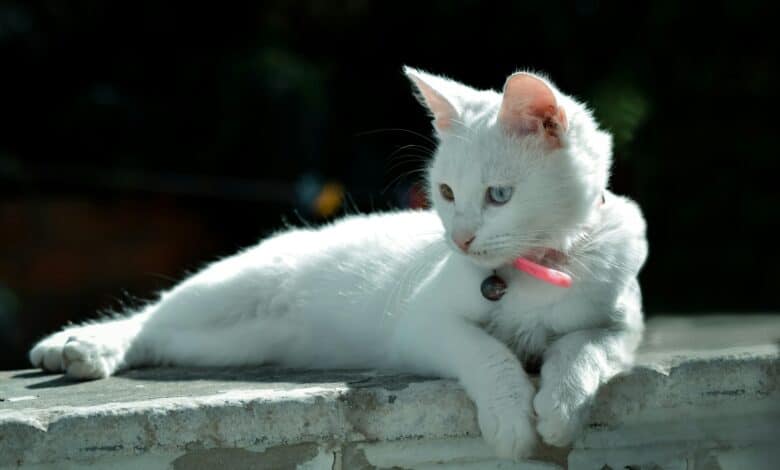
If your feline friend loves to bake in the sun, beware of the risks that come with that, especially if your cat is prone to sunburn and solar dermatitis. Generally cats with white or light fur or those without fur are at risk. Keep an eye on the tips of the ears, nose, eyelids, and belly, as these are common burn zones.
Prolonged sun exposure can lead not only to solar dermatitis but also to potentially cancerous conditions like squamous cell carcinoma.
- What causes it?
- Ultraviolet (UV) radiation: Sunlight damages skin cells directly, especially in cats with light pigmentation or thin fur.
- Window exposure: Glass windows do not block all UV rays; indoor cats can still burn.
- Symptoms to watch for
- Reddened or pink skin: Especially on the ears, nose, and around the eyes.
- Dry, flaky, or scaly patches: Early signs of solar dermatitis.
- Sensitivity to touch: Sunburned areas may be painful or warm.
- Scabs or blisters: In severe cases.
- Repeated sunburns: May lead to thickened skin or ulcerated lesions that resemble non-healing wounds.
- Diagnosis
- Visual exam: Vets assess patterns of redness or lesion placement.
- Biopsy: In cases where cancer is suspected.
- History taking: Important for identifying sun exposure patterns.
- Treatment and management
- Immediate sun avoidance: Keep the cat indoors during peak UV hours (10am–4pm).
- Topical care: Vet-recommended anti-inflammatory creams or ointments.
- Pain relief: For cats with acute burns.
- Surgical intervention: In advanced cases of solar-induced skin cancer, affected tissue may need to be removed.
- Sunblock: Pet-safe sunscreens can be applied to exposed areas, though cats may lick them off, so use with caution.
- Secure your windows: : If your cat enjoys lounging in window sunbeams, install UV-protective film on your windows to block harmful rays.
Find out more by visiting Petworld.