RAV FOUR to RAV4: The concept that changed the SUV game
Long before the crossover boom, Toyota’s RAV FOUR concept laid the groundwork for a compact 4x4 that would become one of the world’s best-selling vehicles.
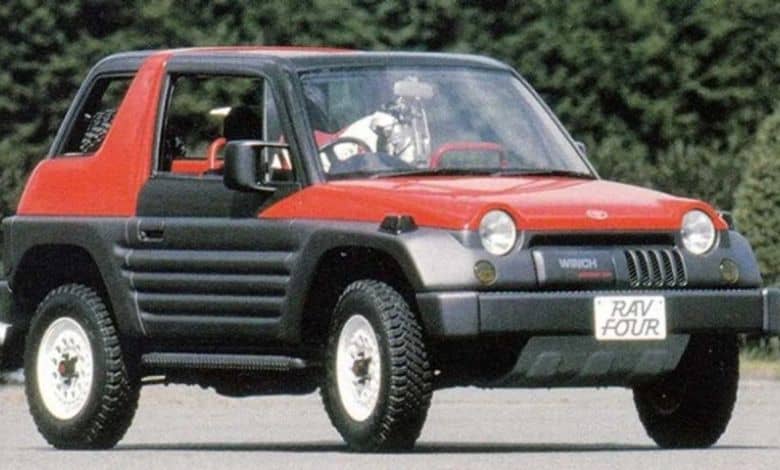
The modern crossover boom can be traced back to the first-generation Toyota RAV4 launched globally in 1994. But the idea behind Toyota’s compact SUV emerged five years earlier with a concept unveiled at the 1989 Tokyo Motor Show.
At the time, SUVs were very different from the versatile vehicles seen on roads today. They were generally larger than the hatchbacks, saloons and estate cars favoured by everyday motorists. Most prioritised utility and off-road ability over comfort, with ladder-frame chassis and live-axle suspension often resulting in a rough ride and cumbersome handling.
In Japan, larger 4x4s could also bring higher registration and insurance costs, along with greater fuel consumption.
Toyota’s engineers saw an opportunity for something different: a vehicle that could handle outdoor adventures and camping gear while remaining practical and comfortable enough for everyday urban driving.
Unlike its body-on-chassis SUV contemporaries, the RAV FOUR featured monocoque construction with a transversely mounted engine to keep its proportions city-friendly.
Its styling, incorporating curves, contrasting lower body cladding and door panel strakes, the latter finding their way onto the first-generation RAV4, was a departure from the utilitarian SUVs of the time. Despite its playful appearance, the RAV FOUR featured some neat off-roader touches.
The underbody was protected by a robust skid plate, while the roof and rear cab panels were removable, à la Jeep Wrangler. The rear seats could be stowed to free up room for camping gear, while the offset box on the bumper contained an integrated winch.
The cabin also featured some suitably outdoorsy touches, including bright upholstery inspired by sports clothing, cargo netting instead of storage compartments and a dashboard-mounted clock that looked like a diver’s watch.
Although primarily intended as a design and feasibility study, the RAV FOUR concept was fitted with a naturally aspirated 2.0l four-cylinder petrol engine coupled with a permanent AWD drivetrain, an arrangement that would carry over to the production version.
While the idea behind the RAV FOUR was simple enough, Toyota’s decision to bring the concept to production reality would prove to be a veritable masterstroke. The RAV4’s ability to neatly blend outdoor and round-town usability in a playful, manageable and affordable package would make it one of Toyota’s bestselling products of all time, accounting for a staggering 15 million units as of 2025.
Click here to browse thousands of new and used vehicles here with CARmag!
Also read
- New Toyota RAV4: SA price confirmed
- Review: 2026 Toyota RAV4 GR-Sport
- Test figures: New Toyota RAV4 GR-Sport
- Buying Used: Toyota RAV4 for under R400k
- Toyota RAV4-based double-cab bakkie in the works?
The post Cool concepts: 1989 Toyota RAV FOUR appeared first on CAR Magazine.
Breaking news at your fingertips… Follow Caxton Network News on Facebook and join our WhatsApp channel.
Nuus wat saakmaak. Volg Caxton Netwerk-nuus op Facebook en sluit aan by ons WhatsApp-kanaal.