West Rand property flipper buys the worst house on the street and then turns it into a dream home
The dirtier, darker and more neglected a house, the more excited a property flipper gets.
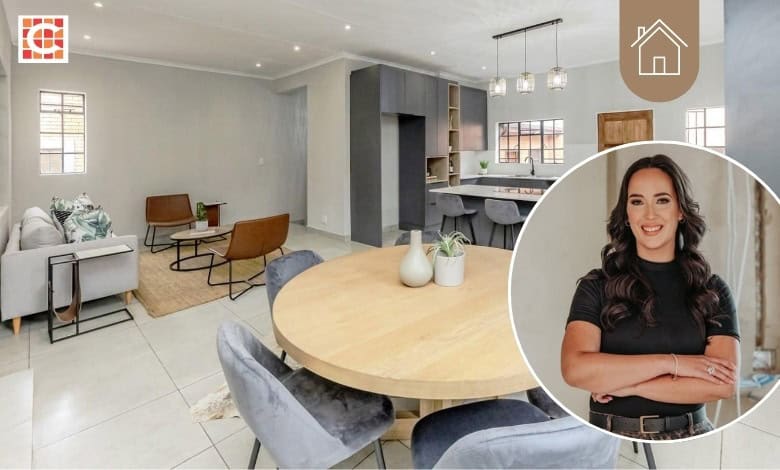
For most people, walking into a dark, filthy house where you can barely see the floor would be enough to make them turn around and head straight back to the car.
For Wilma van Wyk, it is almost an invitation.
The 31-year-old West Rand property flipper and renovator has been buying neglected houses, transforming them into homes people actually want to live in, and selling them for a profit since January 2024. She has completed six flips, is busy with number seven and already has number eight waiting in the wings.
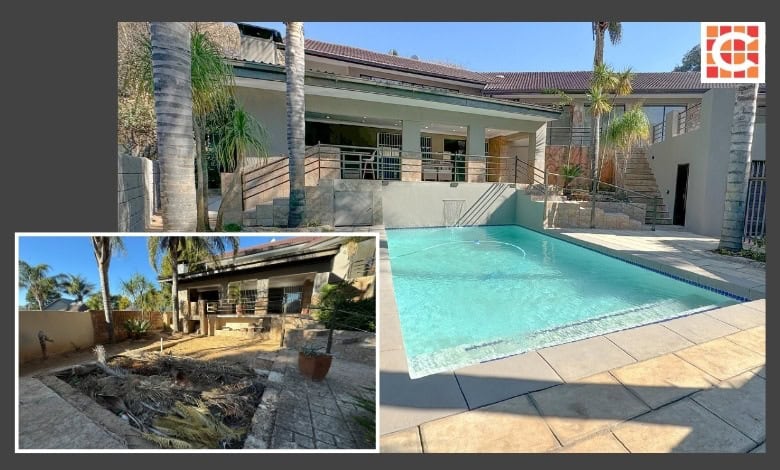
And she has developed a rather unusual strategy along the way: Buy the worst house on the street. Why? Because Van Wyk isn’t looking at the peeling paint, dated tiles or questionable carpets. She’s already imagining what could be hiding underneath it all.
Seeing what others don’t
“When I walk into a house, I immediately focus on what it could be,” she says.
Rather than getting distracted by the current state of a property, Van Wyk looks for the problem areas and starts working out how to create the best version of the house.
Sometimes, her vision is extremely specific.
“This master ensuite is too small. It needs to be bigger, so somehow it’s going to be bigger!” she jokes.
Her biggest focus is usually the living space, where she often creates an open-plan layout to improve the flow of the home. But she also considers the most likely buyer – whether a young couple, a family with small children or one with older children.
The design needs to be beautiful, but it also needs to make sense for the people who will eventually live there.
And, of course, there is one rather important question: Can she actually pull it off within the budget?
Her worst house became her favourite
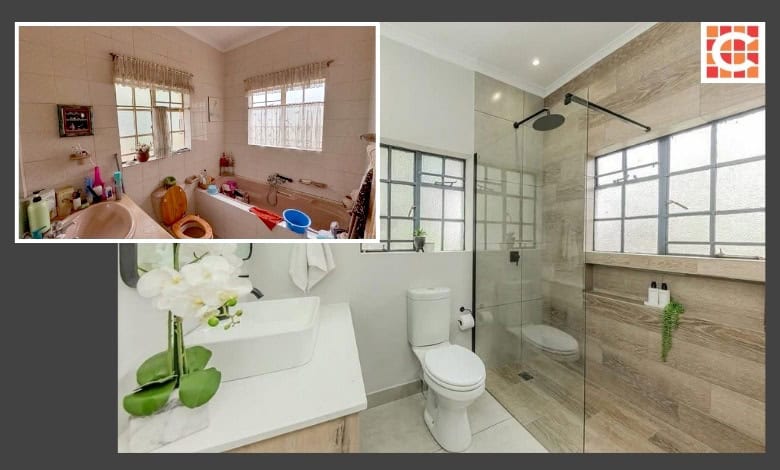
Of all the properties Van Wyk has tackled, House number four remains her favourite, despite being, by her own account, quite possibly the most horrifying.
The house had belonged to an elderly woman with mobility issues whose husband had passed away. Her unemployed son was living in a flat on the property.
When Van Wyk walked into the flat, she was met with what she describes as a ‘hoarder’s paradise’.
“In some rooms I couldn’t even see the floor,” she says.
The curtains were closed, it was dark, and she had to use her phone’s flashlight to see. The smell was so bad that Van Wyk admits she came dangerously close to vomiting.
In fact, she walked through the property so quickly the first time that she had to arrange a second viewing.
This time, she arrived prepared – with a jacket to cover her nose.
Thankfully, the property agent wasn’t the only person who could see something beyond the mess.
Van Wyk immediately saw a warm family home, somewhere Christmases could be spent, where grandparents or in-laws could stay in the flat, or where the additional space could potentially generate rental income.
“It can be such a lovely home for a tight-knit family,” she remembers thinking.
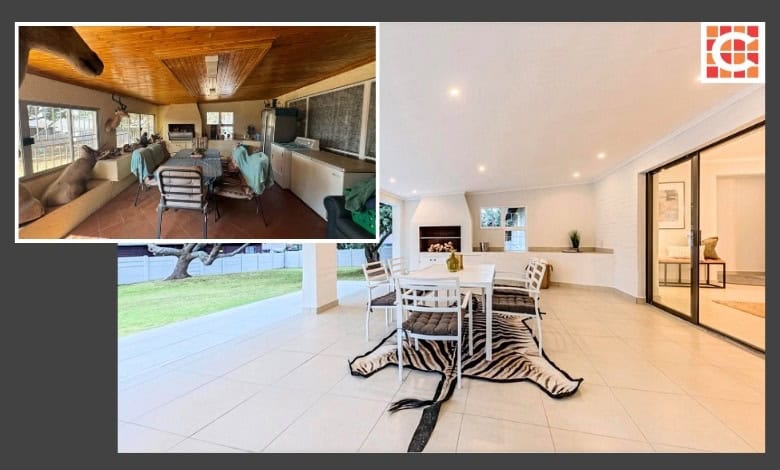
The transformation was dramatic.
The curtains came down, carpets were ripped out and light finally poured into the house. Then came another surprise: The following day, Van Wyk arrived at the property to discover tiny, flat creatures stuck on the walls, apparently disturbed when the carpets were removed.
Still, she wasn’t deterred.
The finished home became her favourite flip, and a perfect example of why she believes neglected properties can hide enormous potential.
If you’re going to renovate, do it properly
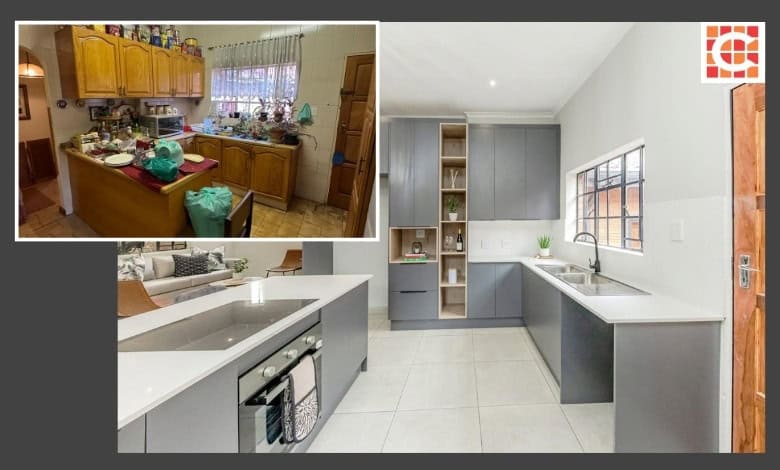
Van Wyk isn’t interested in leaving buyers with a beautiful kitchen and a roof that leaks the first time it rains.
Her philosophy is to tackle the major work upfront so buyers can move in without the inconvenience of a massive renovation.
That means kitchens, bathrooms, flooring and structural changes often make their way onto her renovation list.
That approach is also part of her strategy for selling quickly. Buyers can see the finished product rather than walking into a property, wondering which expensive problem they’re going to have to tackle next.
And Van Wyk has a few favourite tricks.
Open-plan living is one. Sliding doors are another. She loves creating homes where moving between indoors and outdoors feels effortless, along with plenty of natural light, fresh paint and a welcoming entrance.
In other words, if she can knock down a wall, she probably will.
“I’m always breaking down walls,” she laughs.
Her staging secret? Keep it simple
Once the building work is done, Van Wyk stages every house herself, guided by a refreshingly simple philosophy: Less is more.
She keeps the furniture fairly basic and uses a neutral base so potential buyers can concentrate on the house itself rather than being distracted by someone’s very specific taste.
Staging also helps buyers understand how a room works. Empty rooms can appear smaller, while the right furniture allows people to picture themselves living there.
And when it comes to selling your own home, Van Wyk has some blunt advice: Put away the leopard-print curtains. And perhaps the dolphin duvet cover too.
“Your style is not everyone’s style!” she laughs, explaining that overly personal décor can distract buyers.
Please, put down the paintbrush
If there is one thing Van Wyk wishes homeowners would stop doing before selling, it is taking on DIY renovations.
She’s seen it all – chalk paint, stick-on tiles, spray-painted fittings and questionable tiling jobs.
She says if a quick-fix looks cheap, it can make buyers wonder what else has been ‘fixed’.
The secret behind the quick sales
Van Wyk has sold every flipped home within two weeks, but she isn’t putting that down to luck alone. Good contractors, good agents, careful planning and, perhaps most importantly, getting the asking price right all play a role.
“You can’t get greedy with the profit margin,” she says.
For someone who genuinely enjoys Excel spreadsheets and the financial side of flipping, the numbers are as exciting as the transformation itself.
Before-and-after magic
Her favourite moment isn’t necessarily when the house sells. It’s when she puts the before-and-after photographs next to each other.
During a renovation, the house changes so quickly that she can almost forget just how bad it looked at the beginning. But when she compares the photographs, the scale of the transformation suddenly hits her.
“And I just love it!” she says.
Her biggest piece of advice to anyone looking for a property is to start with the area. Look at the neighbourhood, the street and the houses around it before falling in love with the building itself.
“Fall in love with the area first, then find the house,” she says.
Because even the most spectacular renovation can’t change the ceiling price of a neighbourhood and a dream home is only a good investment if the numbers make sense too.
Breaking news at your fingertips… Follow Caxton Network News on Facebook and join our WhatsApp channel.
Nuus wat saakmaak. Volg Caxton Netwerk-nuus op Facebook en sluit aan by ons WhatsApp-kanaal.