5 Frequently asked questions about rose pruning
If you are anxious about pruning your roses, you are not alone! Here are a few answers to frequently asked questions that show how simple it is.

Pruning the roses in mid-July is a task that many gardeners regard with trepidation. And every year rose grower Ludwig Taschner reassures gardeners at his many pruning demo’s that ‘you can’t’ do it wrong.’ That’s because the rose decides for itself how it is going to sprout, irrespective of the type of cut or how high or low it is pruned.
So why prune? Because that is the best way to encourage healthy new growth and more flowers in summer. The roses that benefit most from pruning are the bush type roses because these are the high performance blooming varieties for picking and for a beautiful show in the garden. By removing old stems and dense growth there is room for new stems to sprout and flower. It also tidies up the rose bed and who doesn’t want neat looking roses?
Question 1: How do I know which stems to cut out and which to leave?
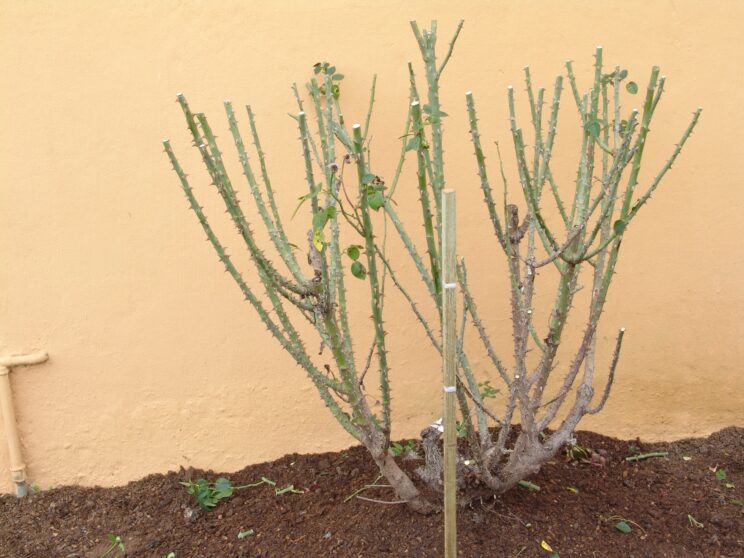
Old stems are a greyish brown with white prickles (thorns) and these can be cut out because they do not sprout easily. Younger stems are light brown or greenish brown and they should be left. Also cut out criss-crossing growth and reduce a forked stem to a single stem, favouring the stronger stem if possible.
Try this: Cutting off the top growth removes all the leaves so that you can look into the rose which makes it easy to see which stems can go.
Question 2: By how much should I cut back the stems if the rose is to be properly pruned?
As a general rule normal bush roses that are hip or shoulder high can be cut down to knee height and taller bushes can be cut down to hip height. Try to retain at least three to four stems, well-spaced apart.
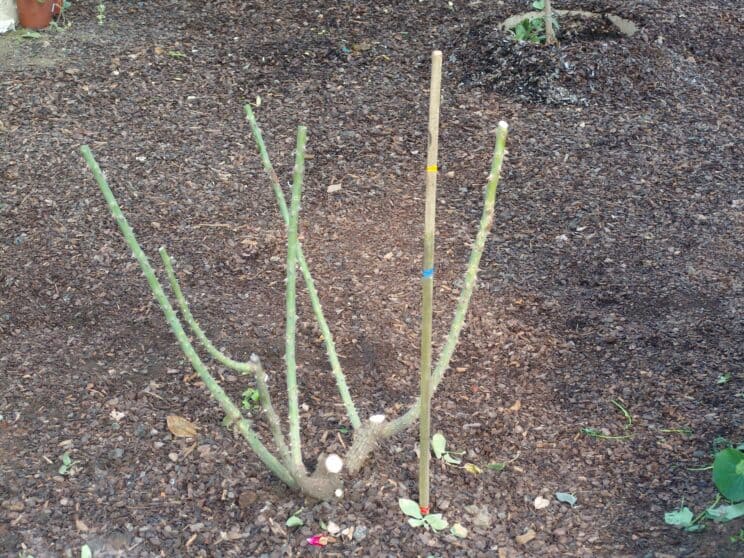
A tall rose bush cut down to hip height. The remaining light green stems are from the previous year’s growth and the eyes will not take long to sprout in spring, unlike eyes in brown woody growth. The stems should all be roughly the same height so that sprouting is even.
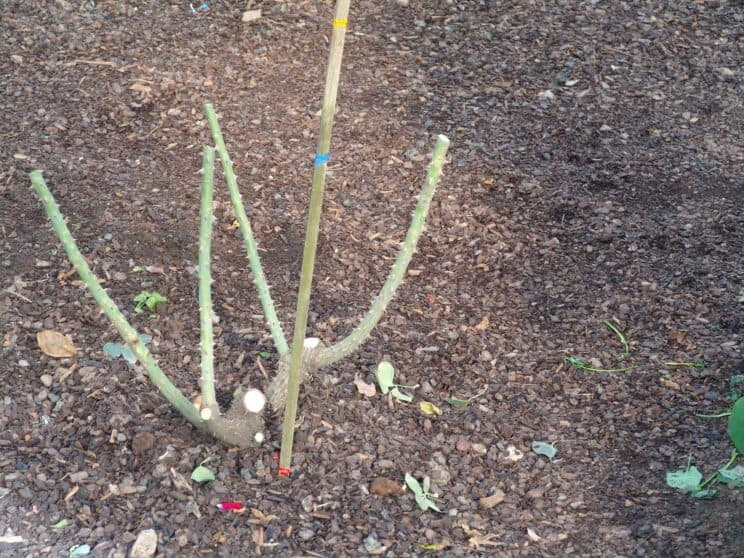
A medium high rose pruned down to knee height. Roses that are planted close together can also be pruned to this height to provide space for the other roses. The remaining stems should be a secateur’s width apart so that there is space for new stems and enough light.
Question 3: When cutting the stem, do I cut to an outward or inward facing eye and should the cut be slanted or straight?
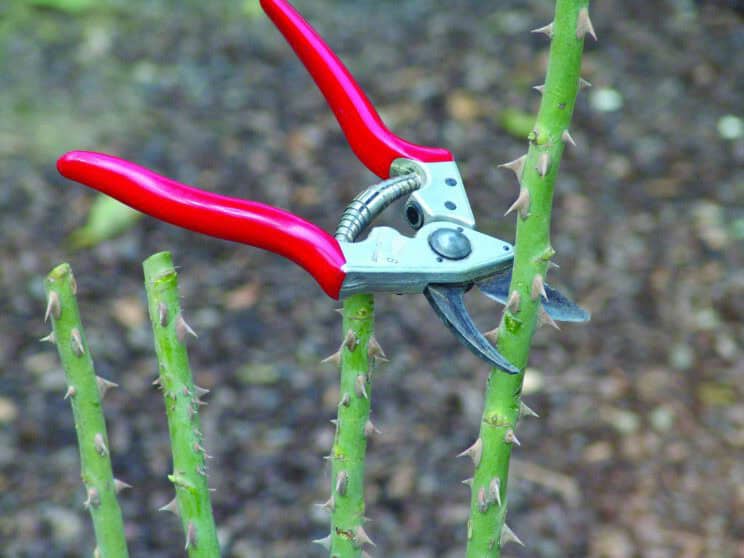
This question always comes up, says Ludwig and his answer is that it doesn’t matter whether you cut to an inward or outward eye. The rose itself will decide which eyes will sprout and it usually is the top three eyes on the stem.
The cut should be straight because it is a smaller wound. In Europe, the stems are cut on a clear slant so that rainwater can drain off. That is not necessary in South Africa.
Good to know: the correct way to use the secateur is for the thinner cutting blade to be on top and the thicker blade at the bottom. When used the other way around it tends to squeeze the bark and even the stem.
Question 4: Do I need to spray the roses after pruning?
If the roses were sprayed regularly for pests and disease during the past season it is probably not necessary. However, if they were troubled by pests, including mealy bug it is a good idea to spray. Use a double strength spray of Ludwig’ Insect Spray which contains canola oil that will smother the pests. In the old days gardeners sprayed with lime sulphur but it has a nasty sulphurous smell and your neighbours wont appreciate it!
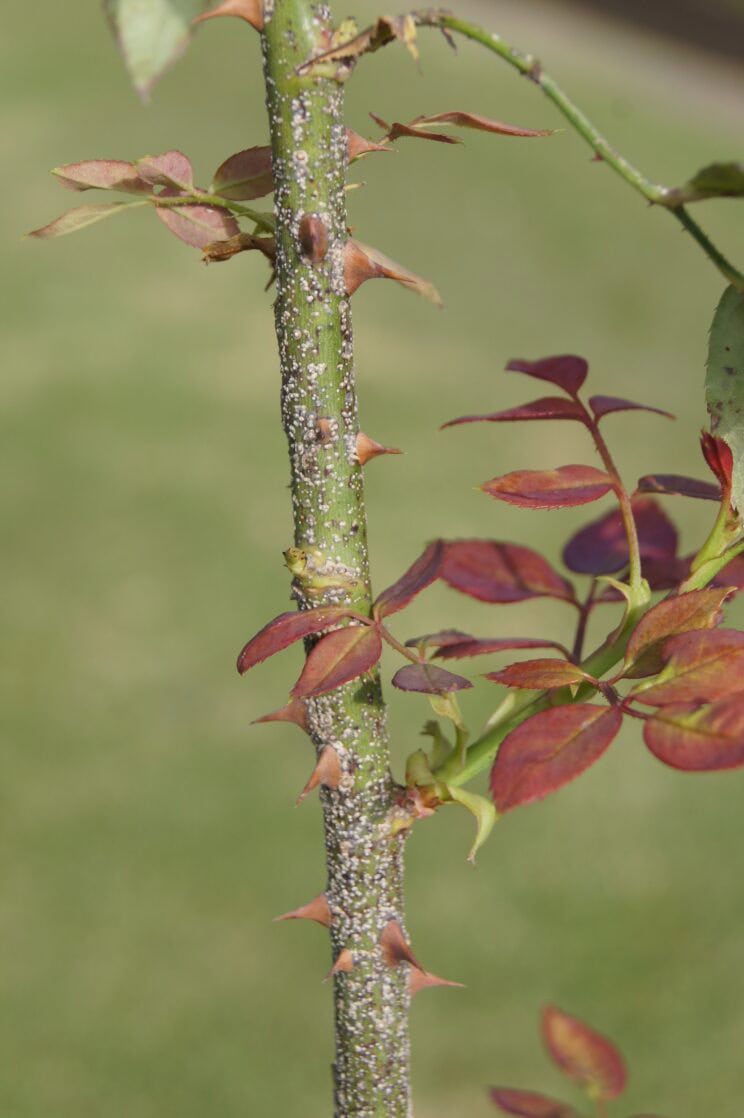
In the case of brown pernicious scale, the only way to remove it is brush it off the stems with a toothbrush or of soft bristle scrubbing brush and then spray with Ludwig’s Insect Spray to seal the stems.
When roses are attacked by mealy bud or scale it is an indication that there is not enough water getting to the roots.
Question 5: Should I fertilise the roses after pruning?
If the soil is hard, first loosen the soil around the rose and dig in soil conditioners like compost, and milled pine bark to a depth of 20 to 30cm, then sprinkle over a rose fertiliser like Vigorosa and water in well. Water at least weekly (if there is no rain) until September when watering needs to be stepped up. Mulch in September to prevent the soil heating up which increases the evaporation of water.
More details visit ludwigsroses – YouTube
Articles and images supplied by Alice Coetzee.
For more on gardening, visit Get It Magazine.