
Did you know that the Ficus elastica, also known as the rubber Ficus, has been a popular indoor plant for more than 100 years? It may be a classic but it’s certainly not outdated, with striking new varieties bringing colour and elegance into homes and offices.
Besides being an attractive statement plant that fits in with a range of décor styles, there are other reasons for its enduring popularity.
- It is a robust, hard-to–kill plant that doesn’t require a lot of attention, good for beginners and those with busy lifestyles.
- The newer varieties with colourful foliage or striking leaves are eye-catching feature plants that stand out on their own or in combination with other indoor plants.
- While Ficus elastica varieties do best with bright, indirect light, they also tolerate lower light.
- The rubber Ficus is a natural air purifier that helps to improve air quality within the home. The leaves have the ability to absorb and breakdown harmful airborne pollutants as well as filter out toxins found in household products and furniture.
A step back in time:
This centuries old tree from the rainforests of Southeast Asia was used by the indigenous people who made the first natural rubber from the tree’s milky sap. The name Ficus elastica is most likely derived from the elasticity of the rubber material. Later grown commercially for rubber production the rubber Ficus also became a sought after indoor plant in England in the late 1800’s and early 1900’s because of its attractive glossy leaves and ability to grow in low light.
Today’s varieties
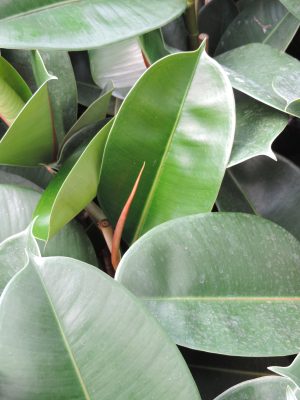
Ficus elastica ‘Robusta’
All these years later the original Ficus elastica ‘Robusta’ is still a presence in homes and offices. It has glossy green leaves with a pronounced midrib. It grows neatly upright and true to its name it is a robust low maintenance plant that can tolerate low light.
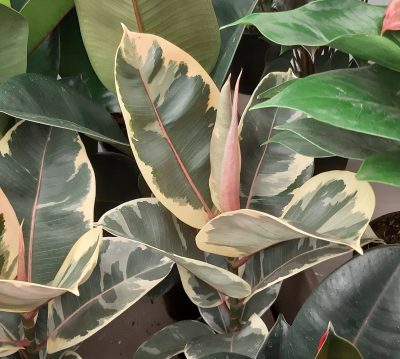
Ficus elastica ‘Tineke’
This is a truly beautiful plant with variegated creamy white and light green leaves with a pink undertone, pink midrib and pink stems. It can grow up to 2m indoors but doesn’t mind being trimmed to keep its height in check.
Use it on its own or as a backdrop for other lower growing foliage plants. It fits in well with minimalist and modern interiors as well as on patios that have bright indirect light.
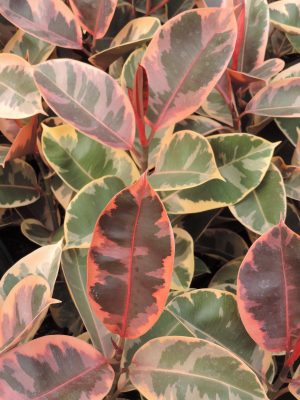
Ficus elastica ‘Red Ruby’
For impact, you can’t do better than Ficus Red Ruby. It needs bright light to show off the bright pink and red tones of its leaves. It is a striking statement plant for homes as well as offices.
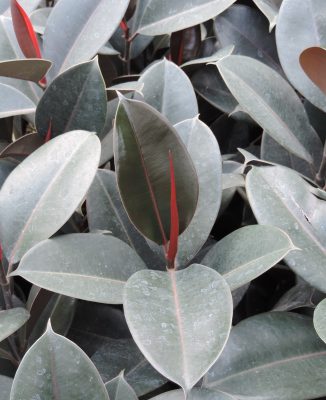
Ficus elastica ‘Abidjan.’
This is a trending plant for contemporary interiors, edging out the popular Fiddle Leaf fig. It has olive green to dark chocolate brown leaves offset by a red midrib and coral-red new leaves. To encourage new leaves, feed with liquid fertiliser, at half strength, once a month from spring to autumn.
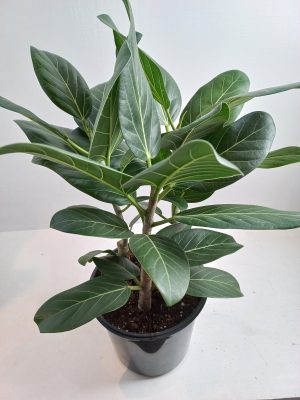
Ficus Audrey
This Ficus has large, velvety leaves with prominent creamy-white veins that stand out. It is becoming an alternative to the Fiddle Leaf fig as it is more forgiving and less temperamental. It grows into an elegant indoor tree and needs only moderate care and bright indirect light.
Care tips
- Ficus elastica varieties need at least six hour of bright indirect light but not direct sun. The green leaved varieties can tolerate lower light but those with coloured leaves need bright light to keep the colours bright.
- Keep the soil moist, but not water-logged soil. Water when the topsoil becomes slightly dry. In very hot, dry weather misting will raise the humidity level and also keep the leaves clean.
- For shiny, healthy leaves regularly wipe the leaves with a soft cloth soaked in lukewarm water.
- For good growth and healthy leaves feed the plant with a liquid fertiliser once a month in summer.
- Plants benefit from pruning. Cut off the top growth when the plant reaches its desire height. This will also encourage bushy growth.
Content by www.lvgplant.co.za
For more on gardening, visit Get It Magazine.