
5 rescued baobabs begin journey to Timbavati reserve
After months on the hot tar at Durban harbour, five uprooted baobabs were being transported to a protected reserve in Limpopo on abnormal-load trucks.
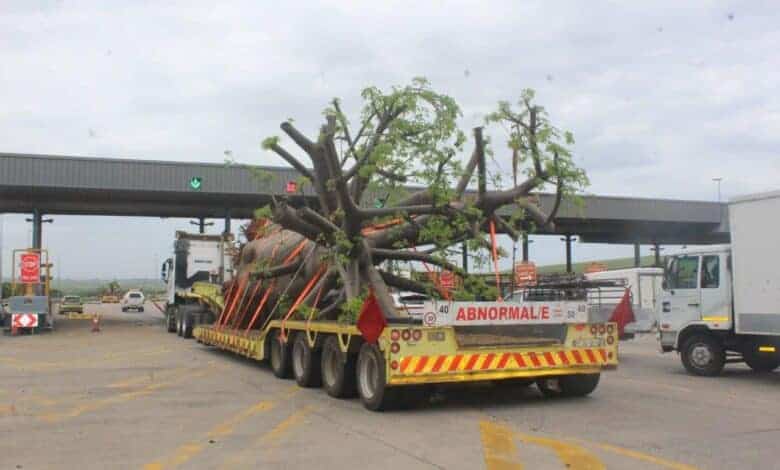
Five baobab trees removed from the Waterberg region of Limpopo and later found at Durban harbour began their journey to the Timbavati Nature Reserve yesterday (November 17).
According to the Lowvelder the trucks transporting the trees departed on schedule on Tuesday morning (November 16). However, delays along the route mean they are expected to pass through Lydenburg later today, where transport permits are being obtained
The trees have been at the centre of an investigation into their removal from their natural environment and an alleged attempt to export them. The exact circumstances surrounding their removal remain under investigation by the Department of Forestry, Fisheries and the Environment (DFFE).
Alleged illegal export plot
According to authorities, the baobabs were allegedly destined for export to Georgia. Pretoria horticulturalist and exporter Corné Maré is accused of facilitating the operation. Maré appeared in the Durban Magistrate’s Court in September. The case was postponed to January 2027.
The DFFE was alerted to the five trees at Durban harbour, where they had been left on the hot tar in a parking area at the Africa Global Logistics warehouse in Mobeni.
According to the department, the trees were intercepted on July 17 after Maré allegedly failed to produce valid permits for their removal, possession, transportation or export.
Signs of recovery offer hope
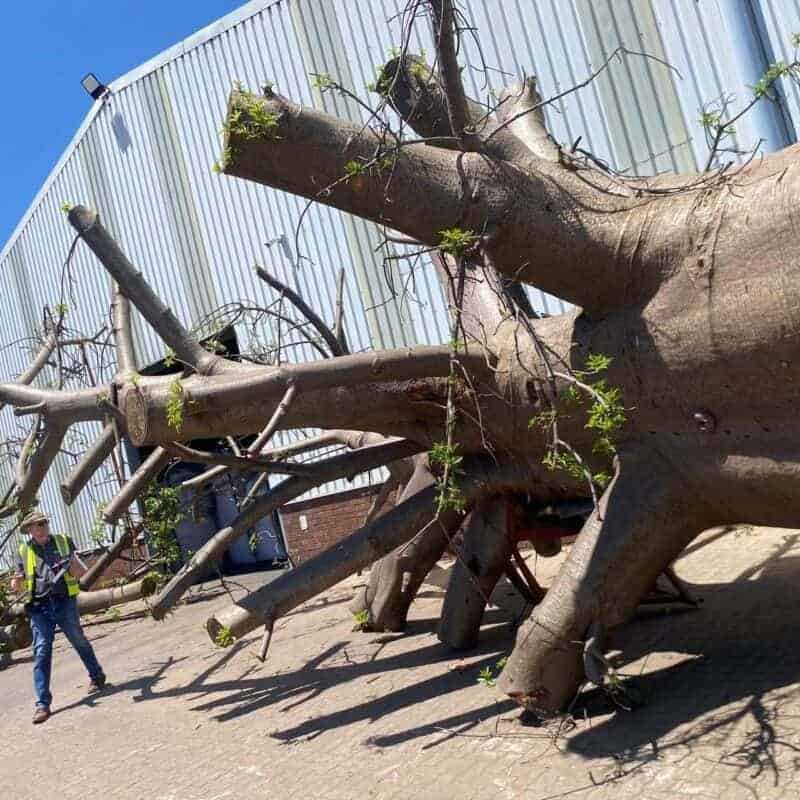
The trees’ roots had been cut during their removal. Despite the damage and months spent at the harbour, they began budding while awaiting transportation. On the day they departed, flowers also appeared, offering a hopeful sign for their recovery.
Dr Sarah Venter, founder of the Baobab Foundation, is overseeing the operation with a team of experts to ensure the trees receive the necessary care during transportation.
Venter said the transportation costs were expected to exceed R1m, as each tree required an abnormal-load truck.
Mark Read, chairperson of the Everard Read Gallery, secured funding for the operation. He previously served on the WWF International Board from 2004 to 2010.
Edwin Pierce, warden of the Timbavati Nature Reserve, said the trees had already endured an extraordinary ordeal.
“While we appreciate that there are challenges ahead, the thought of allowing them to recover and hopefully continue growing for hundreds of years within a protected natural environment is something quite special,” he said.
The reserve’s conservation team helped identify suitable planting sites, taking environmental conditions, ecological suitability and the trees’ long-term protection into account. The planting holes have already been prepared.
Although their survival is not guaranteed, conservationists are determined to give the baobabs the best possible chance of recovery.
The exact planting locations have not been disclosed. The route to the reserve is also being determined daily, depending on road conditions.
Public support follows baobabs’ ordeal
The trees’ plight has attracted nationwide attention and will feature on Carte Blanche.
Venter said South Africans had rallied behind the effort, sending a message that protected indigenous plants and trees should not be removed from the country unlawfully.
The Baobab Foundation works to protect baobab trees across Africa. Its projects include educational books for school learners and employing female tree guardians to monitor and protect the indigenous species.
Breaking news at your fingertips… Follow Caxton Network News on Facebook and join our WhatsApp channel.
Nuus wat saakmaak. Volg Caxton Netwerk-nuus op Facebook en sluit aan by ons WhatsApp-kanaal.
Read original story on www.citizen.co.za

