
Bonsmara bull sold for R4m at auction in KZN
A Bonsmara bull was sold for R4m, one of SA’s highest bull prices, showing strong demand for elite livestock genetics.
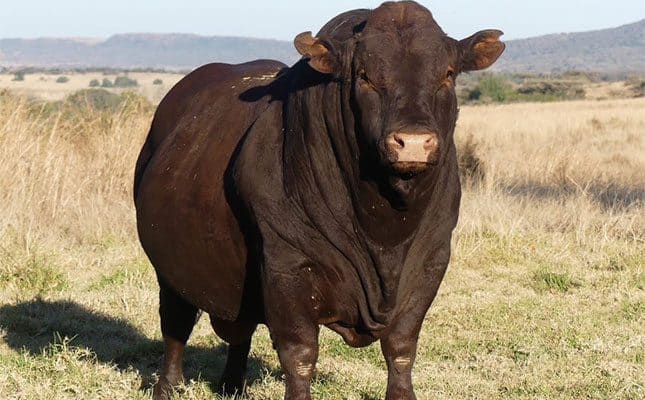
The R4m sale of Lot 8 – LAR21-045, a prized Bonsmara bull – was the highlight of the highly anticipated Up George Bonsmaras 27th Production Sale, held in KwaZulu-Natal in early July.
Record-chasing bull fetches R4m
The bull was snapped up by Bertus and Fouché Blignaut of the Sebadja Bonsmaras stud in Limpopo, marking one of the highest prices ever paid for a Bonsmara bull in South Africa.
Coincidentally, this sale falls just short of the record price paid for a South African Bonsmara bull at R4,4m, set in July 2023. That animal – LAR19-373 – was also sold by Up George Bonsmaras to Sebadja Bonsmaras, and was likewise offered as Lot 8.
“This exceptional bull [LAR21-045] is a proven herd sire, a grandson of LAR14-173 (Maestro), and comes from an outstanding dam line,” the Blignauts told Farmer’s Weekly.
“A special thank you to the Up George Bonsmaras for this incredible opportunity. We can’t wait to see the remarkable impact he will have on Sebadja’s herd.”
Strong demand across the board
The sale, conducted in person and online via Swiftvee, saw spirited bidding and exceptional prices across the board, according to Brandon Leer, auctioneer at AAM Livestock Agents and Auctioneers, who hosted the sale.
Another standout bull, Lot 10, was sold for R2,6 million to Pieter Hoogenboezem and family of Blouberg Bonsmara Stud in Limpopo.
The top-priced female on the day, Lot 93 – a stud in-calf cow with a calf at foot – was bought by Eloff Muller of Tambaraine Bonsmaras in Mossel Bay for R170 000.
All 78 bulls and 59 females presented at the sale were sold. Bulls were sold for an average price of R224 487, stud cows with calves at foot for R90 385, stud in-calf females for R54 318, and commercial in-calf females for R28 292.
According to Leer, even the poultry lots impressed, with seven lots of chickens (each comprising three hens and a rooster) averaging R5,786 each.
He added that while such astronomical prices as those paid for the bulls often grabbed headlines, the Up George sale was also a crucial event for commercial farmers.
“It must be noted that more than half the bulls on offer are sold to commercial farmers looking to improve their herd genetics. In fact, 53% of bulls sold averaged R66,341, reflecting the brand’s consistent appeal across both stud and commercial buyers,” Leer explained.
Up George owners Derek, Tutu, and Robert Ralfe expressed appreciation for the buyers: “We are humbled by the values placed on our cattle and grateful to everyone who participated, both at the sale and online.”
Insuring South Africa’s livestock elite
Due to their immense value, bulls like Lot 8 are insured for millions of rands, Kuda insurance consultant Levine Pillay said.
“High-value livestock are typically covered under specialised agricultural insurance policies, which provide protection against theft, injury, death, or infertility.
“High-value livestock insurance policies usually include predetermined values for the insured animals, which are set either according to current market value or a specifically agreed-upon amount between the insurer and the policyholder,” he explained.

Breaking news at your fingertips… Follow Caxton Network News on Facebook and join our WhatsApp channel.
Nuus wat saakmaak. Volg Caxton Netwerk-nuus op Facebook en sluit aan by ons WhatsApp-kanaal.
Read original story on www.farmersweekly.co.za

