
Census 2022: Are you one of 62 million people counted?
What province is the most populated, and how many South Africans have access to piped water? Census 2022 phase one results are in.
The South African population sits at (give or take) 62 027 503, according to the Census 2022 results that were officially handed over to the president yesterday.
The first phase results, which provide some insights into population growth, province sizes and household living conditions, were received by Cyril Ramaphosa at the Union Buildings in Pretoria.
Statistician-general Risenga Maluleke provided the results of the fourth post-apartheid population and housing count. The first one was conducted in 1996, followed by censuses in 2001 and 2011.
What the stats say
The 2022 results show the highest population percentage growth (19.8%) to date, with the size increasing from 51.7 million in 2011 to just over 62 million last year.
Most populated provinces:
- Gauteng (15 099 422)
- KZN (12 423 907)
- Western Cape (7 433 019)
- Eastern Cape (7 230 204)
- Limpopo (6 572 720)
- Mpumalanga (5 143 324)
- North West (3 804 548)
- Free State (2 964 412)
- Northern Cape (1 355 946)
“Censuses remain the major source of population information, the basis for population denominators for basic health and socio-economic indicators. Population size and composition for all levels of geography at a specified time facilitate effective planning and policy formulation.
“Inability to produce accurate, reliable information on population and its characteristics, as well as living circumstances of such population, is not only detrimental to development but also to the well-being of a country’s citizenry,” reads the Stats SA website.
Homelessness
The executive summary of the statistical release document reports that 55 000 homeless individuals were recorded. The City of Tshwane recorded the highest proportion of homeless people (18.1%), followed by Joburg at 15.6%. Job loss and drug abuse were cited as the most common reasons for being homeless.
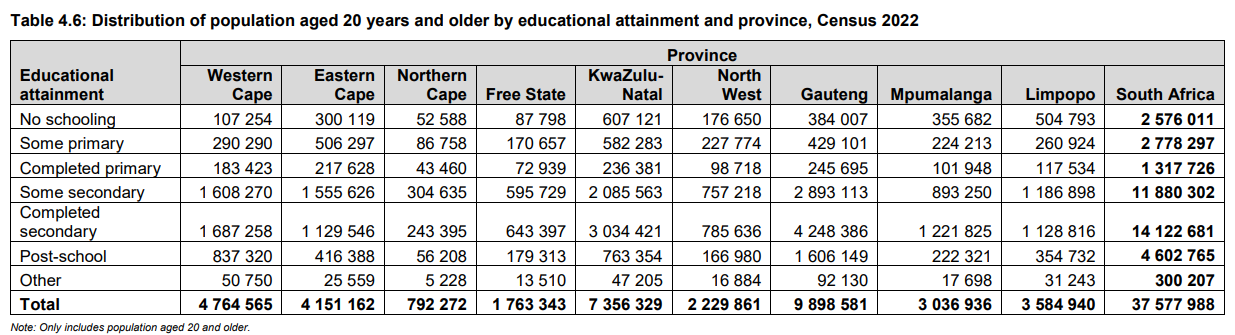
The first phase of results also highlights the education levels of South Africans, and states: “Post-apartheid South Africa was challenged with the difficulty of integrating the previously marginalised and oppressed majority of the population into a new education system. These required extensive reforms through the reconstruction and development programmes, especially targeting the education sector.”
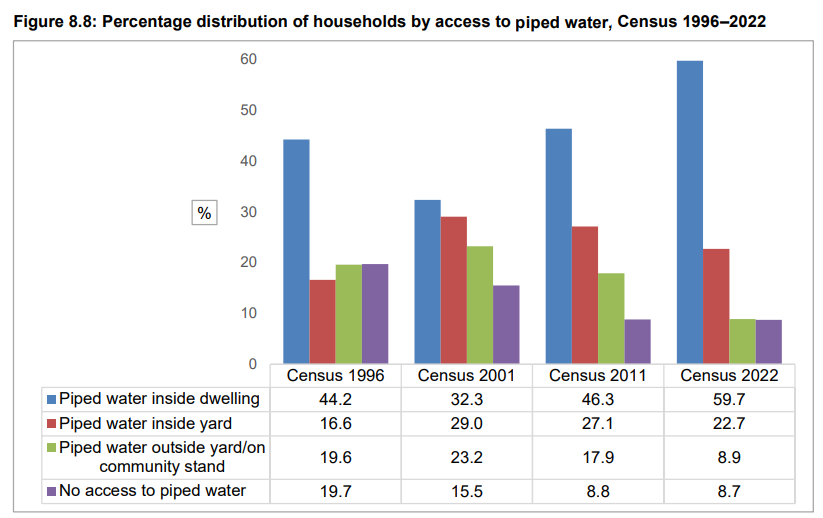
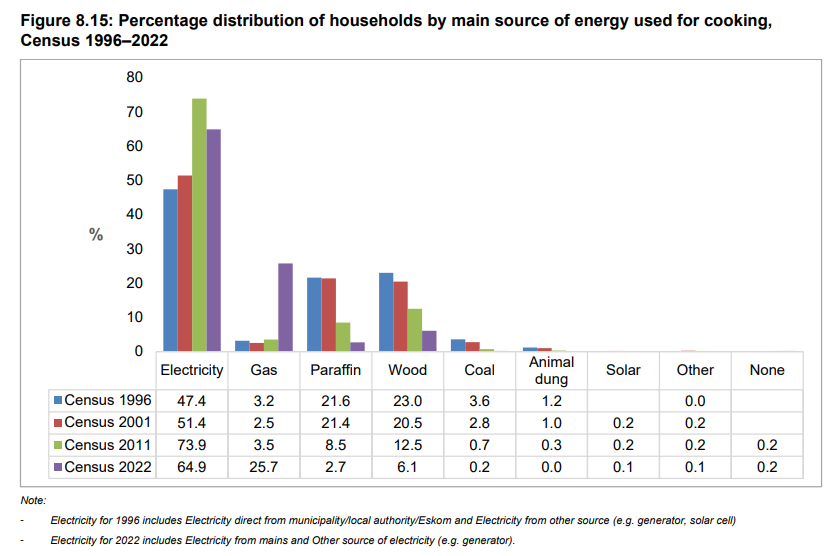
Households and their living circumstances, according to Stats SA, are critical information collected as part of population and housing censuses.
“Such information offers the opportunity for planning, resource allocation and policy making. Collected information at a household level provides detailed household living circumstances, including the type of housing/dwelling and access to basic services such as water, sanitation, energy, and household assets,” the website states.
Census challenges
The latest count was marred by various challenges, according to Maluleke, such as riots, lockdowns due to the Covid-19 pandemic, and flooding in parts of the country.
“Census 2022 data collection started on census reference night, February 2, 2022, and ended in May 2022, with provinces finishing at different times. Censuses in South Africa were traditionally conducted in October but, due to the global pandemic, the census had to be postponed to February 2022.”
In March last year, Stats SA announced that a census mop-up phase would be taking place until April 14. During the mop-up, field workers visited incomplete enumeration areas to count all households that were not counted during the first phase of data collection.
More stats
Maluleke said phase one results ‘give users access to a range of indicators at national, provincial and municipal level’.
The second phase of results, with an announcement date not stated, is set to have data on ‘electronic products such as the community profiles and more in-depth reports on particular themes’.
Read original story on www.citizen.co.za

