
Could the death penalty be the answer to violent crimes?
Nine bodies found in Ekurhuleni have reignited South Africa’s fiercest justice debate – should the death penalty be reinstated?
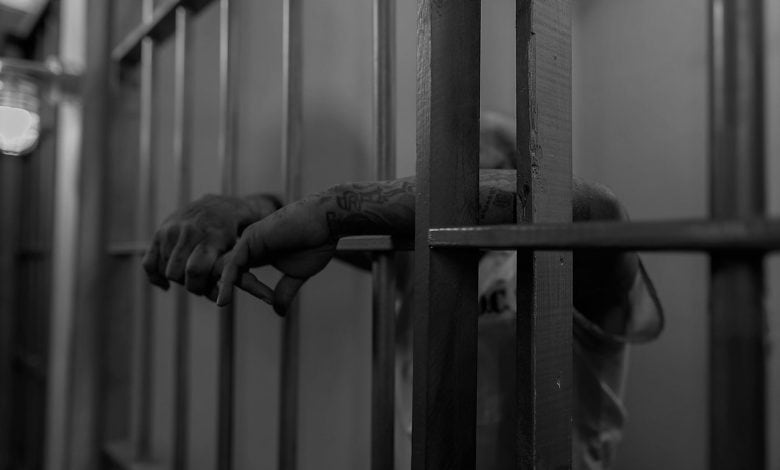
The discovery of nine women’s bodies in and around Kempton Park in Ekurhuleni over the past two months has reignited the conversation around the gender-based violence and femicide (GBVF) crisis in South Africa, with some suggesting that reinstating the death penalty could help curb these crimes.
Highway Mail reports that the call for capital punishment to be reinstated in the country is contentious, and for Josha Daniels of the Rise Up Movement, who is also a member of the NACSA4U Human Trafficking Working Group, weighing the arguments for and against the death penalty should be the starting point.
According to Daniels, the arguments for the death penalty include that it would serve as punishment for horrific crimes, including severe acts of femicide, child murder and human trafficking, because many believe the perpetrator has forfeited their own right to life.
“It gives victims’ families a sense of full payback, ‘an eye for an eye’,” said Daniels.
It would ensure that dangerous predators are permanently removed from society, and would send a strong symbolic message of zero tolerance of GBVF.
Arguments against the death penalty include that it does not stop crime and is not a real deterrent to committing a crime, said Daniels.
“Criminals do not stop to calculate penalties when committing impulsive or passion-driven domestic violence. Criminology shows criminals fear getting caught, not the severity of the sentence. If police detection rates and conviction rates remain low, a heavy sentence changes nothing,” said Daniels.
There is a risk of wrongly executing an innocent person, and the South African Constitution guarantees the Right to Life and Protection from Cruel and Unusual Punishment.
“Bringing back execution requires rewriting our Human Rights Bill, which could weaken protections for other basic rights,” said Daniels.
Reinstating the death penalty would also amount to ignoring the root causes of why crime is so rife in South Africa.
“The death penalty acts as a quick emotional fix, but it does not fix the real problem. To stop GBV, human trafficking and child abuse, we do not need harsher laws on paper; we need effective law enforcement and swift justice in practice,” said Daniels.
Dr Monique Emser, senior lecturer in Political Studies at UKZN and chair of the NACSA4U Human Trafficking Working Group, said a critical question that needs to be answered is whether the country’s criminal justice model currently produces acceptable outcomes.
“The evidence suggests it is not. South Africa continues to record some of the world’s highest levels of GBVF, rape, child sexual violence and murder, with no sustained decline commensurate with the scale of public investment in prevention efforts.
“This points to failures at both the state and societal levels. South Africa has invested heavily in awareness campaigns, community dialogues and public education initiatives, yet there is little evidence that these interventions have produced sustained reductions in serious violent crime at the population level. Awareness may improve reporting and public knowledge, but awareness alone is not the same as prevention,” said Emser.
Emser said institutional weakness in the country’s justice system could result in capital punishment, if reintroduced, failing to achieve the hoped-for goals of reducing high levels of violent crime.
Emser added that whether one is for or against the death penalty being reinstated, ‘the debate continues to resonate with many South Africans who feel that victims’ rights have become secondary to the procedural rights afforded to offenders’.
Advocate Liechen Strydom of Liberation Legal Consulting, and a member of the NACSA4U Human Trafficking Working Group, said the Kempton Park cases underscore the need for responses that are proactive, adequately resourced and focused on disrupting the conditions that allow such violence to continue.
“Declaration of a national disaster is a necessary recognition of scale. It must be matched by consistent enforcement, accurate language, perpetrator-focused accountability and a societal refusal to normalise the violence that continues to claim the lives of women and children,” said Strydom.
South Africa formally declared GBVF a national disaster in November 2025.
The Constitutional Court abolished capital punishment in S v Makwanyane (1995).
Breaking news at your fingertips… Follow Caxton Network News on Facebook and join our WhatsApp channel.
Nuus wat saakmaak. Volg Caxton Netwerk-nuus op Facebook en sluit aan by ons WhatsApp-kanaal.
Read original story on www.citizen.co.za