
From grief to action after 9 Ekurhuleni murders
Social media creators are turning grief into activism following a spate of violent deaths in Ekurhuleni, urging men to take responsibility and challenge toxic behaviour among peers.
South Africa is once again grappling with a wave of devastating violence against women.
Between July and September, the bodies of nine women were found in the Kempton Park and wider Ekurhuleni area.
For the families left behind, the loss is unimaginable. For communities, the deaths have brought renewed fear, anger and grief.
South Africans have taken to social media to use their voices to mourn the women who lost their lives, stand with their families and call for an end to GBV.
The messages are clear: Women should be able to live their lives without constantly having to calculate whether they are safe.
Tribute song
Singer Shané Fraenkel shared a song dedicated to women who never made it home.
“For every woman who deserves to come home safe,” she wrote.
Her lyrics speak to the familiar questions women so often face after violence, including what they wore, where they went, what time they were out or whether they should have been more careful.
Changing the narrative
In a podcast, comedian Mo Vawda turned his attention to the role society plays in keeping women safe.
He questioned why women continue to be told not to walk alone, run alone, go out at night or to constantly share their locations.
He called on men to challenge harmful behaviour among their peers and to intervene when they see controlling, threatening or violent behaviour.
“A woman does not have to belong to you for her life to matter,” he said.
Vawda’s message is about freedom and how that freedom means little if women have to live in constant fear.
Wear black
A call for national solidarity has been gaining traction online. Cherne Boois joined many other South Africans in calling on everyone to wear black today (September 18), in mourning for the women whose lives have been lost.
Running in their memory
For others, solidarity has taken a more personal form.
TikTok user Caden, known as @that_boy_from_atlantis, shared a video of himself completing a 5km run in memory of five women whose lives had been brutally taken.
The post is a reminder of the everyday activities many women enjoy, while also highlighting how they may have to calculate the risks involved in simply going about their lives.
‘Enough is enough’
A 2019 clip of former Miss South Africa and Miss Universe Zozibini Tunzi speaking about GBV has been circulating on TikTok, bringing an older message back into the spotlight amid the current crisis.
Others have used their platforms to make personal calls for change.
Liba Mayifele shared a video about GBV and spoke about being raised by women and the impact it would have on him to learn that a mother, grandmother, aunt or sister had become a victim.
A message to men
Men have also been using social media to acknowledge that the responsibility for creating safer communities cannot rest on women alone.
Grant Stofberg said South African women ‘deserve better’ and called on men to advocate for change and to ‘be better’.
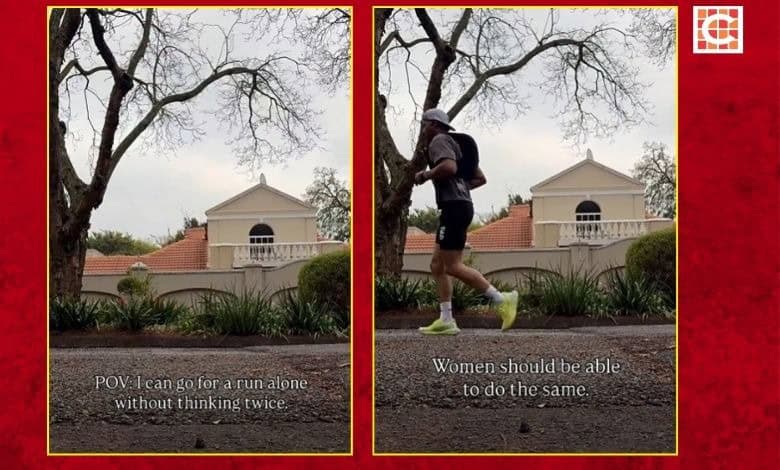
Neil Wash took a more personal approach. He shared that he had gone for a run alone and did not have to think twice about it. “Women should have that same freedom,” he wrote.
His message challenges the familiar advice given to women after yet another killing: Be more careful, don’t run alone, don’t walk home alone, don’t go out at night.
“This isn’t about telling women to be more careful,” he wrote. “It’s about creating a country where they don’t have to be.”
Click the image below to watch the video:
Remembering them
Reality television personality JoJo Robinson shared a tribute to the women who are no longer alive.
She acknowledged that people may feel overwhelmed or powerless in the face of GBV, but urged South Africans to continue talking about the issue rather than allowing the victims to become another set of statistics.
Amid the grief and anger, thousands of people are using their platforms to say that these deaths must not simply become another headline that disappears from the news cycle.
Social media messages are no substitute for justice. But they are a reminder that these women were more than statistics. They were loved. They mattered. And their lives should never have been taken.
Breaking news at your fingertips… Follow Caxton Network News on Facebook and join our WhatsApp channel.
Nuus wat saakmaak. Volg Caxton Netwerk-nuus op Facebook en sluit aan by ons WhatsApp-kanaal.
Read original story on www.citizen.co.za

