
George building disaster: ‘Many red flags ignored’
A report has revealed that multiple red flags, including structural cracks, unqualified oversight, and ignored safety warnings, were raised long before the George building collapse that killed 34 people.

Red flags about serious structural problems in the Neo Victoria building that collapsed on May 6, 2024, were already raised as early as 2023.
Two days before the building collapsed, the contractor observed unusual movement and vibration of the roof slab.
According to the chairperson of the Council for the Built Environment (CBE), Amelia Mtshali, among the early warning signs of structural defects were significant cracks and holes around the bases of the columns, undersized support columns and missing expansion joints, George Herald reports.

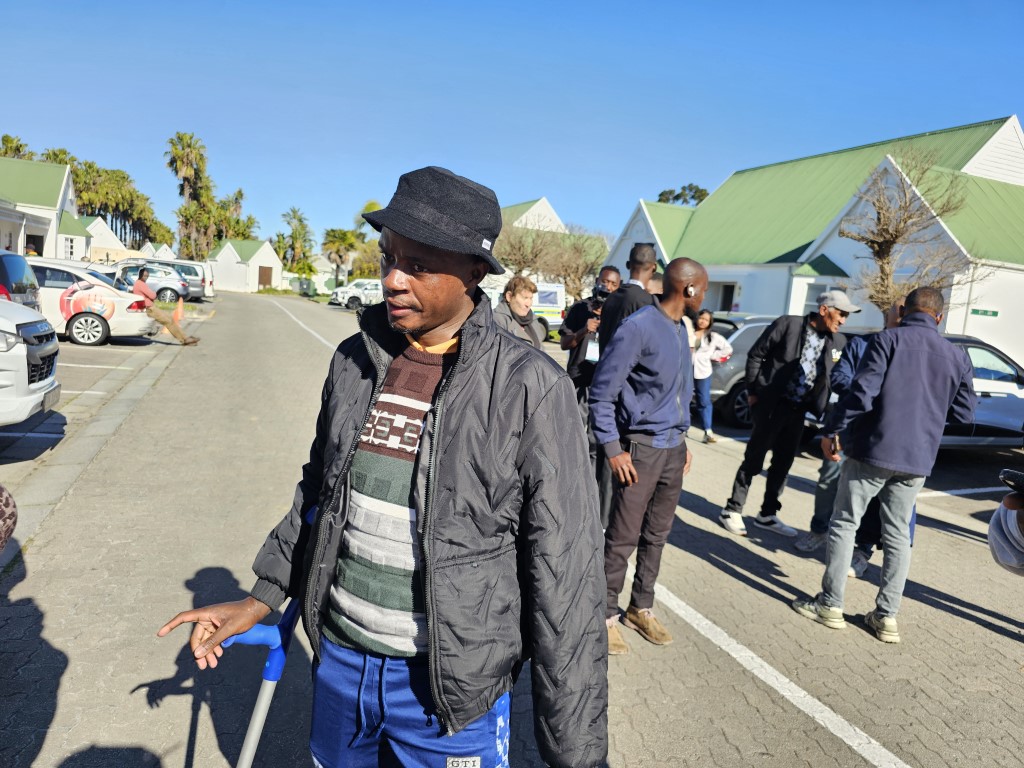
Mtshali was part of a delegation accompanying the minister of Public Works and Infrastructure, Dean Macpherson, who met personally with survivors of the collapse and affected families at the Protea King George Hotel on Saturday, July 19.
The president of the Engineering Council of South Africa (Ecsa), TC Madikane, and the CEO of the Council for the Built Environment, Dr Msizi Myeza also addressed the media.
Speaking at a media briefing after the meeting, Macpherson shared key findings of the CBE report. He said despite the warning signs, site managers reportedly instructed workers to patch the damage with sand and mortar, rather than halt the construction and escalate the matter for formal investigation.
“The strength of the concrete used in the slabs measured 13 MPa, about half of the required specification of 19-25 MPa. “This is a material failure of the most basic kind.”
He said the engineer responsible for the structural system, did not have the necessary competency required to oversee a complex project encompassing a five-storey building. Macpherson said currently the regulatory system allows engineers to self-assess their own competence, which is a glaring loophole that must be closed.
Health and safety agent resigned midway through project
The report also found that the geotechnical study of the site, that is critical in determining soil stability and groundwater conditions, was incomplete and “grossly deficient”. Key tests and geological mappings were missing.
Furthermore, “The health and safety agent appointed to monitor site compliance resigned midway through the project stating clearly that they could no longer ensure safe working conditions. This was not reported, and if it had been, the site would have been closed. This should have stopped the project in its tracks.”
He said there was also a “shocking” lack of coordination between regulatory authorities, from planning departments to the NHBRC inspectors, public works profressionals and the Department of Labour officials. They “… all worked in silos. No one saw the full picture. They only saw that which they were responsible for. No one sounded the alarm with the force and speed required.”
The report also found that the country’s legislative framework is also “hopelessly” outdated. “The National Building Regulations and Building Standards Act was last meaningfully amended in 1996. The built environment has fundamentally changed. Our laws have not.
“These are not minor oversights, but systemic failures, failures of planning, failures of oversight, failures of enforcement, and failures of culture. What happened here more than a year ago, was a lethal convergence of these failures which resulted in the death of 34 people and 28 injured.”
Many chances to stop the project
He said that there was a chance to stop the project at every red flag, but because of a weak regulatory environment, “there was either no incentive or requirement to do so”.
“This is what makes me so angry about this tragedy when I view it from this perspective. It was entirely preventable.”
Engagement with families
Macpherson said his meeting with the families was “deeply emotional”. “It was hard to listen to the protracted pain and suffering that so many family members continue to deal with today. These people have names, they have faces. Their lives and dreams were cut short, and their families have forever been changed by this incident.”

Engineer guilty of five violations
Madikane from the CBE said the registered engineer was found guilty of five violations of the Ecsa Code of Conduct and Code of Practice, including failure to act with care and diligence, disregarding professional norms, misrepresenting qualifications, neglecting public health and safety aspects, and failure to adhere to legislation such as the Engineering Profession Act and National Building Regulations.
A tribunal imposed the maximum fine and cancelled the engineer’s registration, preventing him from practising in South Africa. The engineer has until 3 August to appeal, and may take the matter to the high court if dissatisfied with the outcome.
Ecsa report part of SAPS investigation
Myeza from the CBE said the Ecsa investigation report will be gazetted in due course.
“The report will form part of the police investigation to establish criminal negligence into what happened. If criminal wrongdoing is established, and I believe that it can be, those responsible must be prosecuted without delay. We must ensure that people are held accountable for 34 souls losing their life.”
Myeza said proposed legislative reforms include a revised Council for the Built Environment Bill to strengthen governance, clarify regulatory powers, and improve accountability in the built environment sector.
Sixteen new regulations will be submitted through the minister to government for approval with the intent to strengthen gaps that have been identified and improve the regulations “to ensure that we minimise recurrence of life-threatening structural collapses”.
Video:
The Minister of Public Works and Infrastructure, Dean MacPherson personally shared findings of the Engineering Council of South Africa’s investigation with the survivors and families affected by the Victoria Street building collapse of 2024.
@thegeorgeherald The Minister of Public Works and Infrastructure, Dean MacPherson, this morning personally shared findings of the Engineering Council of South Africa’s investigation with the survivors and families affected by the Victoria Street building collapse of 2024. A media briefing is underway in which Macpherson said the report found serious negligence and shortcomings in the construction processes and legislation from the outset, building materials and oversight. Communication between the various authorities was also significantly lacking, and among the recommendations for the future are revised processes and much stricter requirements for the construction industry and engineers. #georgewesterncape #latestnews #gardenroute #georgebuildingcollapse ♬ original sound – George Herald
Breaking news at your fingertips… Follow Caxton Network News on Facebook and join our WhatsApp channel.
Nuus wat saakmaak. Volg Caxton Netwerk-nuus op Facebook en sluit aan by ons WhatsApp-kanaal.
Read original story on www.georgeherald.com

