
Ian Cameron: Necklacing horror exposes 10111’s institutional crisis
A father’s desperate call for help while witnessing a suspected necklacing in Dunoon in Cape Town has put fresh scrutiny on South Africa’s emergency call centre system.
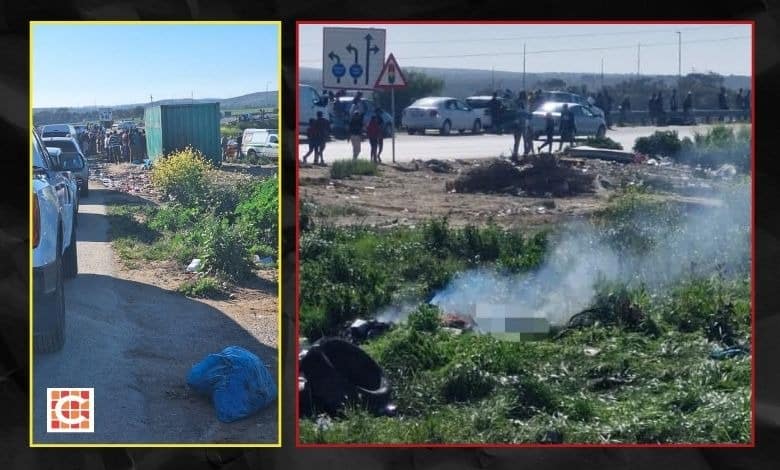
The credibility of South Africa’s 10111 emergency call centre system is under renewed scrutiny after a Cape Town father allegedly struggled to get help while witnessing a suspected necklacing in Dunoon on Sunday afternoon.
The father, who asked not to be named, said he and his children were travelling on the N7 when they took the Malibongwe Drive off-ramp in Dunoon. He said they then witnessed what appeared to be a violent attack in a nearby field.
According to the father, he called 10111 and tried to provide the operator with the exact location using GPS. However, he said the operator asked for an exact address, which he could not provide, and the call was allegedly ended.
What followed was a horrifying scene only a few metres into the field, with passers-by and motorists allegedly watching as people were set alight.
The father reported the incident to police.
Brigadier Novela Potelwa, SAPS head of communications, confirmed that they are investigating this matter. “It would be inappropriate to provide comment on a matter that is currently under investigation.
“Insofar as the operational response to the crime incident, details will emerge once the whole investigation is concluded. Suffice to indicate that the call centre was also alerted to the crime incident by another caller who drove past the scene and notified the police,” Potelwa said.
However, the incident has once again raised questions about the effectiveness of the emergency call centre system, including the training of operators, staffing levels and the technology available to help operators pinpoint callers in emergencies.
Call centre failure highlights institutional crisis
Ian Cameron, the DA’s spokesperson on police and community safety, said the incident should not simply become an attack on 10111 operators.
“Where an individual acts incorrectly, there must be accountability. But the bigger problem is institutional,” he said.
Cameron said he understood that the 10111 call made on Sunday had been reviewed, that its handling was deemed unacceptable and that a disciplinary process was underway. However, he said he had not received confirmation that the operator had been suspended and therefore would not state this as fact.

“If someone acted incorrectly, there must, of course, be accountability. But I do not want to see one operator become the scapegoat while everyone then thinks 10111 has been fixed,” he said.
He said it was necessary to examine the training received by operators, when they last received further training, the conditions under which they work and what management had done to equip them for the job.
Cameron said disciplinary action should be taken where a member acted negligently or unprofessionally, but accountability could not only work from the bottom up.
‘No public trust in 10111’
The institutional problems facing 10111 call centres have been reported for years, according to Jacques Broodryk, AfriForum’s spokesperson for community safety.
Broodryk said the public had increasingly lost trust in the system, which was one reason many people relied on private security companies and community safety groups.
However, Wouter Wessels, FF+ MP and spokesperson on police matters, said private security services were not a realistic option for many South Africans, particularly those in rural areas or disadvantaged areas.
He said the problem also extended beyond the call centres. Even when a competent operator handles an emergency call correctly, the police may not necessarily have sufficient vehicles or resources to respond to the scene.
Asked how many cases had been opened against incompetent operators over the past year, Cameron said he did not have a verified national figure.
“SAPS should make this public: How many complaints were received, how many were investigated, how many resulted in disciplinary action and what the outcomes were,” he said.
“But I also want to know how much further training these people have received. How many have been trained on new technology? How often are their skills evaluated and improved? What is their career path?”
Who is to blame?
Cameron said he had received messages from 10111 members describing poor morale, high levels of stress and limited career development, with some members reportedly remaining at constable level despite decades of service. They had also raised concerns about a lack of ongoing training.
He said SAPS’s description of 10111 as a critical operational component made the lack of development particularly concerning.
According to Cameron, members should not be allowed to stagnate for decades and then be blamed when something goes wrong.
SAPS allocates part of its national budget to staffing and upgrading 10111 emergency call centres. This includes a revised fixed establishment that provides for an additional 535 entry-level constables to address staffing shortages.
The annual budget for the call centres is reportedly about R1.2b. However, Wessels said even a substantial budget could not resolve the problems if the funds were not directed towards the right priorities, including adequate training, staffing and modern technology.
Cameron said the challenges stem from poor leadership rather than a lack of commitment among SAPS members. Many 10111 operators, he said, continued to keep the system functioning despite difficult working conditions.
Potelwa said it is important to note that there are set service delivery standards that SAPS employees attached to the call centre are expected to adhere to.
“The standards relate to their orientation, training and work volumes. Training and capacitation of the facility on a continuous basis remain a priority for the SAPS.”
Delayed police response questioned after 4 deaths
Cameron said it was impossible to know whether the four necklacing victims could have been saved had police arrived at the scene sooner.
“We simply cannot know, and I am not going to tell families something we cannot prove. But according to the complainant, people were being assaulted and pushed towards a fire at that moment. In such a situation, every minute counts,” he said.
It was therefore important to establish exactly what happened, when the call was received, what happened afterwards and whether a faster response could have made a difference, he said.
The incident also highlighted the need to modernise the 10111 system, Cameron said.
“If someone is reporting a serious crime next to the N7, modern location technology should help the system establish where that person is. The system should help the operator save a life, rather than expecting the operator to bridge outdated technology and processes through personal judgement.”
Criminals no longer fear where they commit murder
Cameron said the incident demonstrated how little fear some violent criminals have of the criminal justice system.
“This happened near a major national road, where ordinary people and children could see it,” he said.
He said the children who witnessed the violence should not be forgotten.
“They had to witness this violence. Communities are already repeatedly exposed to serious violence, and then we compound that trauma when the system people rely on for help also lets them down,” he said.
“A child who witnesses something like this should at least be able to see that when an adult calls 10111, the state is doing everything possible to get help there.”
Breaking news at your fingertips… Follow Caxton Network News on Facebook and join our WhatsApp channel.
Nuus wat saakmaak. Volg Caxton Netwerk-nuus op Facebook en sluit aan by ons WhatsApp-kanaal.
Read original story on www.citizen.co.za

