
La Mercy’s last 4 hectares of ‘glass white elephant’ turned into pepper producing greenhouse farm
The 32-year-old pepper farmer from Eshowe and CEO of McFair Holdings, Knox Nxumalo, took a lease on 4 hectares of greenhouse space last year May.
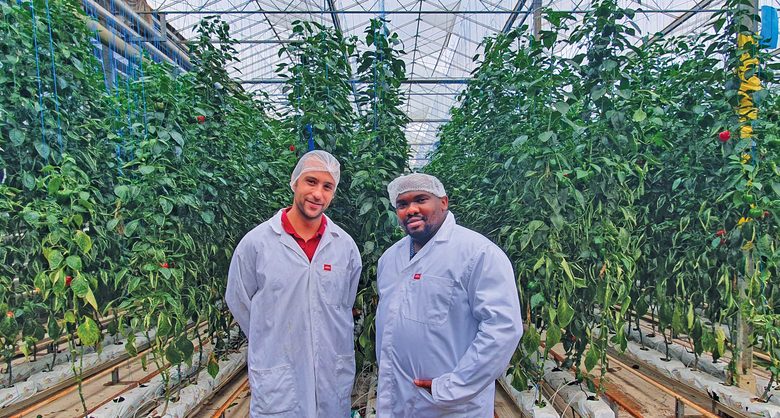
State-of-the-art glass greenhouses at Dube Trade Port’s Agrizone which were thought to have gone to waste since first built in 2011 are now in full operation.
Today 4 of the 16 hectares of greenhouses, built at a cost of about R400-million, are occupied by an enterprising farmer of peppers.
The 32-year-old pepper farmer from Eshowe and CEO of McFair Holdings, Knox Nxumalo, took a lease on 4 hectares of greenhouse space last year May.
He started with 54 000 plants and with the help of Netherlands-based agricultural consultants Delphy, Nxumalo has been able to increase delivery from 20 to 200 crates a day, per client.
He supplies outlets such as Checkers, Shoprite and Game.
The remaining greenhouse space is leased by another farmer.
Jason Freeman, a hands-on Delphy consultant has been working with Nxumalo from the start and said through combined efforts they were able to reduce the use of fertilisers and water by 40% and have not needed to use pesticides.

Water samples are sent to the Netherlands for analysis to determine which nutrients the plants need.
The greenhouses not only ensure crops yield year-round, but also aids in better growth for plants as opposed to open field planting methods.
Drought is not a factor in the greenhouses and plants yield in as little as 2 months, as opposed to 3 in the field.
“Business has been good and you can rest assured, if you pick up a pepper and it is not firm, it is not ours,” joked Nxumalo.

Staff treating the plants must be decontaminated before entering the soilless growing facilities to ensuring that the growing environment remains pest free. In the event that pests do contaminate the area, Freeman said natural methods are used to bring them under control.
“Biological control has many benefits and allows you to farm from a more environmentally-friendly approach through the use of less insecticides and fungicides,” said Freeman.
For example, were you to have an aphid infestation, the team resorts to using parasitic wasps.
“We introduce products of Koppert Biological Systems. Another means of controlling pests include using predatory mites to combat Red Spider mites in these types of controlled environments.”

Not only do you grow cleaner, healthier produce, but ultimately your operational costs for insecticides are reduced, also providing a better working environment for staff.
Nxumalo said his parents used to farm and sell produce to put him through school, so he believed he had to be successful to repay them.
As things stand, McFair Holdings is already looking to expand its growing capacity and is in talks with other retailers who are interested in his product.
Read original story on northcoastcourier.co.za

