
Measles outbreak in two provinces: Get the jab
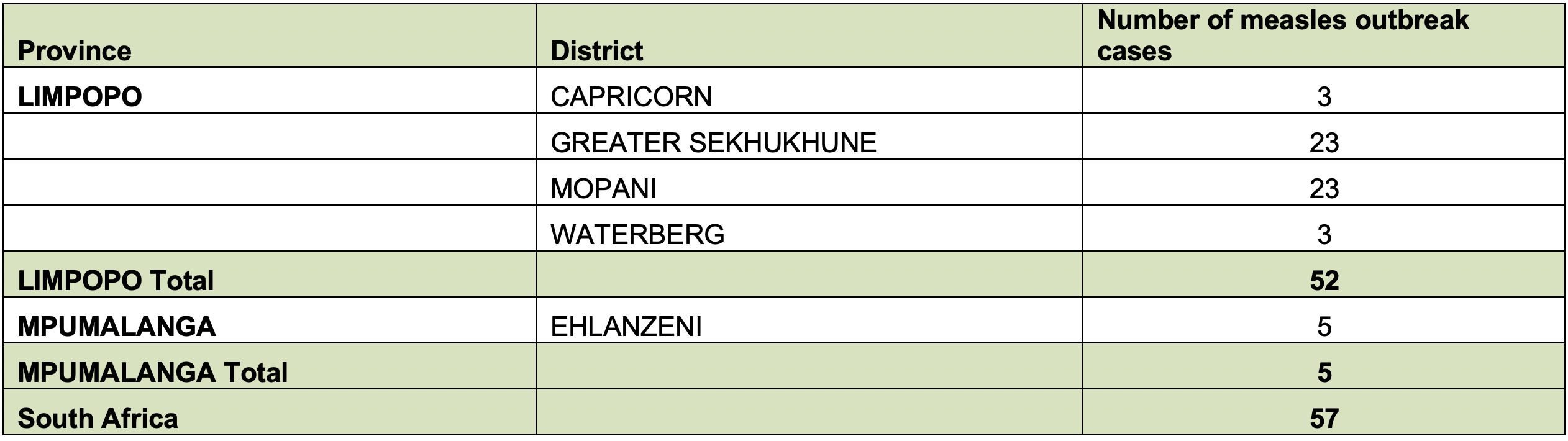
A measles outbreak has been declared after 57 cases were confirmed.

The National Institute for Communicable Diseases (NICD) has confirmed that measles cases in Limpopo and Mpumalanga meet the criteria to declare a measles outbreak.
In a statement, the NICD says the Capricorn and Waterberg districts in Limpopo, as well as the Ehlanzeni district in Mpumalanga, had three or more laboratory-confirmed measles cases within 30 days in their respective districts.
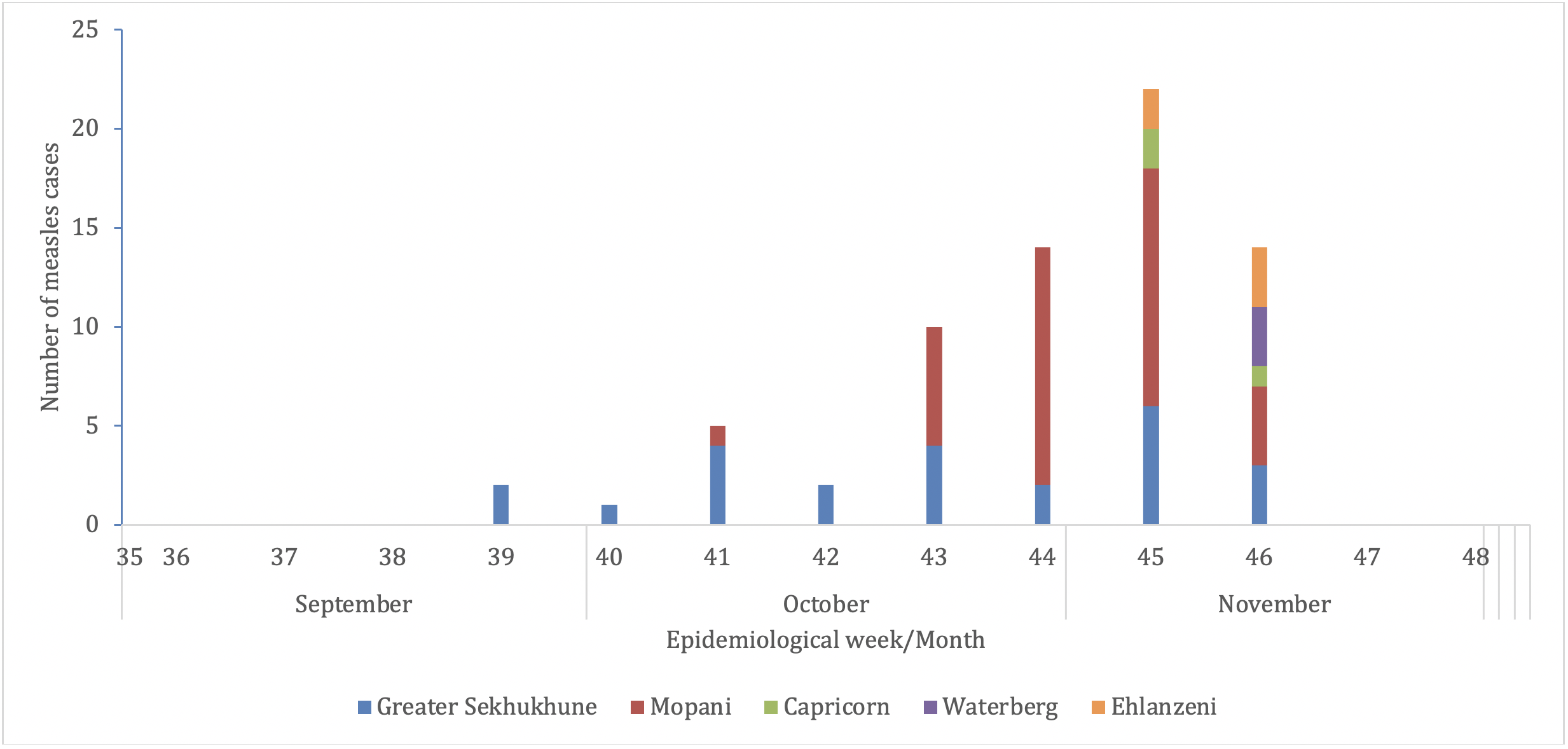
The NICD says that laboratory-confirmed measles cases in Limpopo increased to 52 since the beginning of the measles outbreak. Confirmed cases are also increasing in the Capricorn, Greater Sekhukhune, Mopani and Waterberg districts. Vhembe district reported two laboratory-confirmed cases, with one case epidemiologically linked to the measles circulation in Zimbabwe.
Meanwhile, four laboratory-confirmed cases were reported in the Bushbuckridge area of the Ehlanzeni district in Mpumalanga in the past seven days.
The institute says Ehlanzeni shares the border with the Greater Sekhukhune and Mopani districts, which were the first districts to declare measles outbreaks. The increase in cases in Limpopo and Mpumalanga poses the risk of infections spreading to other regions. Sporadic laboratory-confirmed measles cases have been reported in the Northern Cape, Free State, Gauteng, and the Western Cape.
According to the NICD, a large outbreak of measles occurred in South Africa in 2009, with more than 18 000 confirmed cases.
The NICD says confirmed cases were identified in the Greater Sekhukhune district in people aged from six months to 24 years, and two to 42 years in the Mopani district. The Ehlanzeni infections affected people aged between 18 months and 10 years.
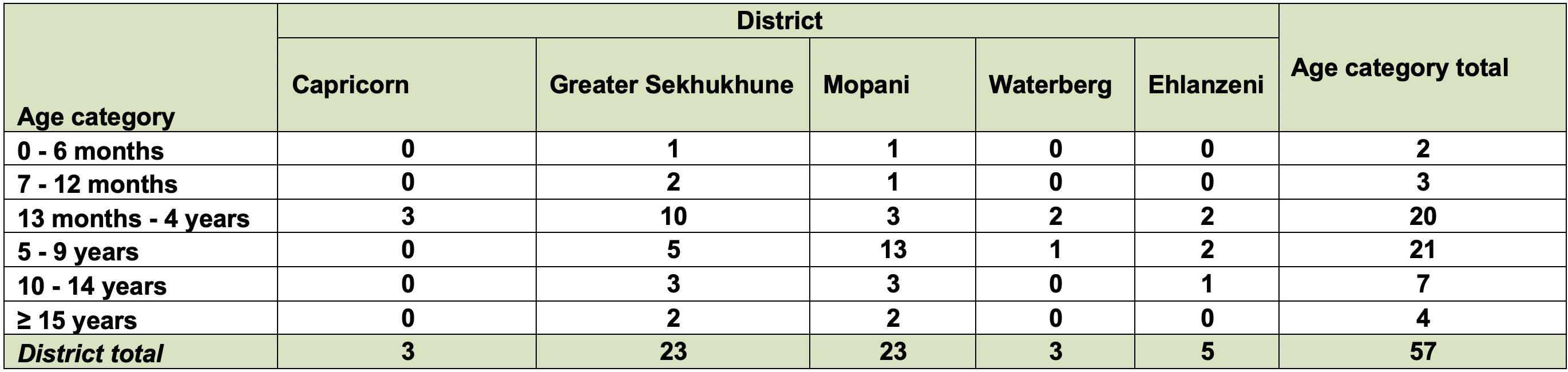
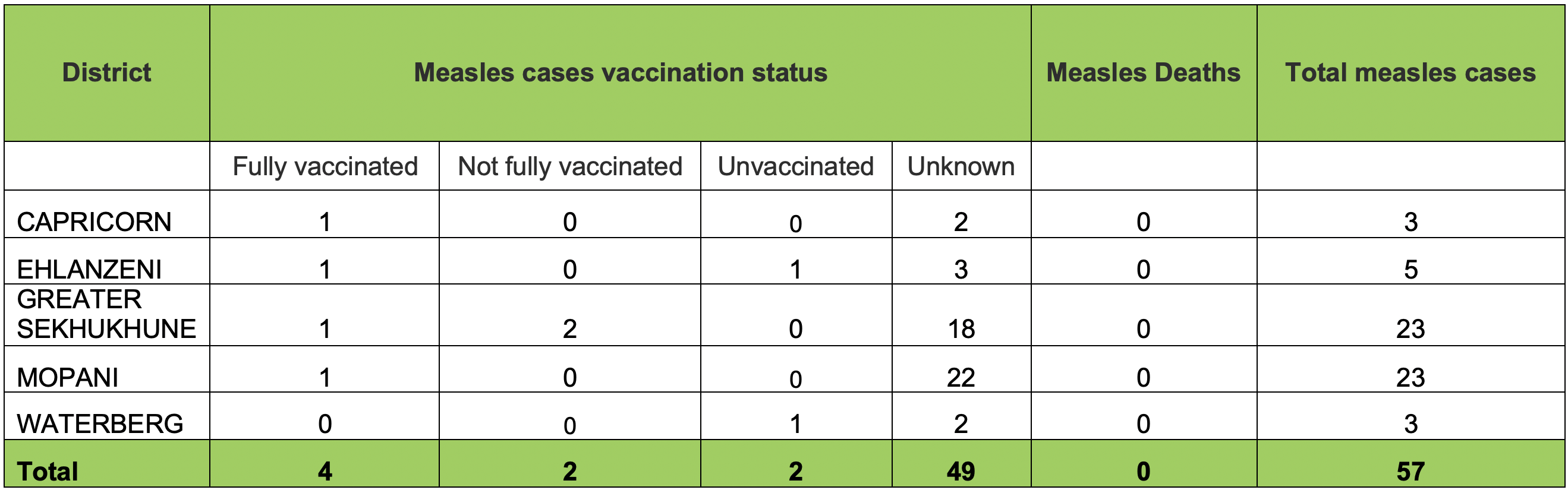
The NICD says two children were discharged from hospital, but that thus far, no deaths have been reported. These measles incidence is high in age groups 13 months to four years and five to nine years.
It says affected districts are tracing laboratory-confirmed cases and vaccinating contacts as necessary to prevent the spread of the virus.
The NICD says contact tracing is also being done in other provinces that report sporadic cases of measles, as per the National Measles Surveillance Guidelines.
Increased immunity the target
The health institute says the response in the public health sector should be to target improving measles immunity.
In healthcare facilities, catch-up measles vaccine doses are given to children who missed their measles vaccinations to increase immunity in the community.
Call to vaccinate as ‘it is never too late’
According to the NICD, 86% (49/57) of the people in Limpopo and Mpumalanga who were infected in this latest outbreak do not know if they were vaccinated against the disease. This impacts the evaluation of the measles coverage in affected areas, it says.
The NICD urges clinicians and caregivers to ensure that children’s measles vaccinations are up to date.
The vaccine doses are given routinely at six and 12 months of age, but it is never too late to vaccinate against measles.
Symptoms
People with measles develop a fever and rash, and may also have a cough, red eyes and a runny nose.
Complications of measles include pneumonia, diarrhoea, dehydration, encephalitis, blindness and death. Measles complications are severe in malnourished children and infants under two years of age. Persons of any age who are not vaccinated can catch measles and develop the disease.
Suspected measles cases should be notified on the notifiable medical conditions system.
Read original story on mpumalanganews.co.za