
Tshwane: Metro’s payment arrears threatens A Re Yeng bus service, says CEO
The Tshwane metro's failure to pay the Tshwane Rapid Transit (TRT) company for five months of services amounting to R132-million could mean a repeat of a recent suspension due to a fuel shortage.
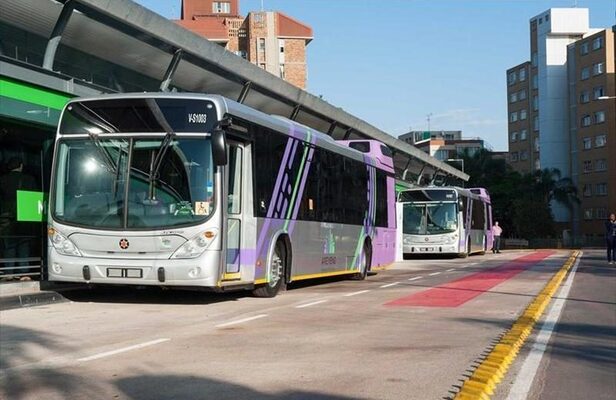
A recent four-day suspension of A Re Yeng bus services because of a fuel shortage might easily happen again, according to service provider Tshwane Rapid Transport (TRT).
“To date, the Tshwane metro owes us five months’ worth of services amounting to R132-million,” said TRT CEO Sam Matebane.
Mathebane said the debt was for day-to-day bus operations.
He has called on the national and Gauteng provincial transport departments to intervene in the matter.
“Without these funds, we are unable to honour our obligations to its service providers and customers.
“The continuity of TRT is endangered by the metro’s actions. This needs to be resolved quickly.”
Mathebane claimed that TRT had on numerous occasions demanded these payments, due on the 20th of every month; however, they had not been forthcoming.
He claimed that each year Tshwane failed to formally communicate their reasons for non-payment.
Mathebane said on June 13, TRT sent a letter to Tshwane to inform them of the fuel shortage and other predicaments key to continuous bus operations.
“This was not a first or second letter, but a fourth letter this year alone informing the metro of challenges experienced by TRT because of non-payment of services to TRT and its other companies.
“This is not the first time that Tshwane has failed to make payments to TRT as per the Bus Operating Company (BOCA) agreement. It has become a recurring pattern.”
Matebane said Tshwane was capacitated with the process of disbursements of funds for BRT operations as the TRT operated on a monthly cost-recovery basis, with Tshwane.
He said operations on the Mamelodi routes received a monthly financial subsidy from the Gauteng roads and transport department, which was meant for the coffers of TRT.
“These monies were kept by and not paid to TRT. As such, TRT is unable to fund its operations.”
Matebane said that fuel had also become the highest expenditure since recent increases.
“Service providers to TRT stopped servicing their contracts due to non-payment by TRT.”
He said such providers were contracted for maintenance when their services encountered breakdowns on routes.
“TRT has 114 buses, but we are currently operating 33 buses on the BRT operations because of budget constraints. These are buses which are needed by the commuters, however, are parked off.”
He said other service providers were threatening legal action.
“Employee salaries cannot be confirmed due to this instability.”
He said TRT anticipated further service stoppages as a result of the temporary “non-sustainable” fuel arrangement.
“The temporary solution is that TRT fills its diesel from Tshwane [metro] filling stations until the matter is resolved. The issue is not sustainable because there are different usage regimes and there have been times where their fuel pumps ran dry.”
He said the metro made commitments to resolve the funding issues at TRT within 10 days; however, the reconciliation process was “tedious”.
“Tshwane uses different safety mechanisms from TRT which involves logistics in handling the matter. There are contracts that must be managed. Stop gap measures of this nature affects these and may cause litigation for TRT.”
He said TRT resumed recent operations under “various pressures and risks”.
“If these issues are not resolved within 10 days, stoppages may continue.”
Gauteng road and transport department spokesperson Theo Nkonki declined to comment on the matter and referred Rekord to Tshwane MMC Dikeledi Seloa instead.
The Tshwane metro has not yet responded to an enquiry sent.
ALSO READ: Police investigating possible syndicate targeting schools
Read original story on rekord.co.za

