
Murder declines for consecutive quarter as police prepare for elections
Some of the country’s deadliest violence starts with little more than alcohol, an argument and a weapon, Acting Minister of Police Firoz Cachalia has warned, as he highlighted progress in violent crime statistics.
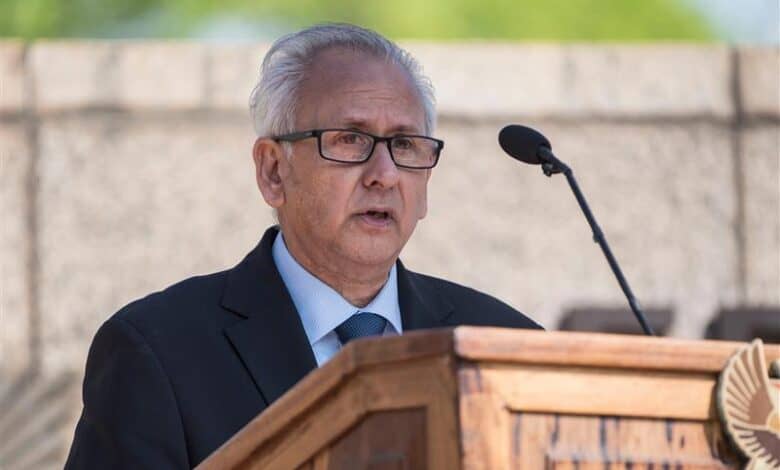
Murder has declined for another consecutive quarter, but police are keeping a close eye on violence as the country heads towards local government elections on November 4.
Presenting the first-quarter crime statistics for the 2026/27 financial year today (August 28), Acting Minister of Police Firoz Cachalia said crime statistics are not merely numbers on a page.
“Behind every statistic is a victim, a grieving family, a traumatised community and, in far too many cases, a life that can never be replaced.”
Decreases were recorded in several of the country’s most serious contact crimes, including murder, carjackings, residential robberies, business robberies and cash-in-transit robberies.
“These are the crimes that create fear in our communities. Many are committed by organised, heavily armed criminal groups that operate with planning and sophistication,” said Cachalia.
He attributed the sustained declines across these categories to intelligence-led policing, targeted operations and improved collaboration between law enforcement agencies.
Although the decreases are encouraging, Cachalia said police must remain honest with themselves and South Africans because the drops do not erase the reality that far too many people continue to lose their lives to violent crime.
“Every murder remains one too many. Every victim deserves justice,” he added.
Focus on GBV
Cachalia added that they were concerned about the increase in crimes against women, children and other vulnerable members of society, and said tackling these crimes remains a national policing priority.
Speaking about a recent meeting of the Minister and Members of the Executive Council (MinMEC), Cachalia said discussions focused on the challenges confronting policing in South Africa.
Among the key resolutions adopted at the meeting was the need to strengthen co-ordination between national, provincial and local government.
The aim is to enhance intelligence capabilities, improve detective services, accelerate the fight against organised crime, extortion, illegal mining and gang-related violence, and ensure that resources are directed towards identified crime hotspots.
The MinMEC resolved to prioritise interventions in 140 high-crime police station precincts across the country.
“These stations will receive, among others, targeted operational support, enhanced oversight and improved resource allocation.”
Alcohol identified as driver of violent crime
Interrogating the crime statistics, Cachalia said they found that alcohol is a primary driver of violence in this country.
“The pattern is consistent and it is depressingly predictable. Violence concentrates over weekends. It concentrates at night. It concentrates in and around liquor outlets, many of them unlicensed and operating without any regard for regulation.
“A very substantial proportion of our murders and serious assaults involve people who were drinking, killing or injuring people they knew, often over trivial arguments,” he added.
Cachalia explained that this meant a portion of the murder rate was not the work of organised criminals or armed robbers.
“It is ordinary people, drunk, with access to a weapon.”
Modernisation of police infrastructure
He added that the statistics released reinforce the importance of the SAPS Reset Agenda, which is about rebuilding a modern, professional and community-centred police service.
“Through its partnership with Business Against Crime South Africa, the SAPS is advancing a project aimed at strengthening digital capabilities at station level, improving operational efficiency and equipping members with technology to enable smarter, more responsive policing.”
He said the SAPS is working with the National Treasury to upgrade and maintain the infrastructure at police stations.
Securing local government elections
“As the country prepares for the upcoming local government elections, it is important to acknowledge the violence that has, at times, targeted political office bearers. There have been incidents in which councillors and other political representatives have been the victims of violent crime, undermining democratic participation and creating fear within communities.
“Every such attack is an assault not only on an individual but also on the democratic institutions they serve. Law enforcement agencies remain committed to thoroughly investigating these cases, bringing those responsible to justice, and working with all stakeholders to ensure that the electoral environment is safe, secure and conducive to free and fair democratic participation.”
He said the first-quarter crime statistics demonstrate that the country is making progress in several critical areas.
“They also remind us that significant challenges remain. There can be no complacency.”
Breaking news at your fingertips… Follow Caxton Network News on Facebook and join our WhatsApp channel.
Nuus wat saakmaak. Volg Caxton Netwerk-nuus op Facebook en sluit aan by ons WhatsApp-kanaal.
Read original story on www.citizen.co.za

