
NHI Bill met with mixed reactions from practitioners and unions
Various organisations react after votes in favour (205) and votes against (125) the bill were cast in the National Assembly this week.
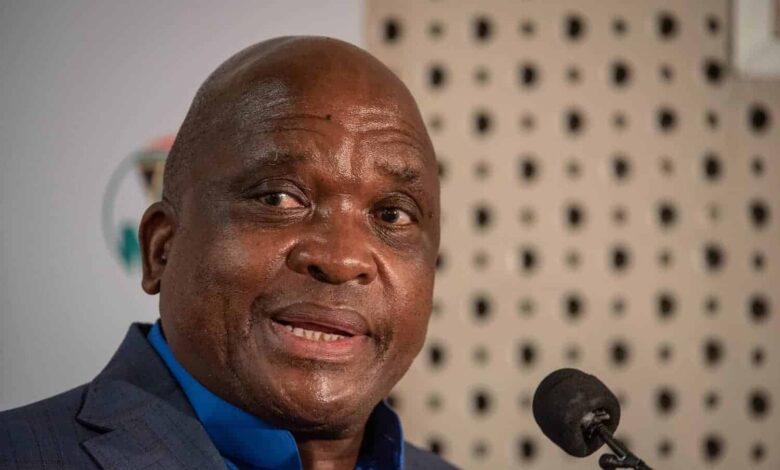
The passing of the National Health Insurance (NHI) Bill has been met with mixed reactions from health practitioners and unions.
There were 205 members of Parliament (MPs) who voted in favour of the NHI Bill and 125 who voted against it in the National Assembly on Tuesday.
Only 16% of South Africans are covered by a medical aid scheme, while 84% depend on 49% of resources from the fiscus and services provided by the public health system only.
Healthcare labour unions Democratic Nursing Organisation of South Africa (Denosa) and the National Education, Health and Allied Workers’ (Nehawu) said they supported and welcomed the move to pass the bill.
Denosa KZN
Denosa KZN chairperson Sibonelo Cele said: “Days of the ‘poor schemes for the poor’ and ‘rich schemes for the rich’ are over. It’s been long awaited because more people depend on meagre resources with the current arrangement.
“With the envisaged changes, the health system will be able to give better healthcare to more people, especially those who don’t or barely afford it as things stand,” he said.
Echoing Denosa’s sentiments, Nehawu spokesperson Lwazi Nkolonzi said Nehawu supported the full implementation of the NHI as it seeks to transform historical injustices and structural inequalities caused by the former apartheid state.
“We re-emphasise our position on the NHI, that if the South African health system is to overcome the challenges it is presently faced with, strengthened political support is needed so that financing can be restructured and the roles of both the public and private sector can be redefined.
“Access to quality healthcare is a right not to be delayed any further by private sector interests, whose only concern is profiting from people. The NHI Bill has gone through extensive public consultations and scrutiny by the Portfolio Committee on Health,” he said.
Health practitioners in KZN agree that the bill had good intentions to ensure universal health coverage, however, they have also raised concerns on how it will be implemented ‘considering the poor level of state services’.
‘Healthcare access for all’
Head of the discipline of public health medicine at UKZN, Professor Saloshni Naidoo, said all South Africans, irrespective of status, are expected to have access to healthcare.
“[Ideally], it should mean better healthcare for all. However, our situation is not ideal. We have a struggling public healthcare system, under-resourced and with serious infrastructure problems.
“There remain several questions around how NHI will be implemented. Details of processes is what government must provide for us to better understand how this will happen and for us to be able to say that we are moving in a positive direction,” she said.
Health professional and deputy chairperson of human rights organisation Active Citizens Movement Dr Kapil Narain said there are many genuine concerns surrounding the passing of the NHI, especially considering the poor level of state services and inept leadership.
He said there was certainly the possibility of maladministration and corruption as witnessed with the Covid-19 pandemic.
“However, I feel this bill is in principle a powerful step towards achieving universal health coverage, in realising that health is a human right, and in ensuring we ‘level the playing field’. It is a defining moment in South Africa’s health landscape.
“Implementation is a grave challenge and may not yet be realised for years to come. Healthcare workers, fellow citizens and civil society must hold government to account.”
IRR
Meanwhile, the SA Institute of Race Relations (IRR) said South Africans should be deeply alarmed that the bill was approved without knowing how much it will cost.
According to IRR campaign manager Mlondi Mdluli, there was no certainty that ‘NHI taxes’ will be reserved for NHI purposes, rather than used for general government spending.
The bill will now be submitted to the National Council of Provinces and SA could comply with Universal Health Coverage, which will give all people equal access to the full range of quality health services they need, when and where they need them, without financial hardship.
Health Minister Dr Joe Phaahla described the passing of the bill as a ‘historic’ moment.
“This in itself is a major milestone. We’ve been on this path over a long period, almost 12 to 14 years. Starting with policy development, it was also delayed by the advent of the pandemic after it was submitted to Parliament.”
Phaahla said the NHI Bill, which was introduced in Parliament in 2019, laid a foundation for major reforms needed in the country.
“It’s a major milestone in a sense that since the advent of democratic South Africa, in the health sector, we focused on improving access from the time of [former] president Nelson Mandela.
“Policy decisions were taken in terms of free access to healthcare for pregnant women and children under the age of six and subsequently opening primary healthcare services free of charge for all users.
“Private health and public health travelling on parallel tracks are both surely [destined] toward crashing. [But] if they can be pooled together, there is a good chance of complementing each other,” he said.
Read original story on www.citizen.co.za

