
Relocate remaining Mamelodi flood victims as promised, Tshwane metro told
The saga of the so-called 'Mamelodi flood victims' continued last week as residents claimed the Tshwane metro had gone back on its promises to relocate the remaining residents.
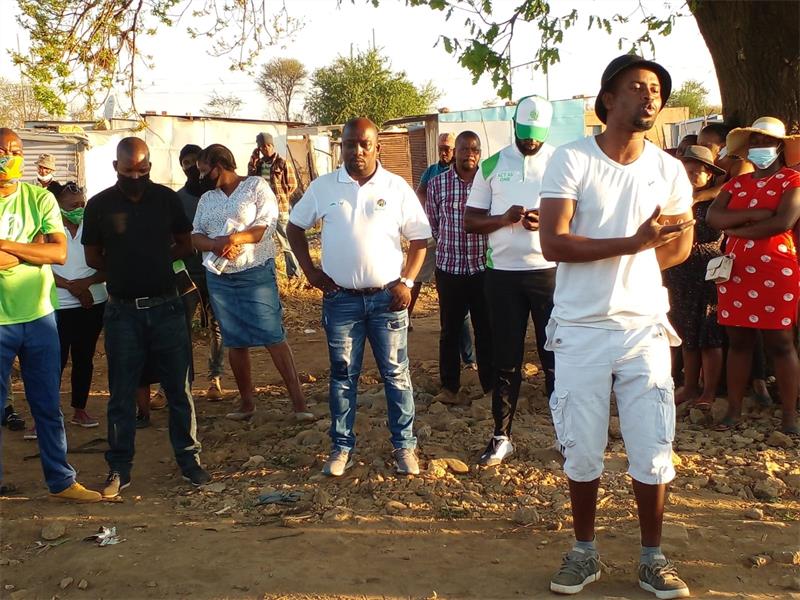
The flood victims, who were left destitute after flooding in 2019, said they held an unfruitful meeting with Tshwane metro officials at the Mini-munitoria office last Thursday (September 16).
A representative of flood victims, December Matlala said they were informed at the meeting that the Tshwane metro had no means of relocating the flood victims.
“We were told no land was available for their relocation and the metro has financial problems,” said Matlala.
Matlala said they were tired of empty promises and dates after dates of relocation.
“When the time comes, it’s always a new story.
“It is almost three years now and we are still waiting to be relocated. All they do is come up with a new story to distract us,” said Matlala.
Abel Tau, ActionSA’s mayoral candidate for Tshwane, said following an invite from the flood victims’ leaders, his team was advised about the remaining victims’ plight.
“During a meeting held earlier this week, the flood victims’ representatives were informed that the metro had no means of relocating and housing these residents.”
He said ActionSA found it “concerning” that only 192 of the 790 families would be accommodated in the metro’s relocation plans.
This while the rest of the families will be stuck in limbo, “while the DA-led metro supposedly cobbled together yet another relocation plan”.
“The affected residents have not been informed on when this ‘plan’ may come about.”
Tau concluded by saying that ActionSA has already pledged the services of its legal team to support the community.
“Our lawyers are ready to assist them.”
Tshwane metro spokesperson Lindela Mashigo said the metro was made aware of the issue by the Gauteng Legislature Portfolio Committee on Human Settlement, “which we have responded to”.
“The metro is experiencing a huge demand for affordable housing,” he said.
“There has been a notable and concerning increase in rapid land invasions since 2014 throughout Tshwane.
“These invasions make our planning and development mandate extremely difficult and impact negatively on our environment, especially on environmentally sensitive areas.”
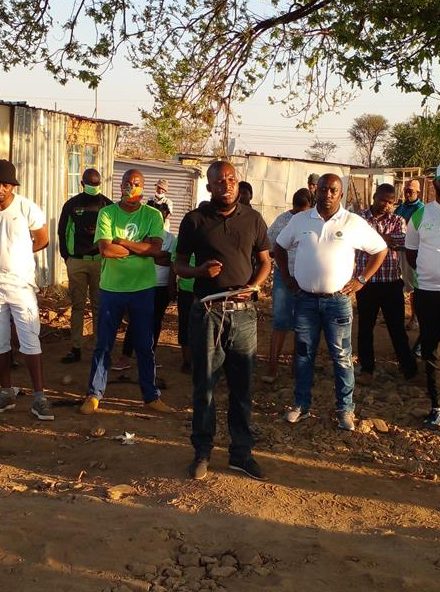
He said as soon as land was invaded, the occupiers are counted as a housing backlog.
“As a result of the recent rapid land invasions throughout the city, it became difficult for us to plan for and provide the rudimentary services as part of interim measures or to even formalise all the informal settlements at the same time.”
Mashigo said the local floods of December 2019 also hit communities settled within flood line and wetland areas.
All seven regions of the Tshwane metro were affected by the floods. Three regions, namely regions 2, 4 and 6 were particularly hit hard.
“In region 6 in Mamelodi, it is important to emphasise that the affected informal settlements (Marikana Camp, Eerste Fabrieke Camp, Seven Camp, Willow Farm Camp, Soul City Camp and the Mavuso camp) were all recently established. In contrast, there are more than 27 recognised informal settlements in the region, the oldest of which was established in 1995.
“Most of the informal settlements in region 6 are in Mamelodi. The reality is that Mamelodi is landlocked with Alaska and Stoffel Park currently located right on top of the green belt (mountain),” said Mashigo.
“We are in the process of finding suitable land that will not only address the informal settlements in Mamelodi but also the informal settlements in region 5.”
Read original story on rekord.co.za

