
Rooibos farmers: Curbing biodiversity loss with sustainable farming
From protecting the Cape leopard to implementing crop rotation – here’s how South African rooibos farmers are working to protect the environment and endangered species.
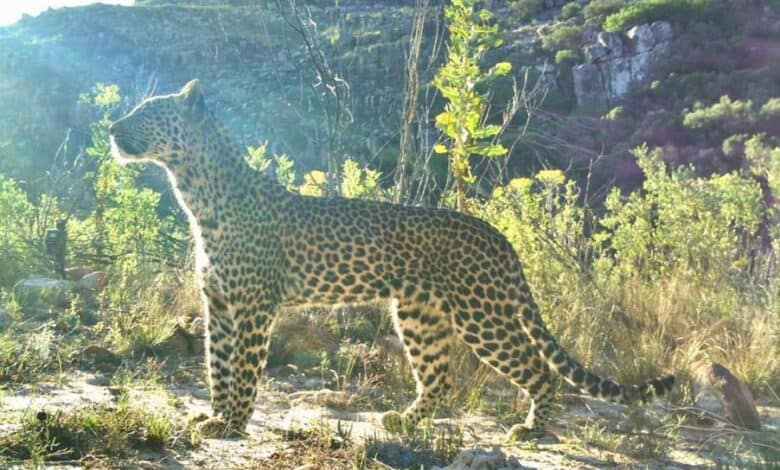
As South Africa faces significant biodiversity loss, rooibos farmers in the Cederberg region are stepping up to show sustainable agriculture can go hand in hand with conservation.
South Africa lost about 0.12% of its natural vegetation annually between 1990 and 2018. This rate doubled to 0.24% per year between 2014 and 2018.
In response to these challenges, the rooibos industry showed how sustainable farming practices can help protect endangered species, restore natural habitats and contribute to global efforts to curb biodiversity loss.
Marthane Swart, secretariat for the Rooibos Council, says local farmers are taking a proactive approach to conservation.
“Many rooibos farmers are implementing measures to restore and protect the unique biodiversity of the Cederberg region. This includes habitat restoration, conservation of indigenous plant species and the protection of endangered wildlife, such as the Cape leopard.”
Protecting the Cape leopard
The Cape leopard, a secretive predator roaming the mountains of the Western Cape, faces ongoing habitat loss due to human encroachment and agricultural expansion.
While its survival remains under threat, some rooibos farmers, in collaboration with conservation groups, are taking steps to support its protection. Some farms have designated portions of their land as conservation areas, helping to minimise human impact and maintain natural prey populations, contributing to broader efforts to safeguard this elusive species.
Rehabilitating the Clanwilliam cedar
Similar efforts are underway to restore the Clanwilliam cedar (Widdringtonia cedarbergensis), a critically endangered tree species endemic to the Cederberg.
Once abundant, these trees have suffered from overexploitation and climate change, resulting in a 90% decline in numbers. Rooibos farmers participating in rehabilitation projects are assisting in reforesting areas with these iconic trees, contributing to the restoration of the region’s unique fynbos ecosystem.
Dawie Burger, managing director of Sustainable Ceder, believes the rooibos industry can play a significant role in restoring the Clanwilliam cedar in the Cederberg wilderness area.
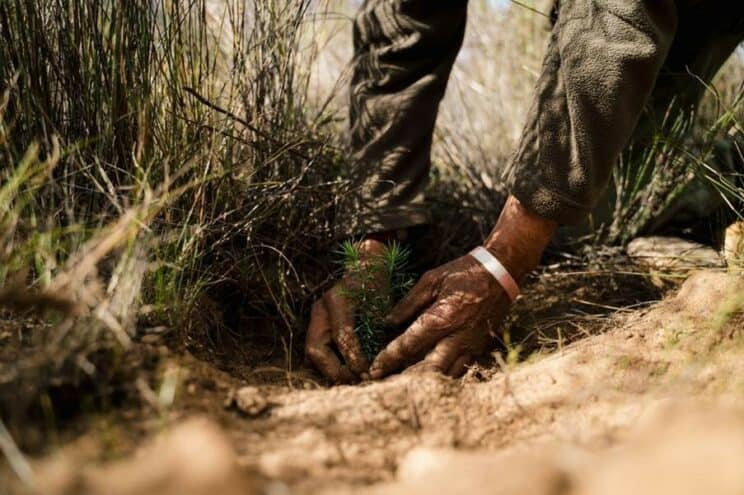
“Revitalising the cedar is essential for preserving the region’s unique biodiversity. While some rooibos farmers have joined conservation efforts, broader participation is crucial. Expanding collaboration would not only support environmental sustainability but also uplift local communities, demonstrating how agriculture and conservation can work hand in hand.”
Monique Ruthenberg, CapeNature Conservation manager for the Cederberg Complex, says the collaboration between Sustainable Cedar, CapeNature and local communities, including rooibos farmers, has been instrumental in restoring the Clanwilliam cedar.
“Our combined efforts include establishing nurseries, propagating seedlings, replanting thousands of cedars and raising fire awareness, all of which have spurred job creation. When conservation agencies, farmers and communities stand together, we know we are on the right path towards a sustainable future.”
Rooibos farmers use sustainable farming techniques
Several rooibos farmers have adopted sustainable farming techniques, such as crop rotation, organic farming and reducing chemical inputs, to preserve soil health and water resources.
According to Swart, farmers who have committed to sustainable agriculture are seeing long-term benefits, not only for their crops but for the surrounding environment.
“By maintaining biodiversity corridors and avoiding monoculture practices, they are helping to preserve the delicate balance of the ecosystem.”
Through initiatives like the Union for Ethical Biotrade and Rainforest Alliance certification the rooibos industry is reinforcing its dedication to sustainability. Farmers who are part of these programmes now collectively have 500 hectares of land under rehabilitation.
These initiatives, including the Greater Cederberg Biodiversity Corridor – which has 70 406ha under conservation through stewardship agreements, and a further 282 953ha under voluntary agreements with biodiversity and business projects in the rooibos and other agricultural industries – ensure that agricultural expansion does not come at the cost of biodiversity, instead fostering coexistence between farming and conservation efforts.
Rooibos Heritage Route
The Rooibos Heritage Route, an initiative designed to showcase the region’s unique biodiversity and cultural significance, is another example of how the industry promotes conservation.
This route takes visitors through the heart of rooibos country, offering insights into sustainable farming practices, local heritage and the natural wonders of the Cederberg. Through eco-tourism, farmers are not only generating additional income but also raising awareness about the importance of biodiversity conservation.
Rooibos industry’s efforts align with global agreement
The rooibos industry’s conservation efforts align closely with the Kunming-Montreal Global Biodiversity Framework, a global agreement that aims to slow down and reverse biodiversity loss by 2030.
South Africa, as a signatory to the agreement, has committed to ensuring its industries contribute to achieving key targets, such as reducing biodiversity loss and restoring degraded ecosystems.
Swart emphasises that the rooibos industry is playing its part in meeting these targets.
“The Kunming-Montreal Global Biodiversity Framework challenges all sectors to act and the rooibos industry is stepping up. Through habitat restoration, sustainable farming and conservation partnerships, our farmers directly contribute to the framework’s 2030 goals.”
Read original story on www.citizen.co.za

