
SA cheetahs to India: An ambitious conservation project or a political stunt?
A reputable conservation organisation has distanced itself from the controversial Indian cheetah relocation programme.
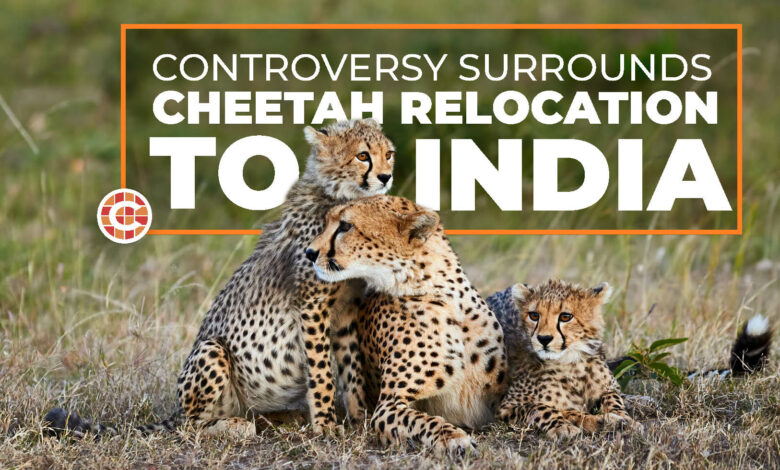
The first South African cheetahs that are part of a multi-million rand relocation project that aims to reintroduce the big cats to India are yet to arrive on foreign soil and already the project is mired in controversy.
Project Cheetah has been hailed by the Indian government as ‘the world’s first inter-continental large wild carnivore translocation project’ but conservationists are calling it ‘tunnel vision’ by authorities who have ‘no experience or understanding of cheetahs in the wild’.
The last definitive sightings of cheetahs in India were in 1947, with the species declared locally extinct in 1952. Cheetahs are listed as Vulnerable on the Red List of Threatened Species of the International Union for Conservation of Nature. There are fewer than 7 000 left worldwide, with the biggest populations found in South Africa and Namibia. Both countries have committed to sending cheetahs to India, to re-establish populations there.
On Wednesday, conservationists from five countries published a letter in the Nature Ecology & Evolution journal, writing that ‘the current action plan is ecologically unsound, costly and may serve as a distraction, rather than help global cheetah and other science-based conservation’.
After initially scheduled to arrive on August 15, on the 75th anniversary of India’s independence, the eight cheetahs from Namibia were released into a boma in Kuno National Park on September 17, Indian prime minister Narendra Modi’s birthday.
Quid pro quo and bureaucratic delays
Instead of being celebrated by conservationists, speculation is rife that Namibia sent the cheetahs in the hope that India would support moves to lift the international ivory trade ban. The trade issue is on the table at next month’s Convention on International Trade in Endangered Species conference in Panama.
South Africa’s involvement in the relocation project is being brought increasingly into question. A memorandum of understanding (MOU) with India is yet to be signed, even though 12 cheetahs, earmarked for the first phase of the relocation, have been in bomas in Limpopo and KwaZulu-Natal for more than three months, following their capture earlier this year. Concerns have been raised by experts over the cheetahs’ long stay in the enclosures.
Caxton Local Media was reliably informed that the Endangered Wildlife Trust (EWT), which assisted in the management of some funds that were dispersed for the relocation, has withdrawn from the project over concerns about certain aspects.
When contacted for comment, the EWT referred all inquiries to the Department of Forestry, Fisheries and the Environment (DFFE).
Not much was forthcoming, with DFFE spokesperson Albi Modise saying they cannot comment on the MOU or any related processes at this stage. This includes reported concerns from the ministry itself, which apparently asked for a risk management plan.
While the DFFE did not want to divulge any information, a state representative from the Madhya Pradesh region, where Kuno National Park is situated, said: “A MOU with the South African government and India is at an advanced stage. It is only a matter of time before the MOU is signed, clearing the decks for the translocation project. Once done, we will expedite the process of translocating the cheetahs.”
Vincent van der Merwe was the manager of the EWT’s Cheetah Metapopulation Project but resigned at the start of the relocation project in June as he ‘wanted to have the freedom to run my own project’. He subsequently founded The Metapopulation Initiative. He told the Hindustan Times two weeks ago that ‘there could be a problem’.
In response to questions from Caxton Local Media, Van der Merwe said: “Government procedures must be followed; these bureaucratic procedures involve meticulous negotiations that take time.”
When asked when he thinks the South African cheetahs will make their way to India, he replied: “Hopefully, November. Fingers crossed.”
Dr Mike Toft, the veterinarian who has been responsible for some of the captured cheetahs that are still in bomas in KwaZulu-Natal, told Caxton he has every faith in the success of the project.
“This is not about a single, once-off translocation, but an ongoing project over the next few years; whatever pitfalls arise will be analysed and investigated. One sometimes has to think out of the box with projects of this magnitude.”
Critics of Project Cheetah say the location of Kuno National Park as the first release site is ill-conceived. The 748km² park, 360km south of Delhi, is unfenced and surrounded by countless settlements with cattle, sheep and goats. The Wildlife Institute of India estimates only 50% of the cheetahs will survive in the first year of the five-year project, estimated at a cost of R200 million.
In the Nature Ecology & Evolution journal letter, the conservationists say that India’s claim that the country currently has sufficient and suitable space for cheetahs is unsubstantiated.
“This expensive, poorly conceived plan has no chance of establishing a viable self-sustaining population of free-ranging cheetahs. It is likely to fail given the severe constraints of habitat quality and socio-economic pressures. Because the project chose to put ‘the cart before the horse’, it may end up as just another fenced-in zoo.”
Read original story on highwaymail.co.za