
SA has the 19th most expensive fluoride toothpaste
Tooth decay is the most common non-communicable disease worldwide, but fluoride toothpaste – the best prevention tool to prevent cavities – is unaffordable to most.
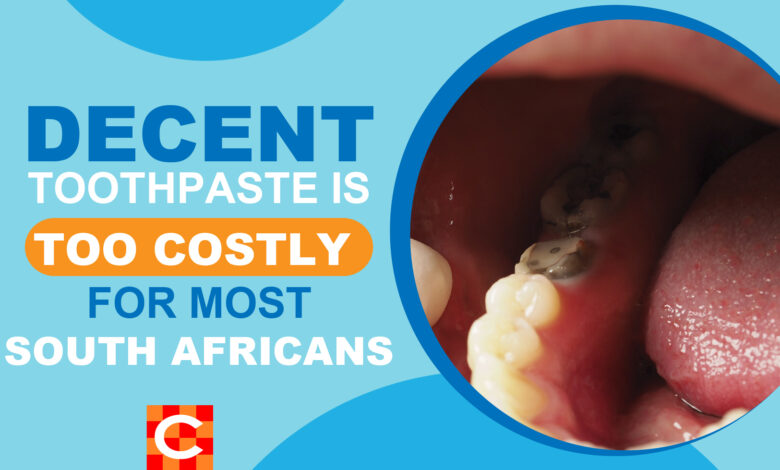
Despite the World Health Organisation (WHO) including fluoride toothpaste in its latest list of essential medicines, many people across the world cannot afford it, especially those in low-income countries.
South Africa is no exception as is evident in a recent study published in the PLOS ONE peer-reviewed journal. South Africa has the 19th most expensive fluoride toothpaste out of the 78 countries surveyed for the Fluoride Toothpaste Affordability Ratio (FTAR). Benin has the most unaffordable and New Zealand the most affordable fluoride toothpaste.
Tooth decay and dental cavities are the most common non-communicable disease worldwide. The WHO promotes the use of fluoride toothpaste as a key preventive strategy, hence its inclusion on the list of essential medicines, which the organisation describes as ‘those that satisfy the priority healthcare needs of a population…’ and ‘intended to be available in functioning health systems at all times… at prices individuals and health systems can afford’.
The scientists behind the PLOS ONE study calculated the FTAR as the expenditure associated with the recommended annual consumption of fluoride toothpaste relative to the daily wage of the lowest-paid unskilled government worker. According to the WHO, if more than one day of work is required to buy a medical product, it becomes unaffordable.
Fluoride toothpaste was strongly affordable in high-income countries, relatively affordable in upper-middle-income countries and strongly unaffordable in lower-middle-income and low-income countries. In many of the 78 sampled countries, the average lowest-paid unskilled government worker needed more than one day of work to purchase 182.5g of the cheapest fluoride toothpaste.
The study found that in South Africa, an average low-income earner needs to work for 1.38 days to afford one of the cheapest brands of fluoride toothpaste. New Zealand’s FTAR ratio, on the other hand, is only 0.0279.
Oral health in jeopardy
In her doctoral thesis, Economics of the South African toothpaste industry (2019), Lesley Vorster stated that despite the wide commercial availability of fluoride toothpaste and pricing distribution over a wide range, the majority were unaffordable to low-income households and completely inaccessible to households located within the lowest income bracket.
Vorster found the number of days of disposable income required to purchase the annual therapeutic dosage of the lowest-priced toothpaste in 2019 was calculated at 1.33 days, more than the one-day critical level. This means there was no commercially available toothpaste ranked as financially accessible to the roughly 3.82 million households in the lowest income group, she found.
With households in the lowest income bracket spending more than 104% of their daily income on the annual dosage of the lowest priced toothpaste compared to the 0.23% spent by the wealthiest households, Vorster concluded that it indicated dire implications in terms of oral health and economic hardship suffered by the poor. She said that the results of her studies ‘clearly demonstrate significant inequity in the affordability of fluoridated toothpaste between socio-economic segments within South Africa’.
Read original story on germistoncitynews.co.za