
Tuks law improves in international university rankings
“Covid-19 forced us to rethink and reimagine, but often it came down to sheer hard work and commitment in the face of a constantly changing and unpredictable pandemic,” UP law faculty dean Professor Elsabe Schoeman said.

Despite challenges posed to the education sector by Covid-19, the University of Pretoria (UP) law department revamped its position in an international university rankings report.
The faculty gained the 60th spot for law in the Times Higher Education’s (THE) World University Rankings 2022 report which included 257 universities from around the world.
This was an improvement for the university from last year when it was ranked in 101-125 band.
The research site provides a list of its world’s best universities, judging the institutions on 13 performance indicators which included: learning environment, research, innovation and international outlook.
Tuks is from a developing country and has over 36 000 students who went against universities such as Harvard and Stanford universities which took the number one spot.
UP law faculty dean Professor Elsabe Schoeman said they were happy about their improved ranking.
“Considering that the THE (overall) rankings include more than 1 600 universities across 99 countries and territories, we are very happy to be in 60th place,” Schoeman said.
She said they constantly worked on their international reputation through collaborating with international partners and networks on research projects and initiatives.
“As a research-intensive university and faculty, we are constantly increasing our research output, focusing on research that matters, especially with regards to the UN sustainability goals.
“This means that our teaching and learning is research-informed and relevant, while also keeping up with the latest technological developments.
“In short, we aim to produce graduates with the skills and knowledge to take on the greatest challenges of our world – injustice, poverty and inequality – and contribute continentally and globally to a better world for all.
Schoeman said following the Covid-19 outbreak that posed a challenge to traditional teaching and learning they implemented emergency remote teaching (ERT).
“It required much intense effort and dedication from staff, as well as technological upskilling.
“We knew that our students depended on us to complete their academic year,” Schoeman said.
“As far as research and community engagement are concerned, staff found themselves confronted by novel legal issues (e.g. in the insurance industry, social media, housing, etc.) as well as the exacerbation of existing inequalities in society – the Centre for Human Rights and the Centre for Child Law, as well as the Law Clinic were busier than ever, dealing with those societal and legal issues.
“Covid-19 forced us to rethink and reimagine, but often it came down to sheer hard work and commitment in the face of a constantly changing and unpredictable pandemic.”
Schoeman said research output by female researchers declined during the pandemic.
“Women still pick up most of the household and childcare duties – and this is something that will have to be addressed in the coming years.”
The faculty has been making strides in development, this year it made headlines for appointing 30-year-old Dr Joel Modiri as the youngest law professor due to his established critical political writings and its relevance to law.
Modiri was promoted at the end of 2020, to the position of an associate professor making him the youngest professor in the current employment of the university – and among the youngest in the history of the institution.
While the law faculty improved the overall ranking was at 601-800 band.
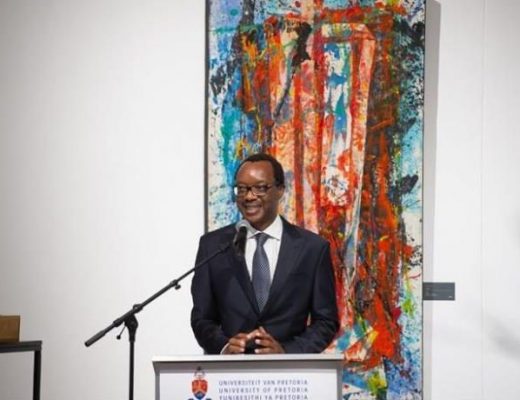
Previously speaking on the impact of Covid-19 on the education sector, vice-chancellor Professor Tawana Kupe said although the pandemic posed serious challenges to higher learning institutions, it also provided an opportunity for universities to enhance their ability to teach in different forms other than contact learning.
“In this university, we do not have the philosophy of having 100% contact learning or 100% online learning. Instead, our philosophy is somewhere in the middle, which is what we call hybrid learning. As we move forward, the university will continue with hybrid learning.”
Read original story on rekord.co.za

