
Voter satisfaction survey: Decline in faith about count-accuracy
Survey finds most voters believe the voting process was free and fair, but shows a lack of trust in other elections processes.
Despite recording the longest queues since 2009, confidence in the IEC remains high, says the Human Sciences Research Council (HSRC).
This was revealed when the HRSC presented its Election Satisfaction Survey findings at a midday media briefing.
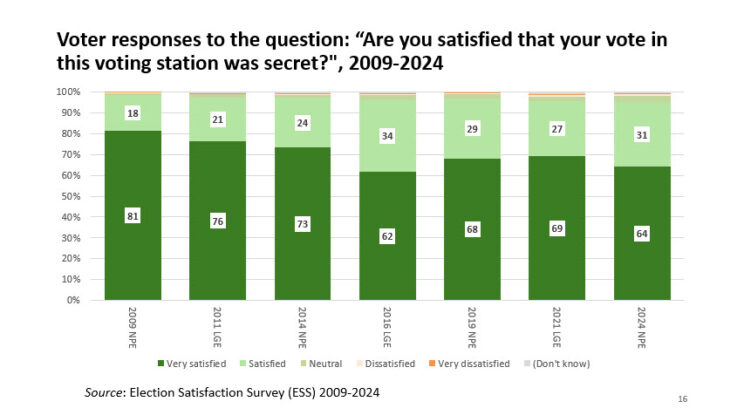
Voters indicated they felt the elections were free and fair, saying they had the space needed to make intimidation-free choices in the voting booths.
However, there was a significant decline (from 60% in 2019 to 45%) in the number of voters who trust that the results will be accurately captured. A concerning 3% of respondents indicated that they were coerced into changing their votes.
The research director of the Developmental, Capable Ethical State (DCES) division at the HSRC, Dr Benjamin Roberts, pointed out that the survey reflects the views of those who voted; non-voters were not included.
Some of the key findings of the survey are:
- 73% of voters decided that they were going to vote more than six months ago.
- 63% voted because they believe it makes a difference.
- 38% voted to improve the economy or government services.
- 37% voted to fight corruption.
Most voters (60%) said they queued for 15 minutes or less, while 11% said they were in the queue for an hour or longer. Most survey interviews (34%) were done between 14:00 and 17:30, with the smallest number (14%) after 17:30.

The survey found that overall, over 50% of voters supported switching to electronic ballots, while around 36% are opposed to the idea.
Interestingly, 64% of those who queued for more than two hours favoured switching to electronic ballots.
Roberts said they have noted increasing polarisation between those who vote and those who don’t. Voters are generally happy with and trust the process, while non-voters are discontent.
Prof Narnia Bohler-Muller, divisional head of DCES, said this year’s long queues are believed to be because of issues like device failures and the introduction of three ballots, rather than a high voter turnout.
By 13:30, 63.71% of votes were declared, with a 58.5% voter turnout recorded at that time.
Read original story on www.citizen.co.za

