
[Watch] Damsels in defence: Women fight back against GBV
As Women’s Month shines a light on women’s strength and resilience, two Centurion women are helping survivors turn fear into strength and reclaim their power.
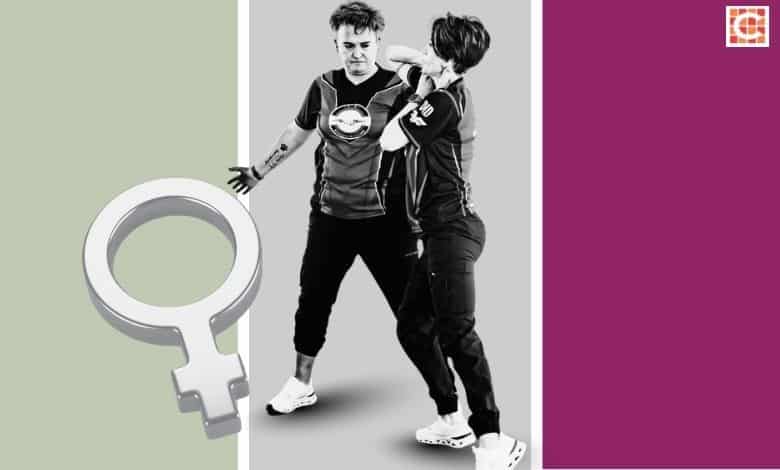
Around 20 women from different social classes, racial groups and generations stand in a circle. Some look as though life has taken its toll, with deep lines of worry creasing their faces and melancholic yet resolute eyes.
“We can. We will. We shall,” they chant, united by shared experiences of abusive relationships, assault and rape.
Then the atmosphere changes.
“Activation!” shouts Andi Rootman-Swart (48), a petite former kickboxing champion with a presence that could send Wonder Woman running back to the Amazons.
The women respond. Their fists rise and their right legs move slightly forward as Andi’s voice cuts through the group.
“Activation!” she shouts again.
Her partner and wife, Adéle Rootman-Swart, moves in close.
“Stop. Block. Frame.”
In a split second, Adéle drops to her knees, giving Andi enough time to move away from her would-be attacker.
“Activation!”
Andi shouts again.
“And now for the selfie!” she cheers.
The women know the move, raising their right arms as if reaching for a selfie stick before delivering an open-palm strike beneath the chin.
“Super slap!”
Laughter breaks through the tension as the women practise the movement, pretending to strike imaginary attackers on the ear.
“Remember,” Adéle tells them, “we are not damsels in distress. We are damsels in defence.”
The women pump their fists into the air as war cries rumble from deep down in their stomachs.
For them, self-defence is about more than learning how to fight back. It is about reclaiming their power, rebuilding confidence and refusing to see themselves as helpless.
They are taking up the fight against GBV themselves.
Holistic self-defence activations
An hour later, Andi and Adéle drop onto the floor mats, exhausted after the intense self-defence session.
They call these sessions activations, held twice a month at venues across Gauteng.
The first Damsels in Defence activation took place in the last quarter of 2014. What began as a programme focused mainly on physical self-defence has evolved over the years. “Our own life experiences have changed us as well, and the programme grew with us,” says Andi.
Today, the approach is broader.
“We see it much more holistically. It is not just about teaching a woman what to do if somebody grabs her. It is about her mind, her body and her soul. It is about confidence, her voice and remembering that she is powerful and worth protecting,” says Adéle.
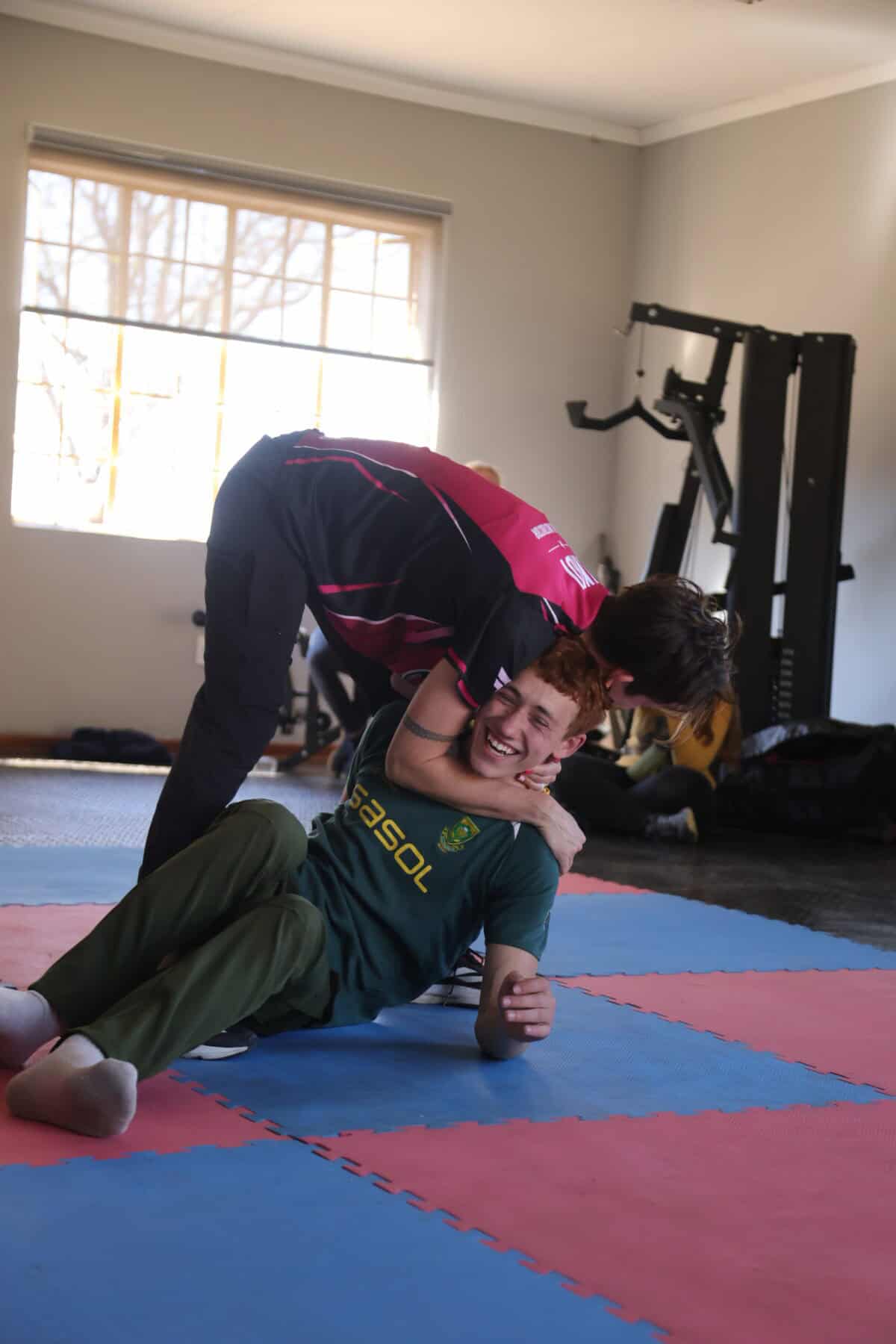
Over the past two years, they have held 32 activations, all free of charge.
“We make our community activations as accessible as possible. We don’t want a woman’s financial situation to determine whether she can learn basic awareness, confidence and self-defence,” says Andi.
Sponsors and partners help fund the community activations, while paid corporate programmes support the organisation’s work.
Adéle describes the activations as experiences rather than simply self-defence classes.
“Because Andi is also a life coach, we approach it through the mind, body and soul.”
Each activation has a theme, Andi explains.
“There is always something for the mind: Conversation, stories and something that makes a woman think about herself and her own life.”
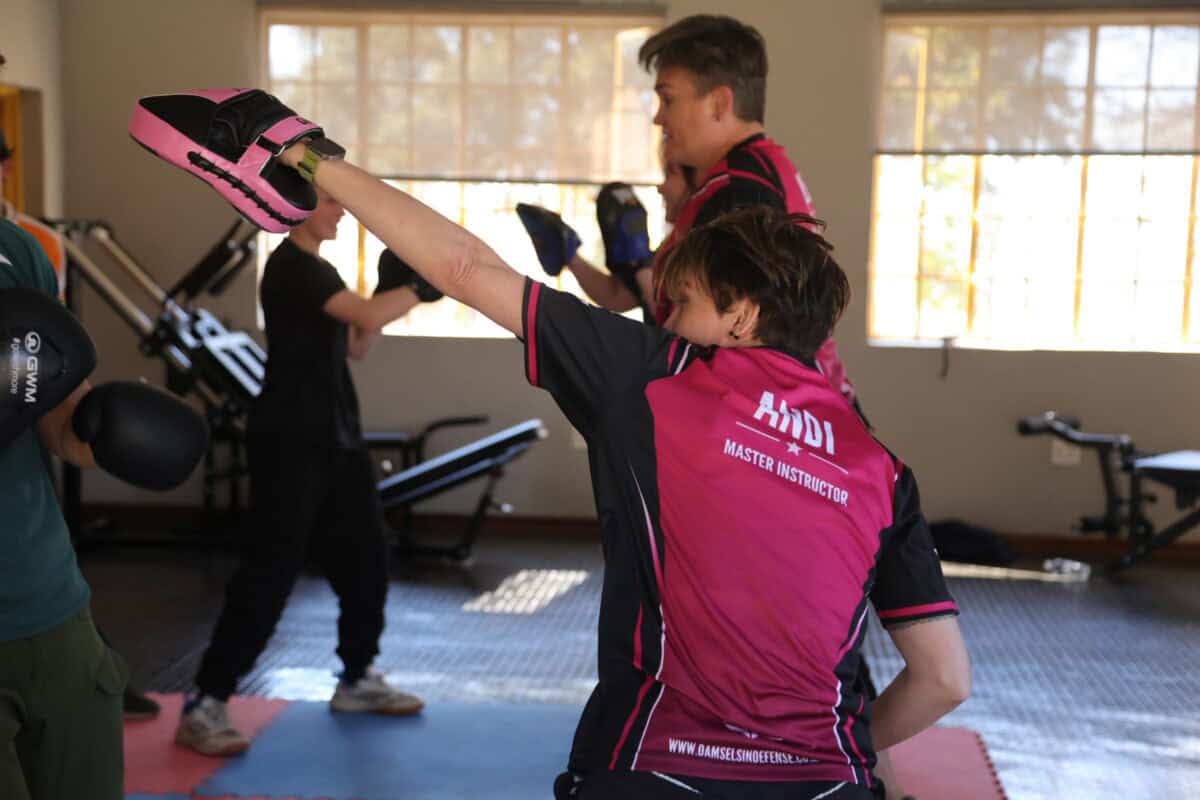
Then comes the physical part. The women box, hit pads, move and learn practical self-defence. But the aim is not to turn women into fighters.
“Sometimes you can tell a woman, ‘You are strong,’ over and over, but she does not believe you,” says Andi.
Then she puts on the gloves, hits the pads, hears her own voice and feels her strength.
The bigger fight
South Africa declared gender-based violence and femicide (GBVF) a national disaster at the end of 2025, yet women continue to face the threat of violence.
Statistics released by the SAPS for the first quarter of 2026 paint a grim picture. During this period, 9 782 rape cases were reported, an average of about 108 a day. A further 12 590 sexual offences and 669 attempted sexual offences were recorded.
Almost half of the reported rapes – 4 620 cases, or 47.2% – took place inside the home of either the victim or the perpetrator.
The figures reflect only cases reported to police, meaning the true scale of the problem is likely to be considerably higher. Many victims, particularly women in abusive relationships, may be reluctant to report their partners, leaving cases unrecorded.
For Andi and Adéle, tackling GBV also means asking why some men resort to aggression and control.
They believe factors such as trauma, insecurity, anger, learned behaviour and an inability to manage emotions could contribute to abusive behaviour, although none of these factors excuses abuse, they say.
Andi believes too much emphasis is placed on what women should do to protect themselves, while not enough attention is given to working with boys and men before abusive behaviour develops.
“If we only work with the woman after she has already been hurt, then we’re coming in very late,” she says.
For women who have already experienced abuse, she believes the focus should be on reclaiming their power and refusing to let what happened define them.
From disaster declaration to action
The government’s declaration of GBVF as a national disaster is welcomed, but Adéle says the real test lies in what happens beyond the announcement.
For organisations already working in communities, she believes sustained support is needed rather than once-off interventions.
Government funding, they say, could help them train women in communities to become facilitators and self-defence coaches themselves.
“We cannot be everywhere,” says Andi. “But if we can equip women to continue the work in their own communities, one activation can become something sustainable.”
The question, they believe, is whether funding allocated to combat GBV is reaching the organisations and communities doing the work on the ground.
Turning pain into purpose
Both women also bring personal experience to the work.
“Both of us have experienced abuse in previous relationships,” says Adéle.
They do not want to identify anyone or discuss the details, but they do not shy away from acknowledging what happened.
“It is part of our lived experience, and I think it is also part of why we can do this work with empathy,” she says.
Adéle explains that she was previously in relationships where she experienced physical abuse and had to defend herself. On one occasion, a weapon was drawn, an experience she describes as extremely frightening.
It is that lived experience that helps her understand the fear many women face.
Women who attend the activations after experiencing abuse are not questioned about why they stayed or why they did not leave. Instead, the aim is to create a safe space where they can choose whether to share their stories without fear of judgement.
The fight that changed Andi
Andi became a Springbok kickboxer about 18 years ago. Her last major fight, when she was 33, proved to be the toughest bout of her career.
At the 2011 World Association of Kickboxing Organisations’ World Kickboxing Championships in Dublin, she reached the quarter-finals. By the third round, exhausted and struggling to keep her mantra alive – I will, I shall, I can – she heard the crowd shouting her name.
“Go, Andi! Go!”
Watching the footage afterwards, she realised they had been cheering from the very first round. She had only heard them when her own voice was no longer enough.
Sometimes, she says, your own voice gets you into the fight, but the voices around you help you finish it.
And that is the message she and Adéle want South African women to hear: Your voice is your biggest weapon.
And then Andi smiles, exhausted but amused.
“We must be more like Fiona from Shrek. We don’t have to wait for the hero to save us. We are our own heroes.”
* Follow them on their YouTube channel She Said.
Watch the video here:
Breaking news at your fingertips… Follow Caxton Network News on Facebook and join our WhatsApp channel.
Nuus wat saakmaak. Volg Caxton Netwerk-nuus op Facebook en sluit aan by ons WhatsApp-kanaal.
Read original story on www.citizen.co.za

