
Watch: Wet weather hits several provinces, up to 100mm expected in some parts
The weather service has warned that more rain can fall in large parts of South Africa today.
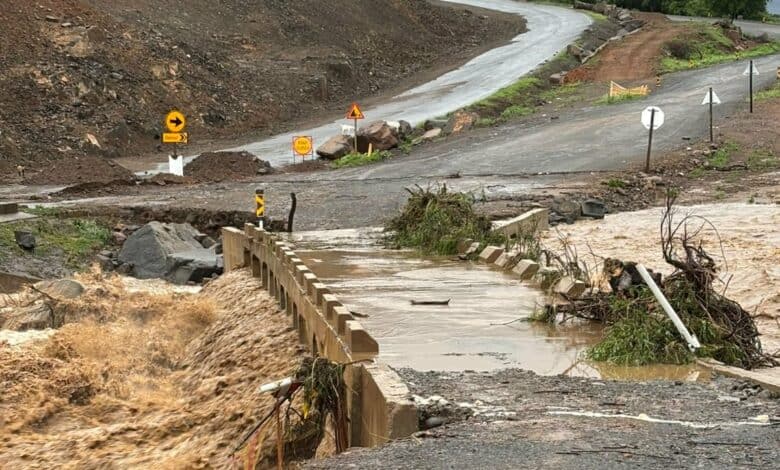
Heavy rainfall has been recorded in several parts of South Africa, with social media users sharing their experiences of flooded roads and gushing water.
According to the South African Weather Service (SAWS), further isolated to widespread showers and thundershowers are expected over the central and eastern parts of the country today.
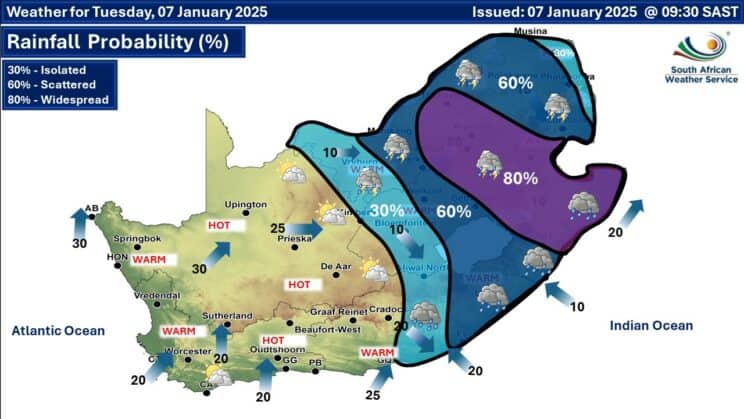
Vox Weather says in a social media post continuous rainfall is expected to result in flooding and disruption to traffic.
“The rainfall accumulation is expected to reach about 100mm this week in places over KZN, Free State, North West, Gauteng, Limpopo, and Mpumalanga resulting in significant impacts.”
The SAWS 24-hour rainfall report ending this morning at 08:00 has recorded significant rain in the following areas:
- Pongola: 96mm
- Hartebeespoort Dam: 75mm
- Vereeniging (Kopanong Hospital): 68mm
- Standerton: 60mm
- Westonaria Agripark AWS: 51mm
- Royal National Park: 49mm
- Van Reenen: 48mm
- Vryheid: 46mm
#Pongola #kzn @oor 120mm #reen
📷Hayley Potgieter pic.twitter.com/neOrzfSoBU— ReenvalSA (@ReenvalSA) January 7, 2025
KZN – HEAVY RAINS resulting in fast flowing rivers and flood damage #StaySafe – more rain in the forecast for today pic.twitter.com/SkYS5lbi0s
— TrafficSA (@TrafficSA) January 7, 2025
KZN – Pongola region: #Flooding HEAVY RAIN and more on the way pic.twitter.com/DX8o9GMKcK
— TrafficSA (@TrafficSA) January 7, 2025
WEATHER MAPS for this TUESDAY – 07 January 2025
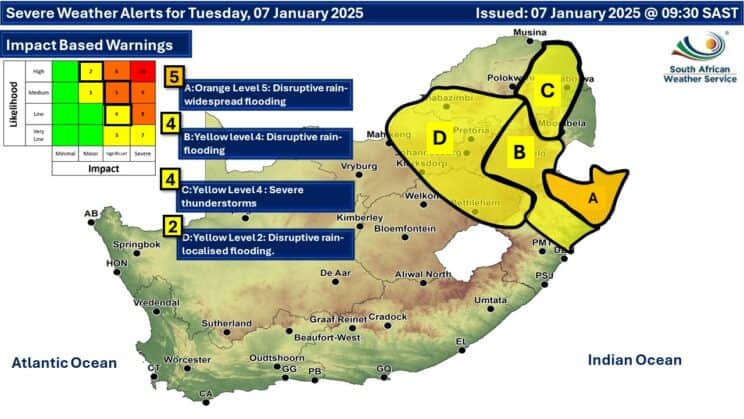
⚠️SAWS WARNINGS ⚠️
🟠Orange L5: Disruptive rain over KZN
🟡Yellow level 4: Disruptive rain over KZN & MP
🟡Yellow level 4: Severe thunderstorms over MP & Limpopo
🟡Yellow level 2: Disruptive NW, Limpopo & GP#Voxweather pic.twitter.com/vNutH0W1RJ— Vox Weather (@VoxWeatherZa) January 6, 2025
Tshwane Emergency Services Department (ESD) spokesperson Lindsay Mnguni told Pretoria Rekord the impact of disruptive rain may include the following:
- The elevated risk of localised flooding, especially in susceptible low-lying areas, informal settlements and at susceptible roads.
- Disruptions to traffic due to major roads being flooded.
- Minor to major vehicle accidents due to poor driving visibility and slippery road conditions.
- Localised service disruptions due to power failures and other damage to infrastructure.
- Some communities temporarily being inaccessible/cut off.
- Danger to life due to fast-flowing streams and rivers.
The Cooperative Governance and Traditional Affairs Department advised people to take the following precautions:
- Those living in low-lying areas must monitor rising water levels and evacuate to a safer or higher spot.
- Do not cross through flooded roads or bridges; use other routes.
- Avoid crossing low-lying bridges, streams and rivers.
- Never try to walk, swim or drive in swift-flowing water: Even if water is 15cm deep, it can sweep you off your feet.
- Motorists must be very careful and avoid driving through flooded areas.
- Drive to and park at a safer place.
- The public must monitor weather alerts on radio or TV.
- When trapped, contact your municipal disaster management centre or police, or call national emergency numbers (112, 10177, 107).
- Do not try to drive over a low-water bridge if water is flowing strongly across it and the ground is not visible.
- Teach your children about the dangers of floods.
- Keep your important documents in a water-resistant container.
- Keep your cellphone close to you and have emergency numbers at hand.
- Do not camp or park your car along rivers, especially during heavy rains or thunderstorms.
- If you are on foot, be aware that low-moving water can be dangerous during flood conditions; do not walk into it.
- Avoid contact with floodwaters, which may be contaminated with raw sewage, oil, or other dangerous substances, and may also be charged with electricity.
Read original story on www.citizen.co.za

