
Western Cape mother awaits son’s return after 8 years in Turkish prison
As hundreds of South Africans remain jailed abroad for drug trafficking, one mother hopes her son will finally return home next year.
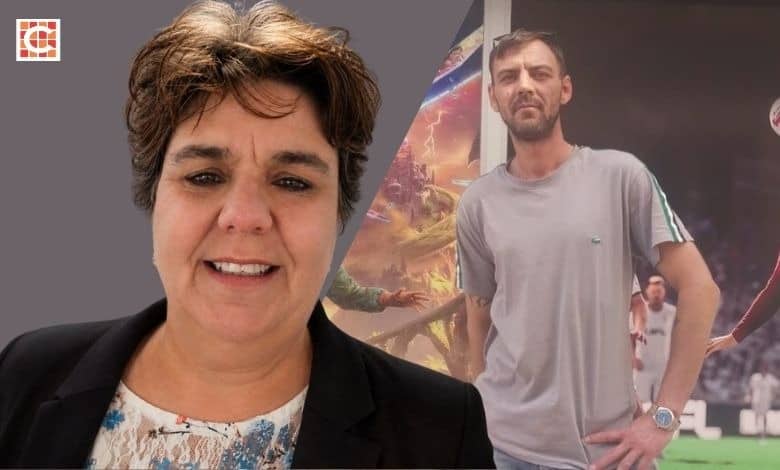
For three months, Christa Wiggell did not know where her son was. There was no call, no explanation and no way of knowing what had happened to him. Life had to go on, but the silence left her anxious and searching for answers.
Then, in August 2018, her phone rang while she was on her way to Colesberg, transporting a load of bananas to Cape Town.
The call came from an international number and on the other end was her son, Chris, who said he had been arrested on May 26 and was in a Turkish prison.
For Christa, who previously lived in Boksburg in Ekurhuleni and now lives in Klein Brak River in the Western Cape, the call brought an answer to months of uncertainty. But it also marked the beginning of a long wait.
Eight years later, there may finally be hope that Chris will return home. According to Christa, he could be released and deported to South Africa as early as January.
Job offer promises way out
Christa says Chris was 26 when he was arrested. His family was under financial pressure: Chris had lost his job, his father was also unemployed and Christa was the household’s only breadwinner.
Then, according to Christa, a Nigerian man offered Chris a job with a good salary and several perks.
The work appeared straightforward. Chris was expected to transport electronic goods to specified destinations in South Africa and abroad. He travelled internationally at least four times before his arrest.
She believes her son did not realise that he had become a drug mule for an international criminal syndicate.
“Yes, at the beginning I was angry and I cried. The first question that I asked myself was: ‘What did I do wrong?’. But after so many years I am not angry any longer. I just hope and pray that I will be able to hold my son again,” she says.
Christa believes Chris has become a more mature person during his time in prison and hopes he has learnt from the experience.
Trafficking arrests highlight wider problem
Chris’s story comes amid renewed attention on South Africans arrested overseas in alleged drug-trafficking operations.
On October 7, 34-year-old South African Qhina Beauty was arrested at Murtala Muhammed International Airport in Lagos, Nigeria, after authorities allegedly found 36.65kg of cocaine in her luggage.
Nigeria’s National Drug Law Enforcement Agency said Beauty had travelled to Nigeria to collect the consignment, alleging that another South African woman had recruited her with the promise of R20 000 for its successful delivery. These allegations have not been established in court.
Another South African woman, Will Jessica Ann (38) was sentenced in Nigeria to an effective 25 years in prison after pleading guilty to importing 5.75kg of heroin. Nigerian authorities said their investigation uncovered alleged links to a transnational trafficking network operating along the Cambodia-South Africa route.
Hundreds of citizens remain imprisoned abroad
The number of South Africans currently imprisoned overseas for drug-related offences remains unclear.
Department of International Relations and Co-operation (Dirco) media liaison officer Nelson Kgwete said he could not provide an exact figure. Asked for an estimate, he put the number at between 200 and 250, but stressed that this was not a verified statistic.
A 2020 report by the Global Initiative Against Transnational Organised Crime, citing Dirco figures, recorded 790 South Africans incarcerated abroad, with 71% serving sentences for drug-related offences.
Syndicates exploit vulnerable job seekers
According to Willem Els, an organised crime expert at the Institute for Security Studies, international drug cartels prey on people facing unemployment and financial hardship.
Christa believes Chris was vulnerable when the job offer came, saying: “Although Chris was not a teenager at the time of his arrest, he was still a vulnerable young man desperately looking for a job to help support his family.”
She recalls that three other young men from Boksburg were also arrested in different countries in the same year, although she is unsure of the details.
Els says drug mules can be drawn in by the promise of quick money, while the people running the wider operations remain far removed from the risks faced by those transporting the drugs.
“When couriers are caught, the syndicates vanish, leaving the suspects to face unforgiving foreign judicial systems alone,” he says.
Christa suspects Chris was caught as Turkish police closed in on the people behind the operation. She believes officers were waiting for him when he stepped off the plane, carrying a photo of him.
Inmate serves sentence in open facility
For families, the sentence does not end when the courtroom doors close. Loved ones back home worry about their safety, try to find money for legal assistance and wait for news from thousands of kilometres away.
Christa says Chris had to pay a fine of 20 000 Turkish lira, then worth between R4 000 and R6 000, and the family helped him pay it.
Prison conditions vary widely between countries and facilities. Turkish prisons have faced criticism over overcrowding, while human rights organisations have raised concerns about access to healthcare and other conditions in prisons around the world.
Chris is now serving his sentence in one of Turkey’s open prisons, where work forms part of his daily routine. According to Christa, he works in a kitchen preparing food for inmates in closed prisons.
Every so often, he is allowed 10 days’ leave, during which he can work in town. When the period ends, he must return to prison.
Although this arrangement offers him more freedom than life in a closed facility, he remains in the prison system and must complete his sentence before facing the possibility of returning home.
“We speak at least once a week and he says that he has been treated fairly over the last eight years,” Christa says.
Embassy provides consular support
Christa has only good things to say about the South African embassy in Turkey. She says it has helped Chris access medical check-ups, dental treatment and psychological support.
Her experience highlights the practical role consular officials can play, but also the limits of what families can expect from government assistance.
Dirco can provide consular support, maintain contact with South Africans detained abroad and raise concerns about their treatment with local authorities. However, officials cannot intervene in foreign court proceedings, secure a prisoner’s release or pay legal, medical and other bills.
For families, this can mean navigating a foreign justice system and the cost of supporting a loved one from afar, while waiting for decisions that are beyond their control.
Regional task teams tackle drug syndicates
The Trilateral Planning Cell, established by South Africa, Mozambique and Tanzania with support from the United Nations Office on Drugs and Crime, co-ordinates intelligence sharing and joint operations targeting criminal networks using the Southern Route.
Earlier this month, Angola and Uganda joined the regional initiative. Officials also discussed a proposed regional counter-narcotics and organised crime centre to strengthen intelligence sharing and co-operation between law enforcement agencies.
Els says South Africa has increasingly become both a destination for drug distribution and a location for drug production as trafficking networks adapt to law enforcement pressure elsewhere.
“I am going to praise the police when deserving, as a lot has been done, especially with the co-operation between different African countries,” he says.
Els believes that drug syndicates are going to find it more difficult to operate in South Africa as a result.
Breaking news at your fingertips… Follow Caxton Network News on Facebook and join our WhatsApp channel.
Nuus wat saakmaak. Volg Caxton Netwerk-nuus op Facebook en sluit aan by ons WhatsApp-kanaal.
Read original story on www.citizen.co.za

