
What the G20 outcomes mean for South African farmers
Global leaders agreed on measures that could reshape African food systems, strengthen supply chains and open new pathways for farm-sector growth.
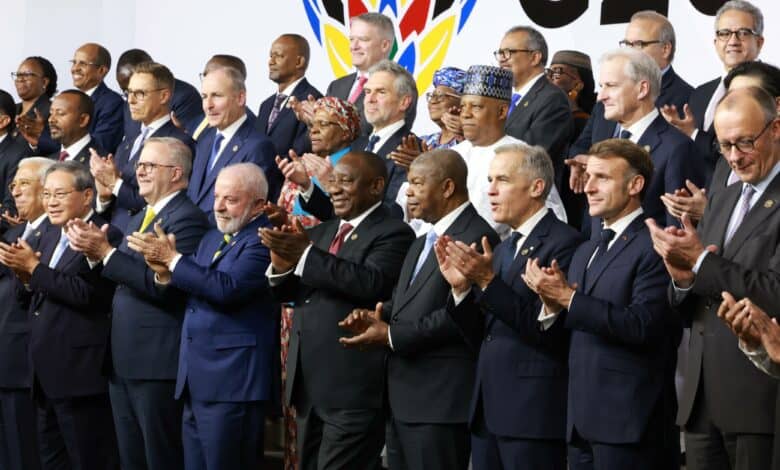
South Africa’s G20 presidency placed agriculture, food security and African rural development firmly at the centre of the global agenda, securing commitments that could have tangible long-term benefits for farmers.
Key gains include strengthened biosecurity systems, increased investment in climate resilience, and new efforts to stabilise agricultural markets and support sustainable food production across the continent.
Here are some Farmer’s Weekly articles you might have missed:
Africa warned it has ‘four harvests left’ to change course
Debra Mallowah, chair of the B20 Task Force on Sustainable Food Systems, warned that Africa has only four harvests remaining until 2030 to shift its food-security trajectory.
The B20 process identified three urgent priorities for the continent:
- Unlocking intra-African trade
- Building resilient regional supply chains, including cold chain and transport logistics
- Scaling sustainable agricultural practices
These measures, the task force argues, are essential to avoid worsening hunger and to boost Africa’s ability to compete in global markets.
Biosecurity elevated to global priority under SA’s leadership
South Africa used its presidency to elevate biosecurity from a domestic concern to a major international focus within the agricultural track.
While farmers may not see immediate change, the commitments agreed at the summit pave the way for:
- faster detection of disease outbreaks
- more predictable and better-coordinated response mechanisms
- improved communication between governments and industry
- enhanced export competitiveness due to stronger sanitary and phytosanitary systems
These improvements could reduce the risk of production losses and facilitate safer, smoother access to global markets.
Ramaphosa Calls for Solidarity, Equality and Sustainability
In his opening address at the G20 Summit, President Cyril Ramaphosa reaffirmed the theme of Solidarity, Equality and Sustainability, urging global leaders to strengthen cooperation on trade, climate adaptation and inequality.
He emphasised that developing countries, particularly in Africa, must see their priorities reflected in G20 outcomes. Without this, he warned, progress toward fairer global trade, food-system resilience and climate justice would remain limited.
Ubuntu as a guiding principle for global food security
The G20 Leaders’ Declaration invoked the African philosophy of Ubuntu (“I am because we are”) as a moral framework for building shared responsibility in tackling food insecurity.
Agriculture Minister John Steenhuisen welcomed the focus on food security but warned that poor infrastructure remains the biggest obstacle to efficient intra-African trade.
He argued that Africa’s counter-seasonal advantage gives it the potential to become a major global food supplier, but only if the continent invests in:
- climate-smart agriculture
- financial and input support for smallholder farmers
- strong cold chain and distribution systems
- knowledge sharing across borders
Declaration commits to stronger climate adaptation and market stability
Several commitments in the G20 Leaders’ Declaration are expected to directly influence the agricultural sector.
Key outcomes include:
- A global push for resilient, sustainable and modern agriculture
- Stronger soil, water and land-management practices
- Expanded climate finance, with ambitions to move from “billions to trillions” in funding for resilience projects
- Adoption of the Ubuntu Approaches on Food Security and Nutrition, aimed at reducing excessive food-price volatility and improving market transparency
- Support for digital and AI-driven initiatives such as the AI for Africa programme to enhance precision agriculture and early-warning systems
These measures could help stabilise markets, strengthen yields and improve food-system resilience across Africa.
Summit concludes with bold commitments despite geopolitical tensions
In his closing remarks, President Ramaphosa described the declaration as a commitment to “concrete actions”, highlighting Africa’s central role in global prosperity. He urged accelerated progress towards the UN’s Sustainable Development Goals, increased climate finance for a just energy transition, and greater investment in disaster resilience.
The declaration was unanimously adopted despite strong US opposition, underscoring the complex geopolitical backdrop of this year’s summit.
Geopolitical rift overshadows final celebrations
Although the summit ended on a high note diplomatically, tensions surfaced between the United States and South Africa over the handover of the G20 presidency.
French President Emmanuel Macron and Canadian Prime Minister Mark Carney warned that rising global protectionism could further fracture global cooperation, a shift that would disproportionately affect developing countries and agricultural exporters.
Deputy President Paul Mashatile confirmed that China provided financial assistance for hosting the summit and reaffirmed South Africa’s intention to expand value-added agricultural exports into Chinese and global supply chains.

Breaking news at your fingertips… Follow Caxton Network News on Facebook and join our WhatsApp channel.
Nuus wat saakmaak. Volg Caxton Netwerk-nuus op Facebook en sluit aan by ons WhatsApp-kanaal.
Read original story on www.farmersweekly.co.za

