
World Clubfoot Day: Step up and change a child’s life
Charity organisation Steps says treating clubfoot in children is a basic human right, not a luxury.
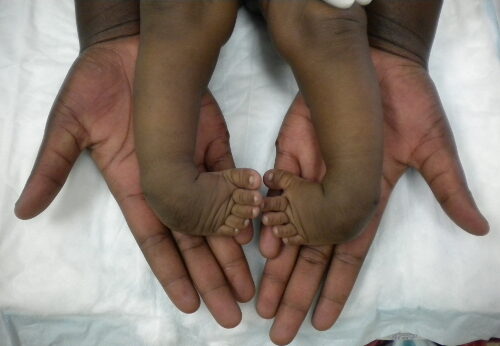
How far do you think you can run or walk while wearing shoelaces tied together? Participate in the Shoelace Challenge this World Clubfoot Day (Saturday) to experience what it is like to walk with a clubfoot that has not been treated and help reach more children suffering from this treatable defect.
Every year on June 3, the only non-profit charity organisation in South Africa focused on clubfoot treatment – Steps, calls for an increase in awareness of clubfoot as well as highlights the need for an increase in the reach of clubfoot treatment programmes across more areas and to more children.
The day also commemorates the birthday of Dr Ignaçio Ponseti, the pioneer of the Ponseti technique for clubfoot, a groundbreaking and non-invasive method for treating clubfoot.
This year, Steps have launched the ‘Shoelace Challenge’, in collaboration with Achilleus, an organisation that focuses on clubfoot in the Czech Republic.
“The most-asked question that we receive from parents is: Will my child walk?” says Gaby Rademeyer, co-ordinator at Steps.
“This is what we want people to experience — the disability of untreated clubfoot. Clubfoot is when the foot or feet are twisted downward and inward in a rigid position. If left untreated, the child will be unable to wear shoes or walk normally, leading to a life of disability, isolation, and pain.
“Unlike many other birth defects, clubfoot is treatable, and through this challenge, we want to raise awareness of how life-changing the Ponseti treatment for clubfoot is. It literally takes someone from disability to mobility,” says Rademeyer.
Here’s how you can participate in the Shoelace Challenge:
- Wear yellow to show your support.
- Tie your shoelaces together and see how far you can run or walk.
- Take a video or photos when you do the challenge.
- Share your video or photos on social media and say how many steps you’ve managed to take.
- Tag Steps’ Facebook or Instagram pages.
Lisakhanya Rulumeni is a great example of this. Born in October 2022, she had bilateral clubfoot (in both feet). Her mother, Zimkitha, did not know what was wrong with her daughter but did know that her feet did not look normal. Treated at Maitland Cottage Children’s Orthopaedic Hospital clubfoot clinic in the Western Cape, Lisakhanya now has normal feet. She is able to run and play like other children.
“The treatment went so well because I came and followed each and every step I was told to follow,” says Rumuleni.
“I was educated about clubfoot from the clinic, and my baby’s feet are perfect now. I advise parents to make sure they attend each and every appointment. Follow all the steps and procedures, and trust the doctors and the Lord.”
Stanislava Bašatová, the CEO and founder of Achilleus, says: “According to a recent study, clubfoot remains one of the most common congenital birth defects. It is important to us that there is a constant awareness that this condition can be treated, which is what the Shoelace Challenge is all about. We want healthy people to at least get a little closer to what it’s like to walk with untreated clubfoot and to realise how important and miraculous the Ponseti method is.”
Steps currently supports 38 partner clinics in the South African state health sector by training healthcare workers, focusing on advocacy and patient-centred care, and supplying clubfoot braces. Clubfoot clinic co-ordinators are trained by Steps on parent education, and clinics are supplied with parent education leaflets, posters, training, and medical devices.
The organisation also mentors and supports clubfoot providers in neighbouring countries with educational resources, training, and medical devices.
“We have incredible donors to assist us in providing all of this support to our partner clinics,” says Karen Moss, the CEO and founder of Steps.
“For World Clubfoot Day 2022, we launched our monthly giving programme Stepping Up. There are now 43 children supported by people who signed up. Our goal is to eventually support 1 000 children through their treatment through this donation programme that everybody can contribute a little bit to and that, when added together, makes such a big difference to many children. With mobility, a child has a chance to become part of society and to make their own way in the world. Clubfoot treatment is not a luxury; it’s a human right.
“Our model was recognised this year at the CSR News SA Legacy Awards as the winner of the Best Rising NGO award. Since founding the NPO, we are so proud that over 18 000 children have accessed effective treatment, 1 424 health professionals have been trained, and 18 868 clubfoot braces have been distributed.”
“In my formative years, I spent enough years in clinics and hospitals for a lifetime,” says Mpumelelo Mhlongo, a Paralympian and proud Steps ambassador.
“The greatest lesson my parents taught me from those incredulous times and travels, is that we borrow the earth from the next generation, and it is our responsibility as adults to ensure they have the foundation that allows a future where they can unlock their potential and power.”
Read original story on citizen.co.za

