Why regular wheel balancing is crucial
Don't neglect wheel balancing and alignment! Like servicing your car, it's essential for safety and longevity.
Imagine your car vibrating like a runaway washing machine while you try to enjoy your morning coffee.
Unbalanced wheels aren’t just uncomfortable; they’re a serious safety hazard. The Tyre, Equipment, Parts Association (TEPA), affiliated with the Retail Motor Industry Organisation warns that ignoring this issue can lead to significant replacement costs.
Unbalanced wheels accelerate tyre wear and damage other vehicle components. More importantly, they compromise control, impacting braking and handling. Given South Africa’s diverse road conditions, maintaining optimal wheel balance is vital.
“SA roads, with their potholes, speed bumps and kerbs, frequently disrupt wheel balance,” says Dylan Petzer, TEPA national and regional vice chair central. “Frequent braking and acceleration in urban areas also contribute to uneven tyre wear, exacerbating imbalances.”

Whether you’re a highway commuter, city driver, or enjoy spirited driving, regular tyre checks and balancing are non-negotiable. Proper wheel balancing ensures a smooth, stable, and secure drive.
How to identify unbalanced wheels:
- Vibrations in the steering wheel, floorboard, or seat, especially at speeds above 50km/h
- Uneven tyre wear.
- Steering wheel wobble.
- Unusual noises, such as humming or thumping.
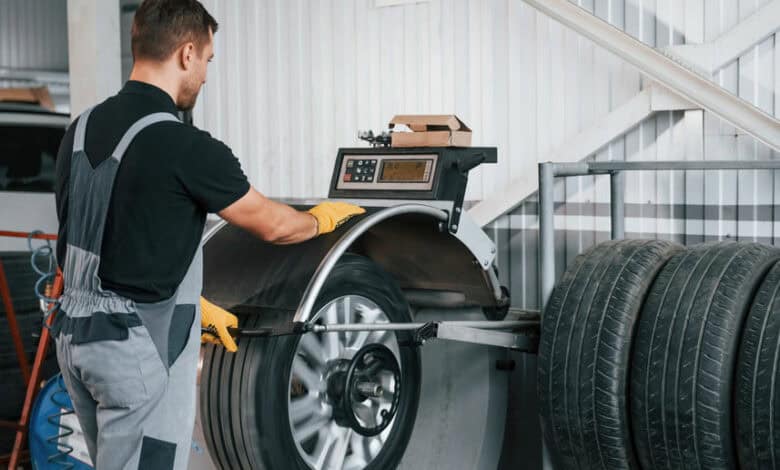
Petzer explains that wheel balancing focuses on even weight distribution around the wheel-tyre assembly’s axis. “Imbalances, caused by manufacturing faults, wear and tear, or impacts from potholes, create vibrations. Technicians use a balancing machine to identify heavy or light spots and attach small weights to the rim, restoring balance.”
“When a balancing weight is lost or the rim is bent, uneven weight distribution causes vibrations, increasing friction, heat, and tyre wear.”
Balanced wheels also improve fuel efficiency. Reduced rolling resistance means the engine works less, saving fuel. Unbalanced wheels create drag, forcing the engine to burn more fuel.
Wheel balancing frequency:
- Every 8 000 to 12 000km or every six to eight months, depending on driving habits.
- After installing new tyres.
- Following significant impacts, such as hitting a pothole or kerb.
- When symptoms arise.
“Wheel balancing is like preventative maintenance; it avoids costly repairs later,” says Petzer. “A vibrating steering wheel or a bumpy ride indicates your wheels need balancing.”
Source: Cathy Findley PR