Nissan revives Pixo nameplate as budget EV for Europe
A revived name returns as a small, affordable electric car, blending retro familiarity with fresh styling and a distinctly modern twist.
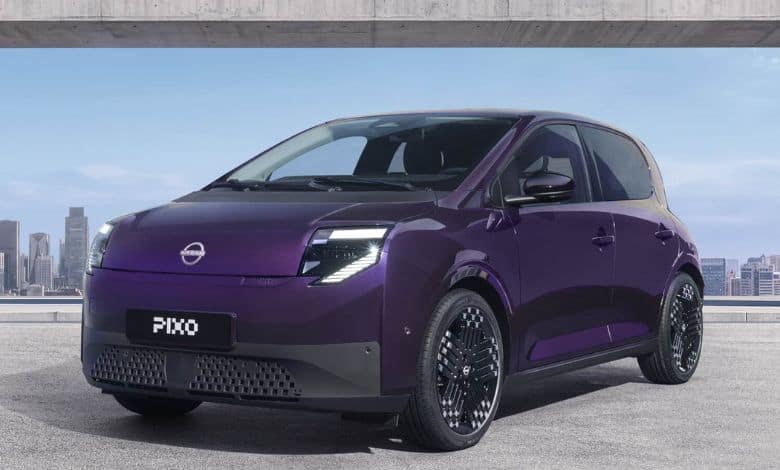
Last used for a rebadged version of the Suzuki Alto in Europe 13 years ago, Nissan has revived the Pixo name, this time as its take on alliance partner Renault’s reimagined all-electric Twingo, reports The Citizen.
Premiering as its new most affordable EV on the Old Continent below the Micra, itself a restyled version of the Renault 5 E-Tech, the Pixo not only differs externally from the Twingo, but also underneath as a number of changes have been made to the AmpR platform.
The original Pixo lasted from 2009 to 2013 in Europe, based on the Suzuki Alto that was also sold in South Africa.
Visually, the Pixo’s unique aesthetic comprises curved headlights instead of the Twingo’s rounded LEDs, a more concave bonnet, seven-shaped LED daytime-running lights, a new bumper and a lack of an intake underneath the bonnet line.
Down the side, the wedge shape from the Twingo remains, though at the rear, the light clusters have been redesigned along with the bumper and tailgate, which gets a block letter NISSAN decal instead of the company’s corporate logo.
Dimensions
In terms of dimensions, the Pixo measures:
- Length: 3 796mm
- Wheelbase: 2 492mm
- Height: 1 512mm
- Width: 1 790mm
This makes it 7mm longer, 70mm wider and 21mm taller than the Twingo, while sharing the same wheelbase length.
The result is more boot space at 356 litres versus the Twingo’s 360 litres, or as much as 1 221 litres with the rear seats down, an increase of 221 litres over the Renault. An additional 50 litres can still be stored underneath its bonnet.
Interior updates
Inside, the Pixo’s interior changes from the Twingo are minor as it retains the same dashboard, physical ventilation knobs, steering column-mounted gear lever, 7-inch digital instrument display and 10-inch infotainment display.
New is the steering wheel, which, instead of the Nissan logo, receives a pixelated Pixo badge, with the only other difference being an assortment of model-specific colours.
Rear-engine, rear-wheel-drive setup
As with the Twingo, and unlike the original, the Pixo’s change in powertrain sees it revert to a rear-engine, rear-wheel-drive layout.
Powered by the same 27.5kWh battery as the Twingo, the unit drives a single electric motor that produces 60kW and 175Nm.
The result is a top speed of 130km/h, 0–100km/h in 12.1 seconds and a claimed all-electric range of 259km, 4km less than the Twingo.
Supporting DC charging up to 50kW will require a wait of 30 minutes from 10% to 80%.
Going on sale in December and priced from around €20 000 (R373 093), the same as the Twingo and nearly €5 000 (R93 273) less than the bigger and more powerful Volkswagen ID. Polo, the Pixo is not expected to form part of Nissan South Africa’s product line-up anytime soon.
Breaking news at your fingertips… Follow Caxton Network News on Facebook and join our WhatsApp channel.
Nuus wat saakmaak. Volg Caxton Netwerk-nuus op Facebook en sluit aan by ons WhatsApp-kanaal.