


While Trump’s unpredictability rattled allies, Xi and Modi used composure, alliances, and strategy to protect their countries’ economic interests.
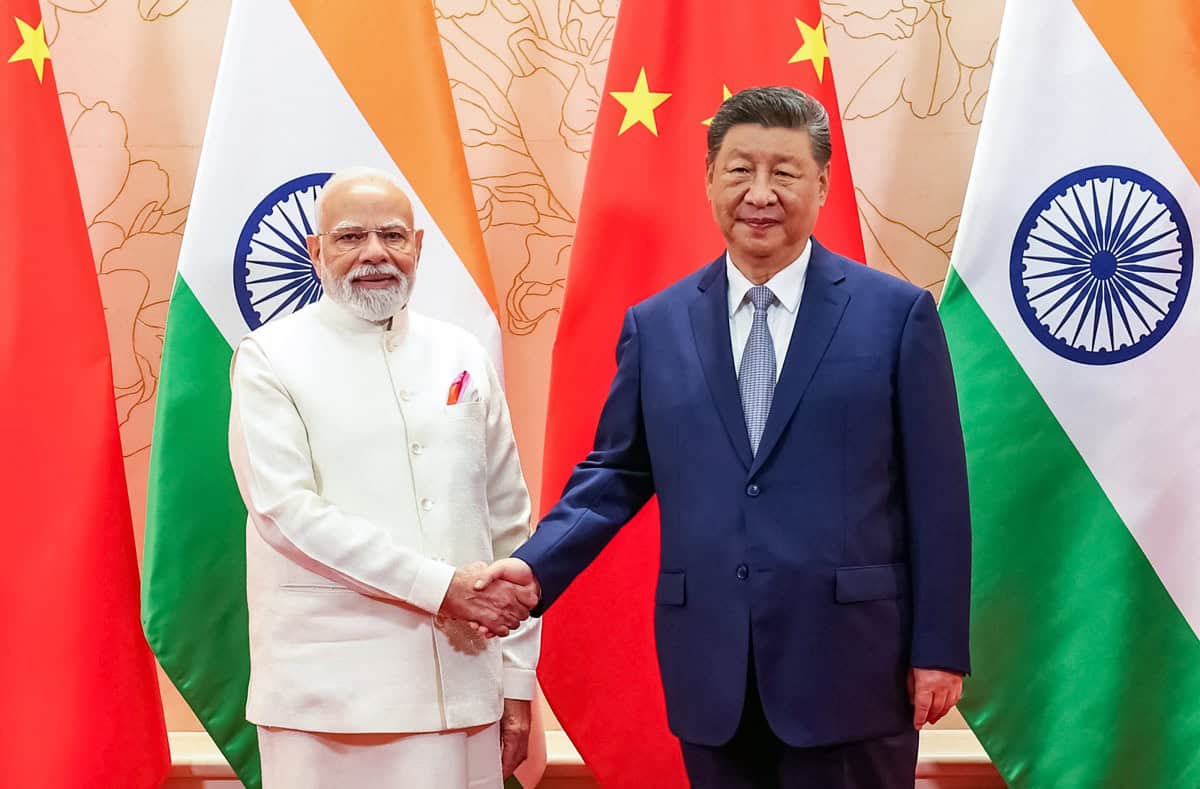
In this handout photograph taken on August 31, 2025 and released by the Indian Press Information Bureau (PIB), Indias Prime Minister Narendra Modi and China’s President Xi Jinping shake hands during a bilateral meeting on the sidelines of the Shanghai Cooperation Organisation (SCO) summit in Tianjin. (Photo by Indian Press Information Bureau (PIB) / AFP)


President Cyril Ramaphosa should take a lesson in handling geopolitical tensions from Xi Jinping of China and India’s Narendra Modi.
Both demonstrated a deft ability to engage US President Donald Trump on his own terms and, at times, outmanoeuvre him – turning the tariff game against him, often with his unwitting assistance.
When Trump threatened Beijing and New Delhi with punitive tariffs, neither Xi nor Modi responded with alarm. Instead, they remained composed and deliberate, fully aware they were dealing with a leader who thrives on projecting cleverness and unpredictability.
Their composure reflected a broader instinct: avoid reactive confrontation and instead play the longer game of positioning their economies and diplomacy for resilience.
In effect, they pulled the carpet from under his feet – tactically leading him to retreat from stringent tariffs while undermining his allies.
ALSO READ: Chinese fugitive accused of R120m fraud captured in SA, flown back to China
Modi’s approach was particularly subtle. He quietly sought new partners, strengthened ties with China and Russia, and deepened participation in Brics initiatives that bypassed the dollar.
This was despite Trump’s warning that any country abandoning the dollar would face 100% tariffs. By refusing to bow to pressure, both China and India forced Trump to scale back his threats to a trickle.
The episode also highlights differences in leadership styles across emerging powers. In South Africa, Ramaphosa has often appeared unsettled when confronted with external economic pressures, projecting caution rather than confidence.
Xi and Modi, by contrast, leaned on the weight of their domestic markets and geopolitical leverage. Their calm responses were tactical, signalling to Washington that they would not be easily cornered.
Xi and Modi also showed a remarkable ability to capitalise on shifting global currents.
ALSO READ: EU, India agree on ‘mother of all’ trade deals
As Trump’s confrontational style strained Washington’s relationships with traditional allies, Beijing and New Delhi stepped forward, offering Europe alternatives that were both pragmatic and strategic.
Where Trump’s tariff threats and unilateral decisions unsettled partners, Xi and Modi projected composure and reliability, positioning their countries as indispensable interlocutors in trade and diplomacy.
Trump’s alienation of allies opened the door for Beijing and New Delhi to cultivate deeper ties with Europe.
As British-Australian analyst James Wood said on X: “Countries like Canada, the UK, Germany and Finland are opening lines of communication with Beijing again, doing more trade, restarting talks and working together on climate and technology. This isn’t a sudden change in beliefs – it’s common sense.”
He added that while Europe still relies on the US for security, “economically and diplomatically they can’t afford to pretend China doesn’t exist. China sits at the centre of global supply chains, climate solutions, manufacturing and growth”.
ALSO READ: Board of inquiry set up to probe Iran’s navy role in ‘Wills for Peace’ drills in SA
This contrast in leadership styles – Trump’s disruptive bravado versus Xi and Modi’s calculated patience – reshaped the diplomatic landscape.
For South Africa, which hurried to Washington only to be publicly humiliated, the lesson is clear: in an era of volatile global politics, resilience and restraint may be more effective than reactive panic.
The US–China episode in particular illustrates how leadership style can alter the balance of global partnerships.
Trump’s alienation of allies accelerated Europe’s eastward drift, strengthening China’s economic foothold and enhancing India’s diplomatic relevance.
What began as a US attempt to assert dominance ended with Beijing and New Delhi drawing Europe closer into their orbit.
ALSO READ: South Africa courts Brics but India skips naval drills
In this way, the Eastern giants did not simply withstand Trump’s pressure – they turned it into an opportunity to expand their influence.
Support Local Journalism
Add The Citizen as a Preferred Source on Google and follow us on Google News to see more of our trusted reporting in Google News and Top Stories.

