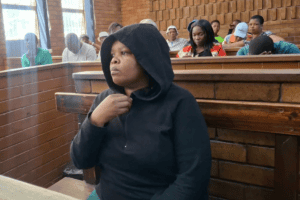
Two men had spent years attempting to secure recognition that they had been wrongfully convicted.
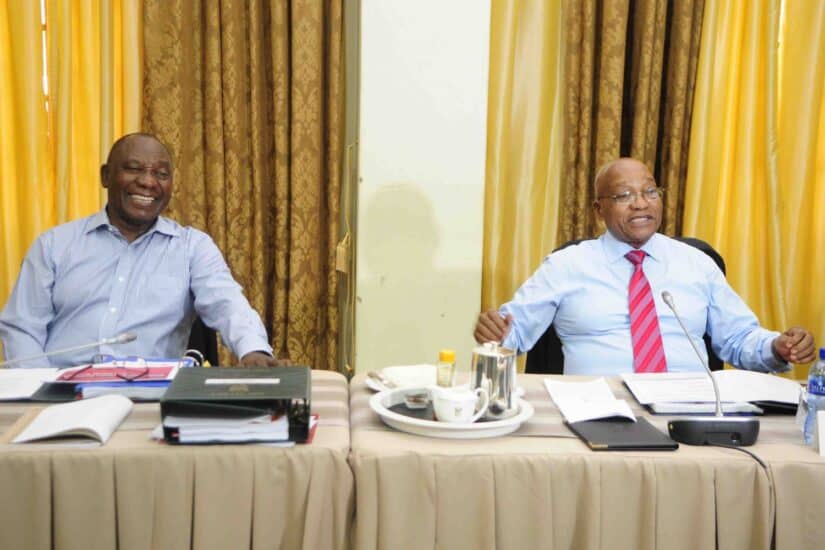
President Cyril Ramaphosa and his predecessor, Jacob Zuma. Picture: Gallo Images / Thulani Mbele


The Constitutional Court (ConCourt) has found that successive presidents failed in their constitutional duties by allowing a presidential pardon application from two wrongfully convicted men to remain unresolved for 24 years.
In a unanimous judgment delivered on Wednesday, 21 October 2026, the ConCourt criticised President Cyril Ramaphosa and former presidents Thabo Mbeki, Kgalema Motlanthe and Jacob Zuma over the prolonged delay in addressing the litigation by Fusi Simon Mofokeng and the late Tshokolo Joseph Mokoena.
The court found that the delay was unacceptable and ruled that Mofokeng and Mokoena’s estate were entitled to constitutional damages.
Ramaphosa was also ordered to pay the legal costs in his official capacity.
Wrongfully convicted after 1992 shootout
Mofokeng and Mokoena were convicted in 1993 of murder, attempted murder and conspiracy to commit robbery following a shootout in Bethlehem, Free State, the previous year.
The 1992 incident involved members of the ANC’s self-defence unit (SDU) and the apartheid-era South African Police (SAP), leaving one police officer dead.
The two men’s convictions relied on the testimony of a single state witness whose evidence was later considered unreliable.
Neither Mofokeng nor Mokoena had been at the scene of the shooting or participated in the SDU.
Despite maintaining their innocence, they received life sentences and an additional 18 years’ imprisonment.
They were released on parole in April 2011 after spending 19 years behind bars.
Their efforts to clear their names continued long after their release.
Presidential pardon application left unresolved for decades
In November 2001, Mofokeng and Mokoena jointly applied to the president for pardons, citing admissions by SDU members before the Truth and Reconciliation Commission (TRC) Amnesty Committee.
They also challenged the credibility of the state’s key witness, who had allegedly admitted to receiving a bribe to provide false information.
Over the years, officials from the Department of Justice repeatedly indicated that the matter was under consideration.
The pair pursued further applications in 2008 after Mbeki introduced the special presidential pardons process to deal with politically motivated offences that fell outside the TRC process.
Their attempt to have their convictions overturned was rejected by the Director of Public Prosecutions (DPP) in June 2018, but they only received notification of the decision in March 2019.
In April 2021, they again contacted the Presidency to establish what had happened to their pardon application.
With the matter still unresolved, they approached the ConCourt in August 2025.
Ramaphosa eventually granted the pardons in December 2025 under Section 84(2)(j) of the Constitution.
Ramaphosa acknowledges constitutional failure
The ConCourt considered the president’s admission that he had failed to meet his constitutional responsibilities.
Ramaphosa apologised and acknowledged that the delay was “deeply regrettable”.
He also accepted that, regardless of whether the shortcomings originated with the justice minister or the department, the ultimate responsibility rested with him as the head of state.
“These concessions by the president are properly made.
“Even if one considers the delay to be four years, rather than 24, that would be no less unacceptable and inexplicable,” Justice Narandran Kollapen wrote in the judgment.
The judge was critical of the successive administrations, stating that 24-year delay could only have resulted from “wilful neglect or gross negligence”.
“Regardless of the reason, the fact remains that Mr Mofokeng and Mr Mokoena lived for two decades not only imprisoned for a substantial period of time for crimes they did not commit, but also under societal stigma and the pall of having been forgotten and shunned by their government despite their every effort to follow up.
“Mr Mokoena passed away before his rights could be vindicated, and also without receiving a conclusion to his long and relentless quest to have his name cleared,” the judgment reads.
ConCourt condemns handling of the case
Kollapen highlighted that the problem extended beyond the length of time taken to decide the applications, describing the broader pardon process and the department’s handling of the matter as “shocking”.
According to the judge, government had failed to recognise the “humanity” of the applicants, despite its constitutional responsibility for “protecting them and their rights”.
The court also dismissed the government’s argument that Mokoena’s death and subsequent posthumous pardon left no remedy for the harm he had suffered.
“This is untenable and smacks of an uncaring attitude,” Kollapen wrote.
The judgment found that Ramaphosa, Mbeki, Motlanthe and Zuma had failed to fulfil their obligations under sections 84(2)(j), 83(b) and 237 of the Constitution.