The increase in funding limits will allow political parties to attract larger donations.
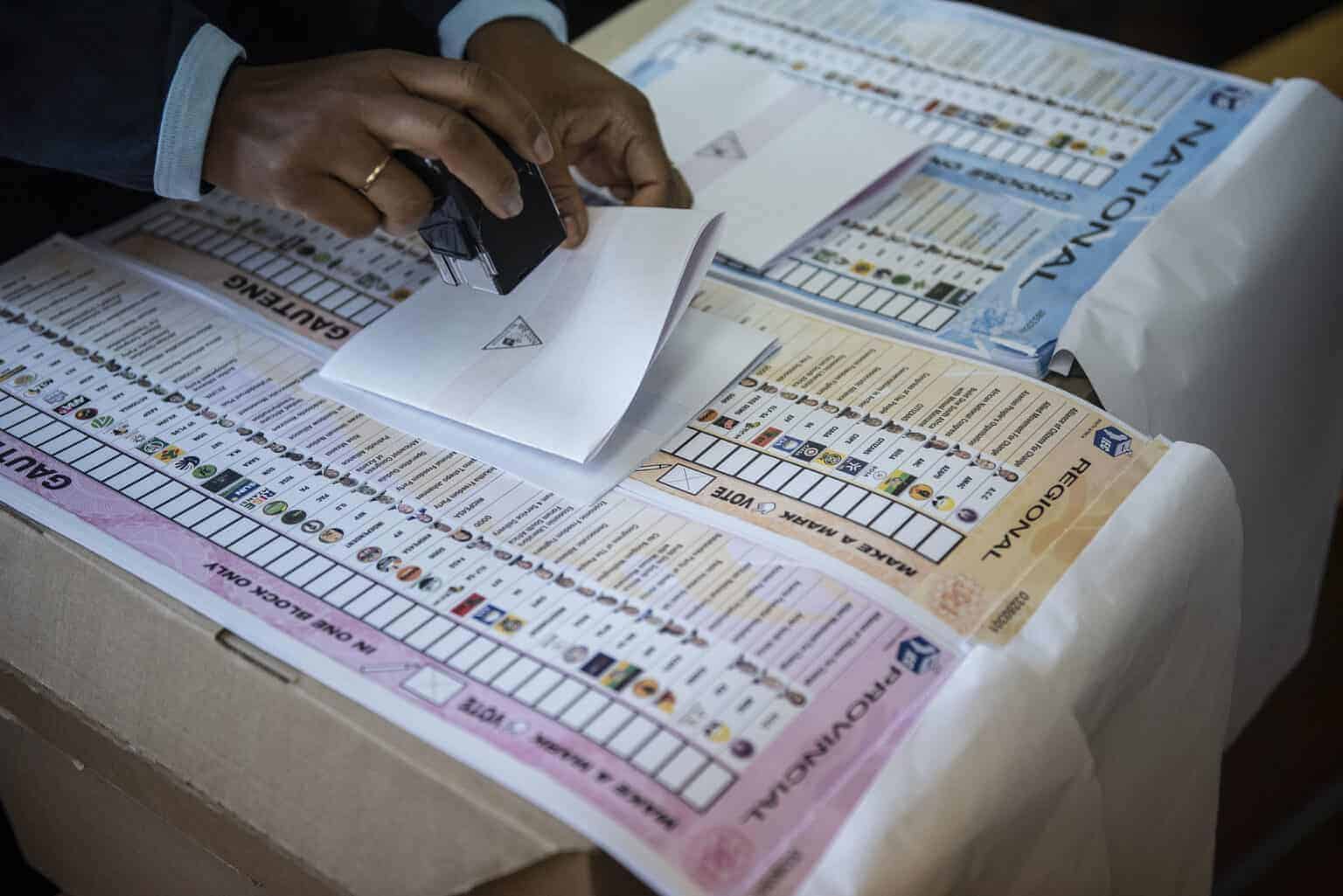
Ballot papers are seen as voters casts their votes at Welizibuko Primary School in Soweto on 29 May 2024. Picture: Michel Bega/The Citizen


South Africa’s upcoming 2026 local government elections could see a significant shift in election campaigning, following recent changes to political party funding rules.
In 2025, Parliament approved increases to donation disclosure thresholds and annual donation limits under the Political Party Funding Act (PPFA).
LIVE interactive map, latest news, multimedia and more!
View MapThe decision comes after the National Assembly adopted a report from the Portfolio Committee on Home Affairs, recommending that the disclosure threshold for political party donations be doubled from R100 000 to R200 000, while the annual donation cap rises from R15 million to R30 million.
ALSO READ: Should you be worried about changes to political party funding?
These adjustments follow the signing of the Electoral Matters Amendment Act (EMAA) in May 2024, which initially removed both the disclosure threshold and donation limit entirely.
The EMAA had created a loophole that allowed parties to receive unlimited funds without disclosure.
Non-profit organisation (NPA) My Vote Counts challenged this in court, and the Western Cape High Court ordered the reinstatement of limits, directing Parliament to set new figures.
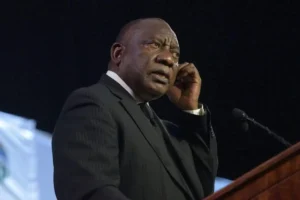
President Cyril Ramaphosa, who is empowered to enforce these regulations, approved the new thresholds of R200 000 for disclosure and R30 million for annual donations in August.
How local government works
South Africa’s local government system is divided into three types of municipalities: Metropolitan, local and district.
Metropolitan municipalities cover major urban centres such as Ekurhuleni, Johannesburg, Tshwane, Nelson Mandela Bay, eThekwini, Cape Town, Buffalo City, and Mangaung.
Local municipalities represent smaller cities and towns outside the metros.
District municipalities consist of multiple local municipalities grouped into one district, usually comprising four to six local municipalities.
READ MORE: Is e-voting coming to the next municipal elections? IEC responds
Elections at the local government level combine constituency-based and proportional representation (PR) systems.
In constituency-based elections, voters in each area elect individual candidates to represent them in council.
The person who wins the majority of votes in each constituency becomes a councillor.
In PR elections, voters select a political party in a larger area, and seats are allocated based on the party’s share of the vote.
The political party chooses the candidates who will become its councillors.
Implications of the new funding thresholds
The increase in funding limits will allow political parties to attract larger donations ahead of the 2026 elections.
Analysts predict this could translate into more extensive campaigns, including election posters, national tours for politicians, and enhanced campaign infrastructure.
Critics, however, warn that higher donation limits may favour well-established parties and deepen inequalities in campaign resources.
READ MORE: IEC unable to make parties account for direct funding
My Vote Counts contended that disclosure data over a four-year period reveals that a small group of wealthy individuals control much of private political funding.
As a result, raising the annual donation limit to R30 million could further amplify the influence of these donors over the political system and increase the risk of parties being unduly swayed.
Are party funding laws effective?
The Electoral Commission of South Africa (IEC) reported a 90% compliance rate among represented political parties in 2024/2025 financial year.
Of 20 parties, 18 submitted their audited financial statements on time.
Non-compliant parties, the National Coloured Congress (NCC) and Build One South Africa (Bosa), were issued directives to comply.
READ MORE: IEC warning: These rising threats could endanger future elections in South Africa
Among 438 unrepresented parties, only 28% adhered to funding requirements, prompting the IEC to issue notices to 304 parties.
The report highlights ongoing challenges in monitoring smaller or emerging political organisations.
Preparing for 2026 local government elections
Voter registration is showing positive trends, according to the IEC.
Between January and September 2025, over 300 000 South Africans registered as first-time voters, while an additional 60 000 updated their registration after relocating.
Despite these gains, the IEC continues to encourage more citizens to register ahead of the elections.
Since the 2024 national and provincial elections, 62 new political parties have been registered, bringing the total to 508, further diversifying the electoral landscape.
With new funding thresholds in place and a growing voter base, the 2026 municipal elections are shaping up to be a high-stakes contest, both financially and politically.
NOW READ: Road to 2026 local government elections: IEC registers 13 new political parties since last month